 English
 Deutsch
 Italia
 August 27, 2026 By admin
Indian Street Food Delhi Jaipur Varanasi
SPLENDID EVERYDAY CUISINE
India’s Street Food Kitchens
Food is everything we are. It’s an extension of nationalist feeling, ethnic feeling, your personal history, your province, your region, your tribe, your grandma. It’s inseparable from those from the get-go. – Anthony Bourdain
If a country’s culture could be known through its food, then India’s flavours must seem like a potpourri – a heady mix of spices, tastes, and aromas. Yet on first bite, you realise how each flavour beautifully complements the other, and you come away sated, only to be enticed again! And nowhere is India’s food more delicious or satisfying than on its bustling streets – this is where real India lives and eats.
In most cities in the world, street food originated as a way for poor people to feed themselves or as a means of providing sustenance to those who worked odd hours. This is true in India as well.
We take you on journey of flavours through three cities in India’s north – Delhi, Jaipur, and Varanasi – whose legacies of food are classic examples of the country’s rich multi-cultural culinary traditions.
In India’s capital city Delhi however, the secret lies in assimilation. Delhi sits on the ancient Grand Trunk road, because of which street food here has benefited immensely from the constant influences and addition of techniques, ingredients, and spices from both the east and west. Delhi’s flavours are robust and complex, fitting for a capital city that is both ancient and modern. This is a city of layers – over the centuries, dynasties have come and gone, each building a newer Delhi over the earlier cities. All of them brought their food traditions with them, all were beautifully integrated into its cuisine, and all are an inseparable part of its richest traditions of eating.
Delhi
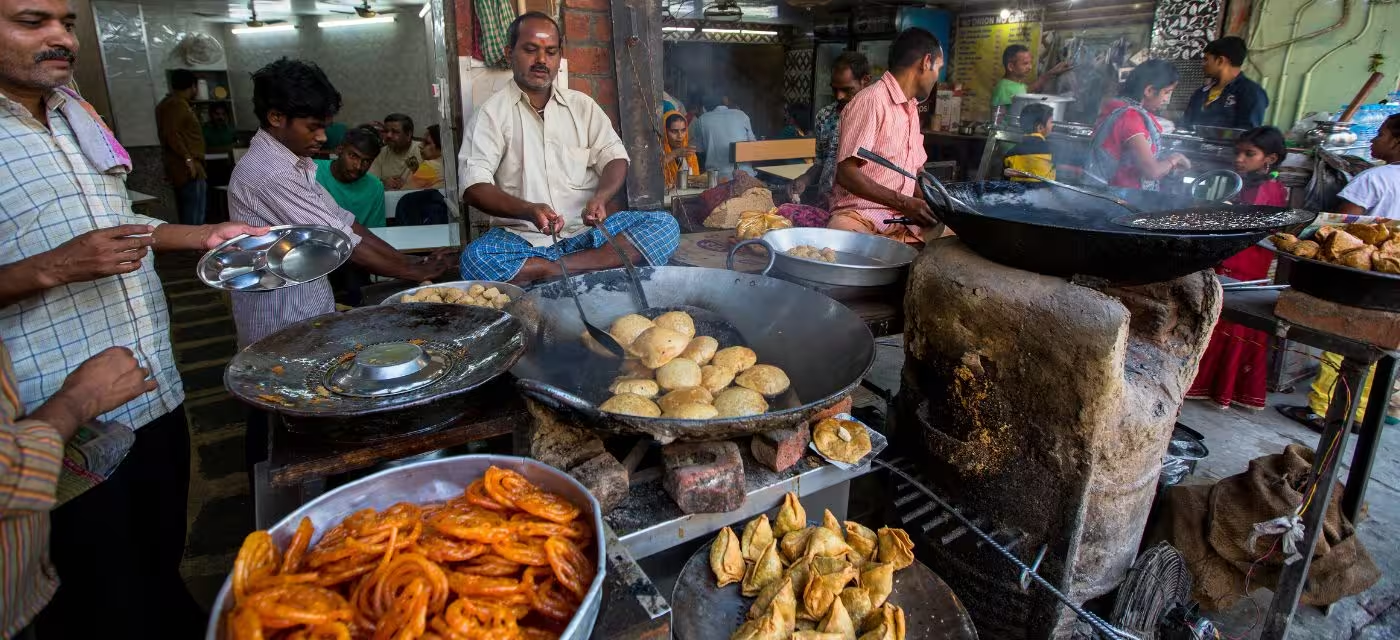
Delhi’s most traditional food is to be found in its old city or Old Delhi, originally named Shahjehanabad. In the narrow streets of Chandni Chowk lie some of Old Delhi’s best kept secrets – recipes fiercely guarded by generations of families who live and cook here.
Either walk or take a rickshaw ride through the sly, narrow lanes to experience the city’s unforgettable food culture. Here’s a pick of Delhi’s finest:
Samosa is an all flour covering stuffed with potatoes, lentils, green peas or cauliflower; alternatively with minced lamb or chicken fillings; deep fried and served with mint chutney and tamarind – a mix of dry ginger powder and tamarind sauce.
Aloo Tikka/Tikki is a fried potato patty or croquette stuffed with either just potatoes or lentils and green peas, served with coriandermint sauce and tamarind sauce. It has a crisp outside and a soft inside.
Chhole Kulchey, another Delhi delight, is a white flour bread (kulchey), served with chhole garnished with onion, tomatoes, spices and lemon; sometimes tamarind or dry mango powder chutney is added to the chhole.
Chole Bhature, a Delhi classic, is a puffed bread (bhature) made of semolina or wheat flour, deep fried in clarified butter or oil, and sometimes stuffed with cottage cheese or mashed potatoes. It is served with chickpeas (chhole) cooked in whole spices, onion, green chilies, and pickles.
Jalebi is made by deep-frying refined white flour in a pretzel or circular shape and then soaked in sugar syrup. The ultimate jalebi is crisp on the outside, soft and chewy on the inside; and has to be had with Rabri – a sweet, slightly thick in consistency, made by boiling milk for long hours.
Chaat, that iconic street snack, is made up of yoghurt, onion, tamarind, and a mix of spices. Again, there are varieties of chaat: Dahi Bhalla is made of fried lentil balls soaked in yoghurt and topped with tamarind, spices, pomegranate seeds and sev (small dried salty noodles). Papdi Chaat consists of little fried and crispy, flat wheat flour crackers with the same toppings. The other two common chaats are aloo tikki chaat and samosa chaat.
Paratha: Choose from a plain one or select a stuffing of your choice – potato, cauliflower, radish, eggs, keema (minced meat), banana or even last night’s left over dal (lentils) the options are galore.
Karim’s, Old Delhi’s most iconic restaurant, was started in 1911, and finds mention in the Lonely Planet guide books. They serve divine mutton stew, mutton korma, mutton biryani, seekh kebab, brain curry, and assorted Indian breads – to crowds of customers who just don’t seem to stop pouring in!
Golgappas are deep-fried hollow balls made of whole wheat or semolina flour. A hole is pinched into the golgappa and chopped cubes of boiled potato and mashed chickpeas are added with tamarind chutney. They are then dipped into a bowl filled with spicy tangy tamarind or mint water, and served.
Delhi’s elusive but mouth-watering Ram Ladoos are made with boiled golden gram pulses and filled with chutney and radish.
But if there’s one street food that sums up the magic and mystery of Old Delhi, it’s Daulat ki Chaat. Actually a dessert, the sweet chaat could hold its own with the world’s most outstanding delicacies!
Apparently, Daulat (meaning ‘wealth’ in Urdu) ki Chaat is made only during winter nights (preferably by the light of a full moon!) when gallons of sweetened milk and cream are whisked continuously for hours into a foamy cloud which is then set by the dawn dew. The foam is carefully removed and collected in a separate dish, sprinkled with saffron, and decorated with vark (silver leaf). By morning the Daulat ki Chaat is just solid enough to be served – sprinkled with chopped pistachio nuts, khoya (condensed milk), and bhoora (unrefined sugar).
Sitting in its thaal (a wide metal platter), the Daulat ki Chaat is like a soft meringue that tastes of heaven – it melts instantly in the mouth, creating an elusive sensation of cream and sweetness. The delicate balance of foam, saffron, sugar, and nuts is sublime!
Jaipur
One of the most popular tourist and holiday destinations in India, Jaipur, known also as the Pink City, is part of India’s classic Golden Triangle (the other two being Delhi and Agra) Tour. Rajasthan’s vibrant capital city, lying on the edge of the state’s mighty Thar Desert, shows glimpses of its majestic past in its architectural splendours and historic bazaars.
Desert land this may be but, don’t doubt Jaipur’s long-held reputation as a food-lover’s paradise. For the city will simply win you over with its unexpected and vast variety of delicious street foods.
Eating out in Jaipur is not just about savouring excellent local food; it is, in fact, a cultural experience in itself. While some of these street foods may be available in other parts of the country, Jaipur is second to none, when it comes to sheer innovation, ingredients, and flavours. We handpick some of the Pink City’s best street eats for you to enjoy.
Dal Cheela (lentils pancake) To make the cheela, a batter of whole moong (green gram) is used, lending the cheela its unique taste and texture. Onion, ginger, green chillies, along with an assortment of herbs and spices, are added to the batter. The result is fluffy, flavourful cheelas…served best with green chutney or even tomato ketchup.
Golgappa Also known as phuchka and paani-puri, this spicy wonder tastes out of the world. These are small hollow balls filled with flavoured water and other fillings. What’s wonderful is that you can enjoy customised gol gappas by choosing from a variety of sweet, tangy, and spicy chutneys (paste condiments).
Kulfi (traditional Indian ‘ice cream’) Similar to ice cream in appearance and taste, the kulfi is, however, denser and creamier. Unlike ice cream, kulfi is not whipped, resulting in a solid, dense frozen dessert. Traditional flavours include cream (malai), rose, mango, cardamom, saffron, and pistachio. The kulfi is one of the best loved Indian desserts, so do make it a point to try at least one flavour while in Jaipur.
Lassi (yoghurt-based summer drink) Lassi is a blend of yoghurt, water, spices and sometimes fruit. Traditionally served in kulhads (earthen tumblers), the rich, creamy lassi is made from homemade curd (yoghurt). This incredibly simple yet wholesome drink is flavoured with kewra water and sugar, and topped with dahi ka malai (cream of yoghurt). No water or ice is added. Available in two sizes! Have the large and chances are you will skip your next meal! Cannot miss.
Sodhani Mirchi Wada Boiled potatoes enhanced with dry dhania (coriander) and black pepper, are stuffed in wax peppers, coated in seasoned besan (gram flour) batter, and deep fried.
Pyaaz Kachori (crispy fried ball with onion fillings) Pyaaz Kachori is a specialty of Rajasthan. This fiery dish is loaded with caramelised onions stewed in peanut oil, and a spicy mixture, heavy on red chillies and garlic powder. Besides pyaaz kachori, many other kachori variants also rule the street food scene in Jaipur.
Chicken Tikka (bar-be-cue preparation) This bar-be-cue dish is a hot favorite with the city’s meat lovers. The tikkas come in different flavours such as lehsooni (garlic) and hariyali (spearmint). Another popular bar-be-cue dish is the tandoori chicken. Similar mutton dishes are a rage too.
Jaipur Omelette There are around 20 different types of omelettes to be found in Jaipur’s street food stalls. Sounds tempting? Well, go ahead and treat yourself to these scrumptious omelette varieties.
Falooda The cold dessert is a heady mix of rose syrup, vermicelli, sweet basil (sabza/takmaria) seeds and milk, often served with ice cream and nuts. An absolute must if you have a sweet tooth. And a terrific way to bust the desert heat.
Sabudana Khichdi (sago porridge) Sabudana is the local name for sago. This dry, spicy dish is made with onion, peanuts, sago, boiled potatoes, green chillies, and spices. Best enjoyed as a warm snack, it is also served with srikhand and fruit on the side. Various versions are available in Jaipur’s street food stalls.
White Korma (Mughlai mutton dish) As the name suggests, this is a mutton dish with white gravy. Suffice it to say that the white korma has attained cult status with its unique aroma and taste.
Srikhand (yoghurt-based dessert) Served with fruit, this yoghurt-based sweet and sour dish is a delicacy here. It is usually made with a lot of nuts and thick creamy yoghurt. You may have it warm or chilled.
Masala Chai and Bun-Maska (Spiced tea and bun with fresh cream) Steaming cups of aromatic masala tea go down smoothly with the bun-maskas. For locals, this is comfort food, meant to be enjoyed with friends or even total strangers…replete with much chatte, laughter, and gossip.
Dahi Vada (lentil dumplings in yoghurt) Fried urad daal dumplings are set to soak in whipped creamy yoghurt and topped with the irresistible flavours of sweet, tangy, and hot chutneys (coriander, tamarind) and spice powders. Light, mouthwatering, not to be missed!
Dal Kachori (fried ball with tangy black gram filling) The Dal Kachori has been winning hearts for generations now! This fried crispy ball is stuffed with urad daal (black gram) cooked in spices and flavored with asafoetida. It is served with sweet jaggery and dried ginger chutney.
Varanasi
Situated on the banks of the River Ganges in the state of Uttar Pradesh, Varanasi (or Benares) is one of the oldest continuously inhabited cities in the world. No surprise that its street cuisine is as layered and elaborate as its history. Neighbouring states, including Bihar and West Bengal, have also influenced Varanasi’s culinary heritage. The fascinating city, considered one of the most sacred Hindu pilgrimage sites in India, is predominantly vegetarian. Since food is an inherent element of Varanasi’s rich culture, a trip to the city would be incomplete without experiencing its fabulous street foods.
Choora Matar (Varanasi’s fusion dish combining elements of Maharashtra and Bihar) Made of flattened rice soaked in desi ghee (pure clarified butter) and cooked with spices as well as green peas, raisins, and saffron, Choora Matar is a famous breakfast and evening snack in Varanasi.
Lassi (yoghurt-based summer drink) Lassi is a blend of yoghurt, water, spices and sometimes fruit. Traditionally served in kulhads (earthen tumblers), the rich, creamy lassi is made from homemade curd (yoghurt). In Varanasi, there are dozens of flavours to choose from. Fruit and trimmed pistachios are largely used to garnish this amazing drink.
Kachori Sabzi (crispy fried balls stuffed with curry) Kachori Sabzi is a hot favorite breakfast dish in Varanasi. There are two different types of Kachoris – Badi (big) and Choti (small) Kachori. While Badi Kachori is stuffed with a spicy lentil mixture, Choti Kachori is stuffed with a spicy mashed potato mix.
Malaiyyo (popular winter dessert) Influenced by Persian cuisine, Makhan Malaiyyo or Nimish is prepared by slowly churning milk to create a creamy texture. The milk foam is then flavoured with cardamom and saffron. Pistachios and almonds are used for garnishing.
Falooda The cold dessert is a heady mix of rose syrup, vermicelli, sweet basil (sabza/takmaria) seeds and milk, often served with ice cream and nuts. An absolute must if you have a sweet tooth. And a terrific way to bust the desert heat
Thandai (cold drink) In the searing heat of India’s northwest, the tantalising thandai brings tremendous sweet respite. Tracing its roots to Mughal cuisine, the thandai is traditionally a creamy blend of milk, sugar, almonds, fennel seeds, poppy seeds, whole white peppercorn, rose petals, cardamom, saffron, and sugar. The Banarasi Thandai is famous for its refreshing taste. Made from seasonal fruit puree, the thandai is flavoured with rose essence, dry fruit, ice-cream, nuts, pepper, fennel seeds, and various other ingredients.
Launglata (a regional delicacy) This delightful preparation is usually made during the festival of Holi but, is available throughout the year in Varanasi. Launglata has a crispy covering made of pastry dough and filled with mawa (whole dry milk), nuts, and sugar. It is then soaked in flavoured sugar syrup and served.
Rabri Jalebi (sweet dish) Benaras is often called the ‘king of jalebis’ (fried pretzelshaped sweet made with flour and sugar syrup), and this is an understatement. The combination of jalebis or imarthis (a bigger version of the jalebi) with rabri (condensed milk-based sweet dish) is sheer heaven!
Paan (betel leaf stuffed with fragrant spices) An after-food mouth freshener, paan is a common treat almost all over India; and in many Indian households. The betel leaf used to make paan has not only traditional uses but also health benefits – it aids digestion and is believed to cure headaches even. The famed Banarasiya Paan is something that you must try in Varanasi. It is stuffed with lime, betel nut, and various other natural flavouring ingredients such as gulkand (a sweet preserve of rose petals) and fennel seeds.
Tamatar Chaat (snack) This is a delightful mashed mixture of boiled potatoes, tomatoes, onions, green chillies, and fresh coriander leaves. Spices such as pounded ginger and red chilli powder are sprinkled to lend it a fiery flavour.
Related Posts