 English
 Deutsch
 Italia
 August 27, 2026 By admin
Holi Festival India
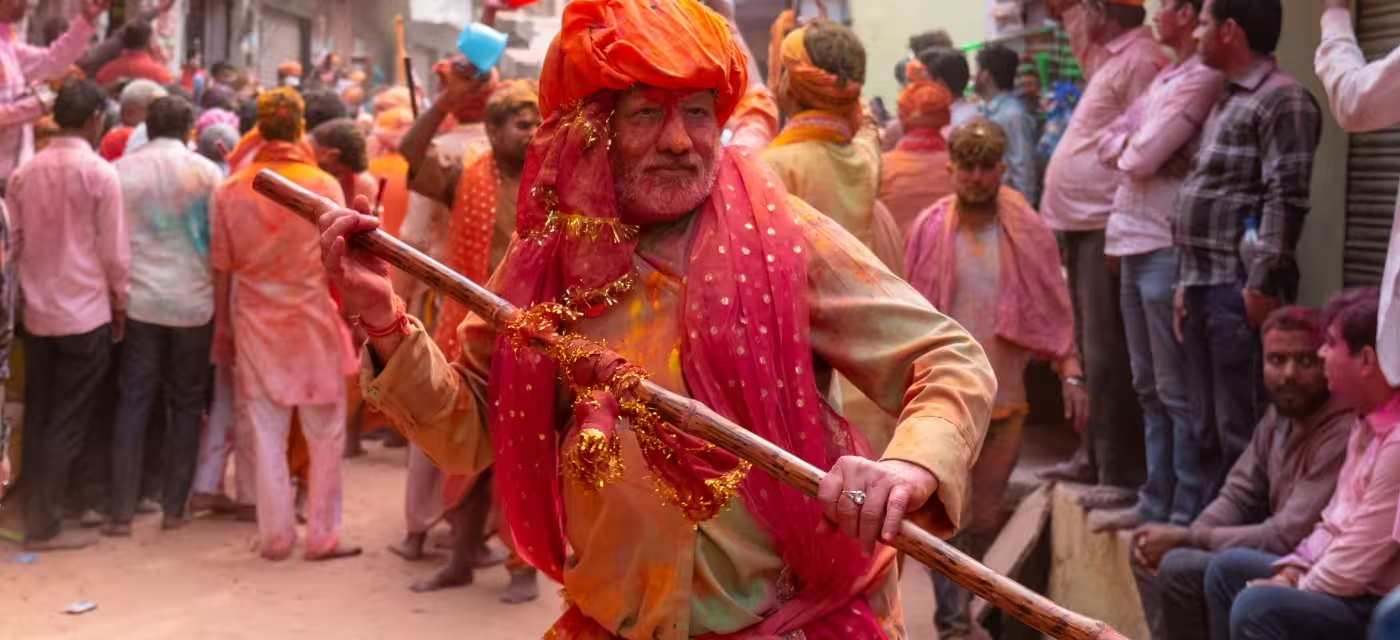
HOLI
The Great Leveller
To other countries, I may go as a tourist, but to India, I come as a pilgrim.
– Martin Luther King, Jr
Life is a wonderful journey, and in this land of plenty, it is celebration every step of the way. All over India, Holi is celebrated during the Phalgun month (roughly between end-February and mid-March) of the Hindu calendar. Marking the end of winter and heralding the arrival of spring, Holi, in an agrarian society, is symbolic of thanksgiving for a good harvest and fertility of the land – a sign of the new life and energy of the season.
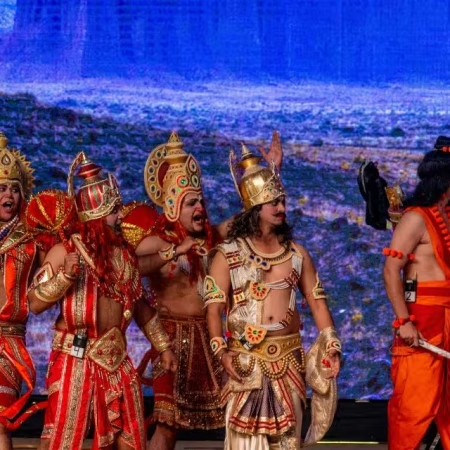
The ancient festival (finding references in Indian texts from as early as the 3rd century CE) commemorates events from Hindu mythology involving demons and deities. The mythological stories surrounding Holi may vary from region to region but all of them essentially celebrate the triumph of good over evil, the conquest of the spirit over the flesh; and the deeper message that those who seek to torment the faithful will be destroyed.
Holi is all about joy, playfulness, and much merrymaking. The exuberant festival brings people together and reminds them how important human relationships are.
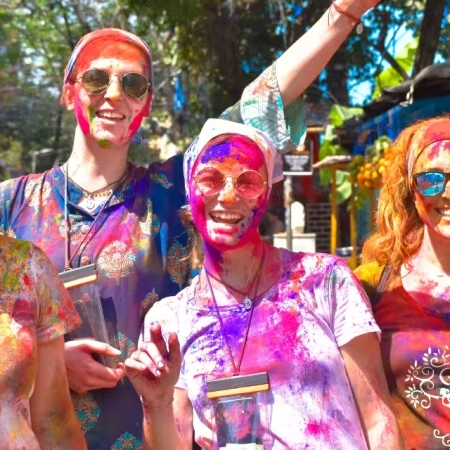
Social and cultural barriers are cast aside, differences of faith are forgotten, inhibitions are shed, broken bonds are rebuilt, distinctions of age and gender are suspended, and all is forgotten and forgiven as people seem to riot in the streets with water pistols, paint-filled balloons, and clouds of powdery pigments!
Anyone and everyone is fair game, friend or stranger, rich or poor, man or woman, children and elders. Celebrations take place in streets, homes, parks, temples etc. Groups playing traditional drums and other musical instruments move from place to place, sing, dance, and smear each other with colours. The occasion is also a time for families and friends to get together, give gifts, and eat delicious food – prepared especially for Holi.
The festival has come to be woven into all the great mythic cycles: of cowherd-god Krishna, of ascetic-lover Siva, of the Lord of Nanak, and the Buddha…
In South India, the festival is celebrated by worshipping Kaamadeva, the God of love. According to legend, Kaamadeva shoots Siva with a love arrow to break Siva’s meditation and entice him to take an interest in worldly affairs. In the East, especially West Bengal, Holi is known as Dol Jatra or Dol Purnima. The festival is celebrated by placing the idols of Krishna and his consort on a beautifully decorated palanquin which is then carried through the streets.
Another interesting ceremony is the ‘breaking of the pot’ practiced in the states of Maharashtra and Gujarat. A pot of buttermilk is hung high on the streets, inviting boys and men to form a human pyramid to break the pot with their head. All the while women try and dissuade them by throwing water on them. The tradition has its roots in the story of Krishna as a child. Krishna loved butter and would do all he could to steal it from any house in the village; and the womenfolk would try and keep it out of his reach!
For the Sikh community, Holi is a celebration of their martial skills and military prowess. They call it Hola Mohalla and mark the occasion with equestrian feats at a spectacular fair one day before the festival. Hola Mohalla is held at Anandpur Sahib in Punjab.
Holi is of particular significance in the Braj region (western Uttar Pradesh state): Here, in Mathura, Vrindavan, and Barsana – places traditionally associated with the birth and childhood of Krishna – festivities, celebrations, and cultural programmes begin several days before the actual day of Holi; and it has now become a significant event in an international tourist’s calendar.
In the villages and towns of the Braj region, Holi is celebrated at high octane levels. With vibrant and interesting Holi traditions that are unique to this region, the festival takes on a form that is rarely witnessed elsewhere in the country. During this time, people take a holiday and daily trade comes to a halt. On the special day, prayers are offered early morning in temples, blessings are sought, and then it is time to play…HOLI!!
HOLI AT DIGGI PALACE, JAIPUR, RAJASTHAN
The Palace of Colours
Spring in Jaipur is simply enchanting. Come March and a delightful time is in store for those who want to celebrate the beautiful festival of Holi in an especially earthy and homespun yet regal ambience.
Come with us as we take you away from the noise and crowds of the streets outside… in through the majestic wooden doors…and enter the vast, lovely lawns of the quietly elegant Diggi Palace. As the doors shut behind you, the garden is transformed into a riot of brilliant colours!
Let’s Play Holi!
The Diggi Palace is iconic of Jaipur and is renowned for hosting some of the city’s finest cultural events – it is, in fact, the ideal setting to celebrate Holi and enjoy the bounties of spring.
With traditional drums and folk dancers, shimmering mounds of organic colour, tubs of cool water, and classic preparations of sweets, eats, and local brews, Holi at the resplendent Diggi Palace, is truly an affair to remember!
So go on, wear your immaculate whites and join us at the Diggi Palace, to play Holi… Experience pure joy as you watch the first burst of colour transform your clothes into a multihued canvas, feel the shower of petals, and the smear of coloured powder, as you soak in the comfortably intimate, old-world surroundings and make new friends… join in the song and dance, taste fabulous foods, and savour every unforgettable moment of your special time here.
Welcome to the Diggi Palace! Built in the 1860s, the Diggi Palace stands amidst its havelis (grand old mansions), structures, and gardens, on acres of land, in the heart of Jaipur. Originally the ancestral haveli of the Thakurs (land owning noblemen) of Diggi, the Palace was also the bagh (garden retreat) of the Diggi family, and soon became the permanent residence of the erstwhile rulers.
Today, the family continues to reside at their beautiful garden estate, a large part of which has been converted by them into a splendid heritage property.
Hidden behind cool blue walls and lofty wooden doors, lies an abundant leafy garden dotted with deckchairs, and framed by potted plants and bougainvillea. Surrounding it are beautifully manicured, expansive lawns… where the occasional peacock struts his glorious stuff!
The superb architecture gives you stately, stylish, and harmonious rooms that face the lush garden, separated by sunny courtyards and covered passageways.
The Diggi family ensures that every guest enjoys not only the luxurious comforts and tranquil ambience of an aristocratic home but also the warmth and welcome of a truly distinguished family.
At Home with a Royal Family
Meet Thakur Ram Pratap SinghJi and his wife Thakurani Jyotika Kumari. Gracious and warm, the Thakur and Thakurani endeavour to uphold their regal legacy by not only restoring their historic haveli into an exquisite heritage property but also through the old royal tradition of extending patronage to the fine arts – every January, the Diggi Palace is the venue for the hugely popular Jaipur Literature Festival; and in March it hosts the fabulous Holi celebrations.
Programme
Guests arrive at the Diggi Palace
They receive a special Welcome with the chung, a traditional music instrument played especially during Holi and a reserved non-alcoholic welcome drink.
Guests are then escorted to the exclusive venue for the Holi celebrations. At the venue, they will have the opportunity to meet and interact with the hosts and other guests.
Guests are served snacks and beverages. Now it’s time to play Holi in the lawns outside!
Guests can play and enjoy Holi with dry ‘Gulaal’ colour, made from an organic cornflower base – the venue will be stocked with thalis (platters) of Gulaal, so there’s plenty for all!
Guests will experience and enjoy live cultural performances, and are keenly encouraged to participate, if they want to.
A sumptuous Buffet Lunch awaits them soon after. After lunch, guests return to their respective hotels.
Related Posts