
 English
 Deutsch
 Italia
 August 18, 2026 By admin
Heritage Walks in India
Top 5 Heritage Walks of India That Cannot Be Missed
1. Chennai: The Mylapore Walk
Mylapore is one of the oldest residential neighbourhoods of Chennai and is known as the cultural hub of the city. Its tree-lined avenues are home to elegant old-style houses, beautiful temples, churches and mosques, vibrant music halls, and some of the finest schools in Chennai.
Walk
Begin with the exquisite Kapaleeswarar Temple, followed by the lovely central temple tank. Continue to the tranquil San Thome Basilica, the beautiful 16th-century Luz Church, the quiet and sprawling Sri Ramakrishna Mutt, and the ever-active Music Academy.
Then, make your way through the narrow and fascinating lanes, which are busy with fruit and vegetable sellers, flower sellers, and tiny old shops selling everything from jewellery and silk to herbal oils, powders, local crafts, religious memorabilia, and music-related items.
Once you have finished your walk, stop at Saravana Bhavan to enjoy Chennai’s famous coffee and snacks.
2. Mysore: The Mysore City Walk
Mysore, now known as Mysuru, is the royal city of Karnataka and was the capital of the erstwhile Mysore Kingdom. The city’s glorious heritage and history are evident in its fabulous palaces, monuments, art galleries, and universities.
The Mysore Palace, home of the Wodeyar royal family, is one of the grandest and most beautiful palaces in India. Mysore is also famous for its production of sandalwood, incense, and fine silk.
Walk
Explore Mysore’s culture and heritage through its impressive colonial-style buildings and traditional yet exciting city markets.
Begin at the Big Clock, then move on to:
- Town Hall
- Freemasons Hall
- Chamaraja Circle
- Palace Gates
- K. R. Circle
- Small Clock
- Devaraja Market
- K. R. Hospital
- Mysore Railway Station
- Maharani College
- Maharaja College
- DC Building
- Mysore University
- Oriental Research Institute
This walk offers a wonderful glimpse into the royal, colonial, educational, and commercial heritage of Mysore.
3. Goa: The Panjim Walk
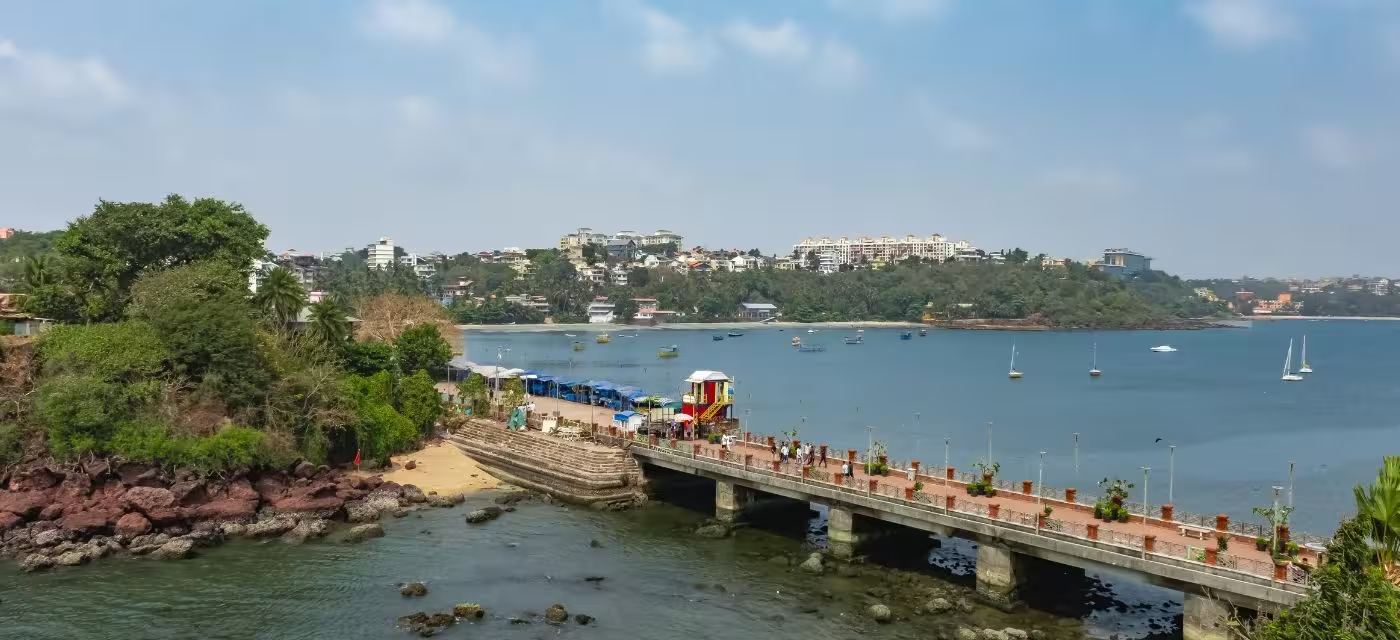
To discover a slice of Goa’s fascinating history and heritage, walk through Sao Tome, the oldest district in Panjim. Quaint and brimming with Latin heritage, the area is filled with charming bungalows, churches, houses, and cafés.
Take a quiet and pleasant walk through this historic part of Panjim before continuing through the colourful lanes of Fontainhas.
Fontainhas gets its name from the Phoenix Fountain, which once supplied water to the area.
Walk
Explore the narrow streets and admire the colourful Portuguese-influenced architecture, historic homes, and peaceful surroundings.
Finish your walk by stopping at one of the charming cafés for tea and snacks.
4. Mumbai: The Worli and Dadar Walks
Mumbai offers two particularly fascinating heritage walks that reveal very different sides of the city.
The Worli Walk
Walk through the busy and fascinating Worli fishing village, where the Koli fishing community continues to follow traditional ways of working and living.
Watch the fisherfolk set out to sea with their nets and boats, and wait for the morning’s catch as it comes in. Walk through the incredibly busy and noisy fish markets and experience a day in the lives of the hardworking Koli community.
Also visit Worli Fort, built by the British in 1675.
The Dadar Walk
Take an early-morning tree walk through the lovely, green Five Gardens in the neighbourhood of Dadar, also known as Dadar Parsi Colony, the largest Zoroastrian enclave in the world.
Learn about different tree species, their history and cultural associations, and listen to interesting anecdotes about Mumbai and its neighbourhoods.
5. Delhi: The Humayun’s Tomb and Old Delhi Walks
Delhi offers two remarkable heritage walks, taking visitors from Mughal architecture and landscaped gardens to the bustling lanes and markets of Old Delhi.
The Humayun’s Tomb Walk
Humayun was the second Mughal Emperor to rule parts of northern India from 1530–1540 and again from 1555–1556.
His tomb was built in 1570 and is unique because it was the first garden-tomb on the Indian subcontinent. Humayun’s Tomb is a UNESCO World Heritage Site.
Walk
Follow the beautiful tree-lined path towards the spectacular vision of Humayun’s Tomb set against the Delhi skyline.
Walk up its steep steps and around the monument. Then take a stroll through the green and elegantly laid-out garden complex surrounding the tomb.
On your way back, explore:
- Nai ka Gumbad (Barber’s Tomb)
- Isa Khan’s Tomb
- Nila Gumbad
The walk offers a fascinating combination of Mughal architecture, history, gardens, and Delhi’s urban landscape.
The Old Delhi Walk
In 1638, when Emperor Shah Jahan shifted his capital from Agra to Delhi, the Chandni Chowk bazaar came into being.
Many generations later, families continue to work in the same businesses, having built reputations for themselves over the years.
Today, Chandni Chowk is perhaps Delhi’s busiest market area. Its narrow, crowded lanes are filled with jewellery shops, silversmiths, repair shops, specialist clothiers, shoe shops, street food, spice markets, traditional sweet shops, and much more.
It is a fascinating place where Delhi’s rich and diverse social and cultural heritage comes together.
Walk
Begin with Dariba Kalan, the famous silver market. Then continue to:
- Kinari Bazaar – known for wedding trousseaus
- Paranthewali Gali – famous for its varieties of paranthas
- Gurdwara Sis Ganj Sahib
- Jama Masjid
- Historic temples and churches in the surrounding lanes
The Old Delhi walk is an immersive experience of the city’s history, architecture, markets, food, faiths, and everyday life.
Related Posts