 English
 Deutsch
 Italia
 August 19, 2026 By admin
The Land Before Time Andaman Nicobar
The Land Before Time
“Perhaps…the smallest race upon this earth…fierce, morose, intractable.”
— Sir Arthur Conan Doyle, describing the inhabitants of the Andaman Islands
The Andaman Islands: A Land Before Time
In 1890, Sir Arthur Conan Doyle described the inhabitants of an island in these words. Doyle was referring to the natives of the Andaman Islands, which also feature significantly in his story The Sign of Four.
The islands lie on the historic trade route between Burma and India. They first appeared on Ptolemy’s 2nd-century map and were also recorded by the Chinese traveller I-Tsing in the 7th century CE.
For thousands of years, the islands were inhabited by Aboriginal tribes but remained largely unexplored. Their isolation and inaccessibility meant that adventurous seafarers who attempted to come ashore were often attacked, repelled, or killed.
The indigenous Andamanese people lived in relative isolation, largely cut off from the rest of the world. The islands were briefly used and controlled as naval bases by the Tamil Chola kings and later by the Marathas.
Significant outside contact came in the 18th century, when the islands were first colonised by the Danish and later by the British. The British eventually gained control of much of the archipelago and used the islands as a penal colony.
Political prisoners from different parts of India were sent here in large numbers following the completion of the Cellular Jail in 1906.
Today, the indigenous Andamanese communities, including the Onge, Jarawa, Sentinelese and Karen, as well as the Nicobarese and Shompen of the Nicobar Islands, continue to maintain distinct cultural identities. The islands are also home to communities with origins in Burma, Malaysia, Bangladesh, Guyana and Sri Lanka.
The Emerald Islands
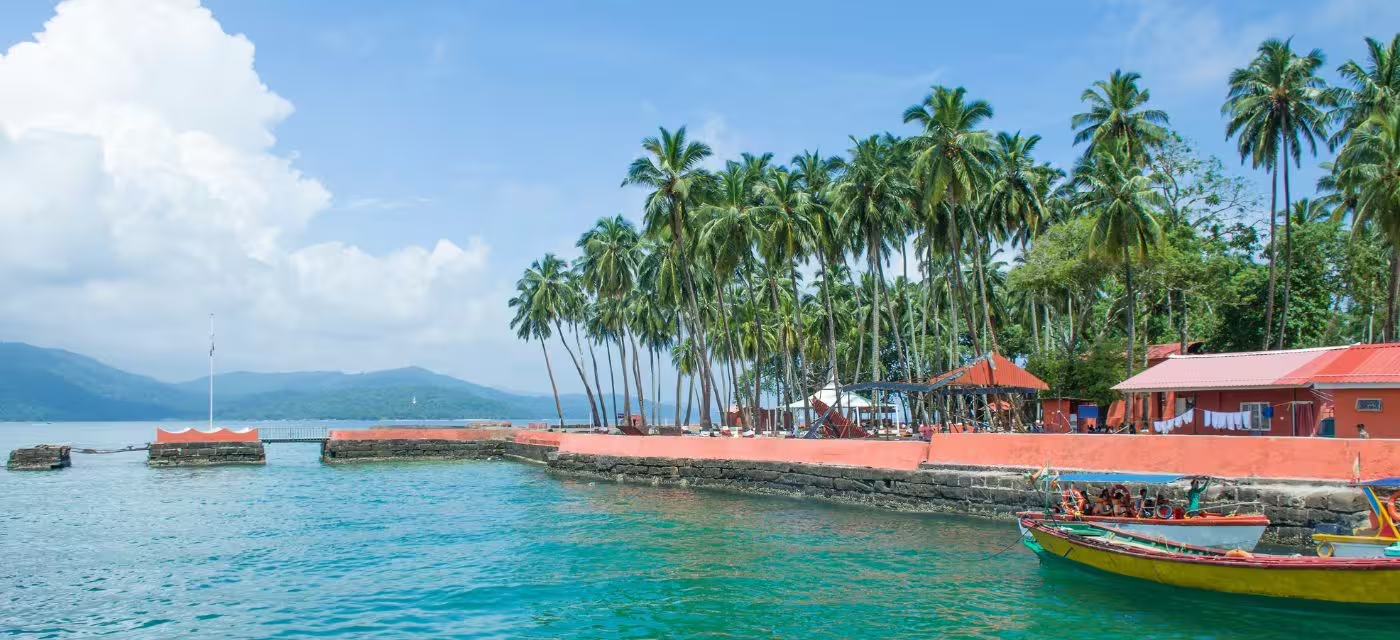
Seen from the air, the Andaman and Nicobar Islands are breathtaking. Spread across the Bay of Bengal, the archipelago appears as limitless expanses of aquamarine water broken by strips of emerald-green land.
The Andaman and Nicobar Islands consist of about 574 islands, of which only 34 are inhabited. They were formed by a submarine mountain range that separates the Bay of Bengal from the Andaman Sea.
The Andaman Islands are separated from the Nicobar Islands by a 150-km-wide strait.
The Nicobar Islands are strictly off limits to general tourism because of the protection afforded to their indigenous communities and heritage.
This remote chain of tropical islands is thickly forested, with rainforests, tropical trees, volcanoes, mangrove swamps, palm-fringed beaches, and spectacular coral reefs.
For travellers, the real magic lies beneath the sparkling, clear waters.
An Underwater Wonderland
If you love the water and want to explore the seabed, scuba diving is an unforgettable experience. You can also:
- Snorkel in the bays
- Swim in secluded coves
- Windsurf
- Water-ski
- Fish
- Explore the islands by boat and ferry
- Discover the coral reefs and marine life
For birdwatchers, trekkers and nature lovers, the islands are equally rewarding. Canopied rainforests provide opportunities to encounter a remarkable variety of birds, mammals, reptiles and plants.
Here are some of the finest holiday destinations across the islands.
South Andamans
Port Blair
The capital, Port Blair, is about 1,200 km from Chennai and Kolkata and is connected by regular flights from these cities as well as Delhi.
Port Blair serves both as the gateway to the Andaman Islands and as a reminder of the islands’ history as a British penal colony. It is a small town and can be explored comfortably over a couple of days.
Sights
Cellular Jail: The most striking landmark of Port Blair, the Cellular Jail was built by the British and was used until 1938 to incarcerate Indian freedom fighters. Three of its original seven wings survive. The complex also contains a museum displaying photographs and information about prisoners.
Chatham Saw Mill: One of the oldest sawmills in Asia. Visitors can tour the mill and explore the Forest Museum, which showcases unusual local varieties of wood.
Marine Museum: Features collections of shells and corals and displays around 350 species of marine life.
Zonal Anthropological Museum: Worth visiting for its photographs of early exploratory expeditions and handcrafted weapons and artefacts associated with indigenous communities.
Mount Harriet
Located about 55 km by road, or around 15 km by ferry and trek, from Port Blair, Mount Harriet was once the summer headquarters of the Chief Commissioner during British rule.
At 365 metres, it is the highest peak in the South Andamans.
Viper Island
Located near Haddo Wharf at the mouth of the harbour, Viper Island served as a prison base before the Cellular Jail was built.
Corbyn’s Cove
About 7 km south of Port Blair, Corbyn’s Cove is famous for its beach. Visitors should exercise caution around crocodiles.
Collinpur
About 35 km south of Port Blair, Collinpur has the nearest beach where visitors can swim. The beach is attractive, but caution around crocodiles is advised.
North Bay Beach
Located just north of Port Blair, North Bay offers opportunities for snorkelling among its coral reefs and can be reached by ferry from Aberdeen Jetty.
Cinque Island
Located about 26 km from Port Blair, Cinque Island is known for its tropical rainforest, rare corals and underwater marine life. A sandbar connects North and South Cinque Islands.
Ross Island
Just a 15-minute ferry ride from Port Blair, Ross Island was once home to the indigenous Great Andamanese.
It served as the capital from 1848 until 1941, when the Japanese took control and converted it into a prisoner-of-war base.
The ruins of the church, the British Chief Commissioner’s Residence covered in creepers and vines, and the Subalterns’ Club offer evocative glimpses of a bygone era.
Mahatma Gandhi Marine National Park
Located at Wandoor, about 29 km southwest of Port Blair, the Mahatma Gandhi Marine National Park was created in 1983 to protect coral beds and the tropical marine ecosystem.
Covering approximately 280 sq km, the park includes 15 uninhabited tropical islands covered with forests and mangroves.
Its marine environment supports a variety of fish, shells and colourful corals, while the islands are home to numerous birds and plants.
Only two islands are open to visitors—Jolly Buoy and Red Skin—alternately for six months each.
Tours begin at Wandoor with a ferry ride through mangroves and may include a glass-bottom boat ride over the coral reef, snorkelling and time on the beach.
Chidiya Tapu
The tranquil island of Chidiya Tapu lies about 30 km south of Port Blair and is approximately an hour away by road.
It is known for beautiful beaches, snorkelling, diving and glass-bottom boat rides. Forest trails offer excellent opportunities for birdwatching.
The island is particularly famous for its spectacular sunsets.
Baratang
Located between the South and Middle Andaman Islands, about 100 km north of Port Blair, Baratang is famous for its beaches, mangrove creeks, mud volcanoes and limestone caves.
The island also has the unusual Tota Tekri, or Parrot Island, an uninhabited islet surrounded by mangroves. Hundreds of parrots gather here around sunset to roost before leaving the following morning.
Baludera Beach is another attraction.
The Andaman Trunk Road to Rangat and Mayabunder passes through Baratang.
Middle and North Andamans
The Andaman Trunk Road is the principal road connecting Port Blair with the northern areas. It passes through the restricted Jarawa tribal reserve and connects with Rangat and Mayabunder.
The journey offers spectacular views of the forests and landscapes of the islands.
Rangat
Rangat is about 170 km by road and 90 km by sea from Port Blair.
About 8 km from Rangat is the eco-friendly Aamkunj Beach, which is suitable for snorkelling.
Other attractions include:
- Dhaninallah Mangrove Nature Walk
- Morcidera
Mayabunder
Situated on the northern edge of Middle Andaman Island, Mayabunder is surrounded by mangrove swamps and extends as a peninsula into the sea.
Karmatang Beach
About 13 km away, Karmatang is known for its black sand, gentle sea and soft beach.
Avis Beach
Avis Beach has a distinctive convex shape and extends into the sea. The surrounding coconut plantation, located on a small island, is particularly beautiful. Permission is required to visit the island.
Interview Island
For adventure seekers, Interview Island offers a more remote experience. About a three-hour doongi ride from Mayabunder, the uninhabited island is covered with dense jungle and mangrove creeks and is home to wild elephants.
Only day visits are permitted.
North Andamans
Diglipur
Formerly known as Port Cornwallis, Diglipur is the northernmost region open to tourists.
It is known for oranges, rice and quiet village life. The Kalpong River, the only river in the Andaman Islands, flows through the region.
Kalipur Beach
Located 22 km from Diglipur, Kalipur Beach is a serene, palm-lined beach with beautiful views of Ross Island.
It lies against the impressive backdrop of Saddle Peak, which rises to 730 metres and is the highest peak in the Andaman and Nicobar Islands.
The islands are also visited by Olive Ridley turtles during their nesting season in December and January. Kalipur has a turtle hatchery and offers the opportunity to witness this remarkable natural phenomenon.
Lamiya Bay Beach
A few kilometres beyond Kalipur lies the pebbled Lamiya Bay Beach, situated at the foothills of Saddle Peak.
Those planning to trek to Saddle Peak National Park should ideally begin early after camping at Lamiya Bay.
Ross and Smith Islands
The Ross and Smith Islands are two tiny, circular islands connected by a natural silvery-white sandbar.
During high tide, the sandbar disappears beneath the water, while at low tide it reappears, creating a remarkable dumbbell-like formation.
Evergreen tropical forests cover both islands, while the surrounding marine sanctuary makes them excellent for scuba diving and snorkelling.
The islands are also home to Olive Ridley turtles during the winter nesting season.
Nearby, the limestone Alfred Caves can be explored with a guide or forest guard. The cluster consists of 41 caves, and an early start is recommended so that visitors can return by evening.
Ritchie’s Archipelago
Located about 20–40 km off the east coast of South Andaman and Baratang, Ritchie’s Archipelago consists mainly of inhabited islands.
Three islands are open to foreign tourists:
- Havelock
- Neil
- Long Island
They can be reached by ferry from Port Blair and Rangat Bay.
Havelock Island
Located about 21 nautical miles northeast of Port Blair, Havelock Island is one of the most beautiful islands in the archipelago.
Its pristine beaches, paddy fields, banana plantations and coconut groves make it an ideal place to unwind.
Radhanagar Beach
A striking curved bay with a beautiful lagoon at its far end, Radhanagar is one of the island’s major attractions.
Elephant Beach
A narrow but spectacular beach accessible by ferry or a short jungle trek.
Other beaches include Vijaynagar Beach and Kalapather Beach, both excellent for long walks.
Havelock’s surrounding waters are rich in coral and marine life, making it a superb destination for diving.
Popular dive sites include:
- Seduction Point
- Aquarium
- Lighthouse
- Pilot Reef
- Mac Point
- Turtle Bay
- Minerva Ledge
Snorkelling is also excellent, particularly around Lighthouse near Elephant Beach and Aquarium, where shallow coral ecosystems can be explored.
Neil Island
Located about 19 nautical miles northeast of Port Blair, Neil Island is the smallest Andaman island where tourists are permitted to stay.
It is quieter than Havelock and covered with lush green forests.
Bharatpur Beach is ideal for swimming and coral-spotting.
At Sitapur Beach, visitors can watch the sunrise. The bay ends at limestone caves where the Andaman’s distinctive hawabill birds build their edible nests.
Laxmanpur Beach is known for a natural rock formation called the Howrah Bridge, best viewed during low tide.
Sir Hugh Rose Island, also known as Chhota Neil, is a wildlife sanctuary and turtle-nesting ground. Permission from the Forest Department is required, and only day visits are permitted.
Long Island
About 47 nautical miles from Port Blair, Long Island is a small and relatively unspoilt destination with silvery beaches, secluded coves, green hills, swamp forests, evergreen forests and rich marine life.
It is also a paradise for birdwatchers.
The main beach is Lalaji Bay, a pristine coconut-lined stretch reached by a two-hour forest trek or by boat.
The surrounding waters contain some of the Andamans’ finest dive sites.
Day trips can also be made by boat to Merk Bay on North Passage Island, where dolphins may be seen.
For the more adventurous, the Button Islands—North Button, South Button and Middle Button—offer further exploration.
Little Andaman Island
Home to the Onge, one of the last remaining Negrito tribes, Little Andaman Island lies about 120 km south of Port Blair across the Duncan Passage.
The island is covered extensively by betel, red oil palm and banana plantations.
Hut Bay is the entry and exit point and the island headquarters.
Butler Bay Beach
About 14 km from Hut Bay, Butler Bay has white coral sands and is particularly popular for surfing.
Little Andaman Lighthouse
Located about 14 km east of Hut Bay, the lighthouse rises 41 metres. Climbing its 200 steps offers spectacular views of the coastline and forests.
Waterfalls
Little Andaman is home to several beautiful waterfalls.
White Surf Waterfall lies about 6.5 km away in the rainforest and can be reached by following a path along a freshwater creek.
Whisper Wave Waterfall is about 25 km away and requires a 4-km trek through rainforest.
There are also additional waterfalls above Whisper Wave and around Krishna Tala.
Visitors can also go birdwatching around RK Pur Dam or visit the Red Oil Palm Plantation.
Perhaps Little Andaman’s most exciting claim to fame is its reputation as one of India’s finest surfing destinations.
Great Nicobar
Great Nicobar lies about 500 km south of Port Blair and is an extremely remote destination.
The journey can take around 40 hours by ship, while helicopter and ferry services are also available.
The only town is Campbell Bay, which has limited accommodation.
For those who make the journey, Great Nicobar offers glorious beaches, crystal-clear waters, lush rainforests and something increasingly rare: immense solitude.
At the southernmost edge of Great Nicobar stands the Indira Point Lighthouse.
Visitors should be aware of the presence of crocodiles.
A World of Adventure
Once primitive, remote and inaccessible, the Andaman Islands have developed into remarkable holiday destinations offering a vast range of experiences.
Adventure and Water Activities
- Water skiing
- Water scooter rides
- Speedboat rides
- Windsurfing
- Game fishing
- Forest and beach camping
- Snorkelling
- Scuba diving
- Sea walking
- Sailing
- Kayaking
- Trekking
- Birdwatching
- Mangrove creek safaris
- Elephant rides
- Beachcombing
- Sunbathing
- Swimming
- Sunrise and sunset experiences
A Resilient Paradise
On December 26, 2004, the tsunami that struck the Indian Ocean devastated the coasts of the Andaman and Nicobar Islands, killing and injuring thousands and destroying homes.
The subsequent journey of recovery, rehabilitation and restoration was neither easy nor quick.
Yet the islands have continued to stand with remarkable resilience—remote, pristine and rich in natural and cultural heritage.
Today, the Andaman Islands are among India’s most cherished holiday and adventure destinations, while efforts to protect their indigenous peoples, ancient heritage, natural landscapes and extraordinary marine ecosystems remain an essential part of their story.
These peaceful islands, rich with beauty and mystery, remain among India’s most treasured natural wonders.
Do visit.
Related Posts