 English
 Deutsch
 Italia
 August 18, 2026 By admin
Wajid Ali Shah’s Secret Awadhi Cuisine
Wajid Ali Shah’s Secret
In the heart of the north Indian state of Uttar Pradesh lies the region of Awadh, or Oudh as it is also called. Lucknow, the present capital of Uttar Pradesh, has always been the traditional capital of Awadh. The food and flavours distinctive to this region are essentially the heart of Awadhi cuisine.
The Royal Kitchens of Awadh
In Lucknow, the Nawabs and their Begums led rich, lavish lives and were great connoisseurs not only of the arts but also of food, savouring everything to the fullest. They simply loved their food—and very good food it was indeed!
Just as the royal city is symbolic of delicate chikankari embroidery, stunning jewellery, and lessons in tehzeeb (etiquette), it is also synonymous with Awadhi cuisine.
Wajid Ali Shah, the last Nawab of Oudh, was responsible for popularising the beloved cuisine of his ancestors. The rules and customs of the rustic kitchens of the Mughal emperors have stayed the same down the generations. Wajid Ali Shah made sure of that.
The royal chefs dedicatedly maintained the same standards of cooking and patiently followed the secret recipes to the core.
The cuisine is intricate and lavish, and its richness lies not just in the variety of dishes but also in the ingredients and elaborate techniques used to create them.
The Secret of Awadhi Cuisine
One might imagine hundreds of different spices being roasted or ground for Awadhi cooking, but this is not actually the case.
The beauty of the cuisine lies in its minimalistic choice of spices and flavours—just the perfect blend of unusual spices belonging to the region. These are used to create exquisite food that is bursting with flavour while remaining delicate and subtle in taste.
The secret behind Awadhi cuisine’s wonderfully aromatic and flavourful dishes lies in its cooking style.
Quite literally an art invented by bawarchis (chefs) and rakabdars (gourmet cooks) centuries ago, the dum pukht style of cooking, or cooking over a slow fire, remains a defining tradition of Awadhi cuisine.
It is a slow, steady, and constant process. The hard work and patience certainly pay off because they allow every ingredient to be absorbed completely, bringing out the most marvellous textures, fragrances, and flavours while retaining its important nutrients.
Awadh has been greatly influenced by Mughal cooking styles and techniques. Lucknow’s cuisine, both vegetarian and non-vegetarian, also shares similarities with the cuisines of Central Asia, Kashmir, Punjab, and Hyderabad.
The Royal Dastarkhwan
The royal feasts featured elaborate dishes such as:
- Kebabs
- Kormas
- Biryanis
- Kaliyas
- Nahari-kulchas
- Zarda
- Sheermal
- Roomali rotis
- Warqi parathas
Many of these dishes continue to be served today.
Dastarkhwan, derived from Persian, literally means a meticulously laid-out ceremonial dining spread. It was customary in Awadh to sit around and share the dastarkhwan.
Laden with the finest and most varied repertoire of the khansamas (chefs), the dastarkhwans of the raeis (the rich) were called Khasa, meaning special.
The Legendary Kebabs of Lucknow
Kebabs are integral to Awadhi cuisine, and Lucknow is rightfully proud of its very special kebabs.
Some of the finest include:
- Kakori Kebabs
- Galawat ke Kebabs
- Shami Kebabs
- Boti Kebabs
- Patili-ke-Kebabs
- Ghutwa Kebabs
- Seekh Kebabs
Awadhi cuisine also offers an impressive variety of vegetarian kebabs, including:
- Dalcha Kebab
- Kathal ke Kebab
- Arbi ke Kebab
- Rajma Galoti Kebab
- Zamikand ke Kebab
The Rajma Galoti Kebab is made with kidney beans and aromatic herbs, while the Zamikand ke Kebab is a Lucknowi yam kebab.
Made from minced meat, mostly lamb, many Awadhi kebabs are prepared as round patties filled with spicy blends and tangy kairi (raw green mango). This makes May, when mangoes are still young and raw, an especially interesting time to enjoy them.
Depending on the recipe, kebabs may be marinated, skewered over charcoal fires, baked in tandoors, or sautéed on griddles.
Tunde Ke Kebab
More than a century old, Tunde ke Kebab in Lucknow remains one of the most famous places for melt-in-the-mouth kebabs.
Legend has it that the kebabs were named after a one-armed chef. The unique recipe remains a closely guarded family secret.
The masala, or homemade spice blend, is prepared by women in the family and is said to incorporate as many as 160 spices.
Korma: The Royal Curry
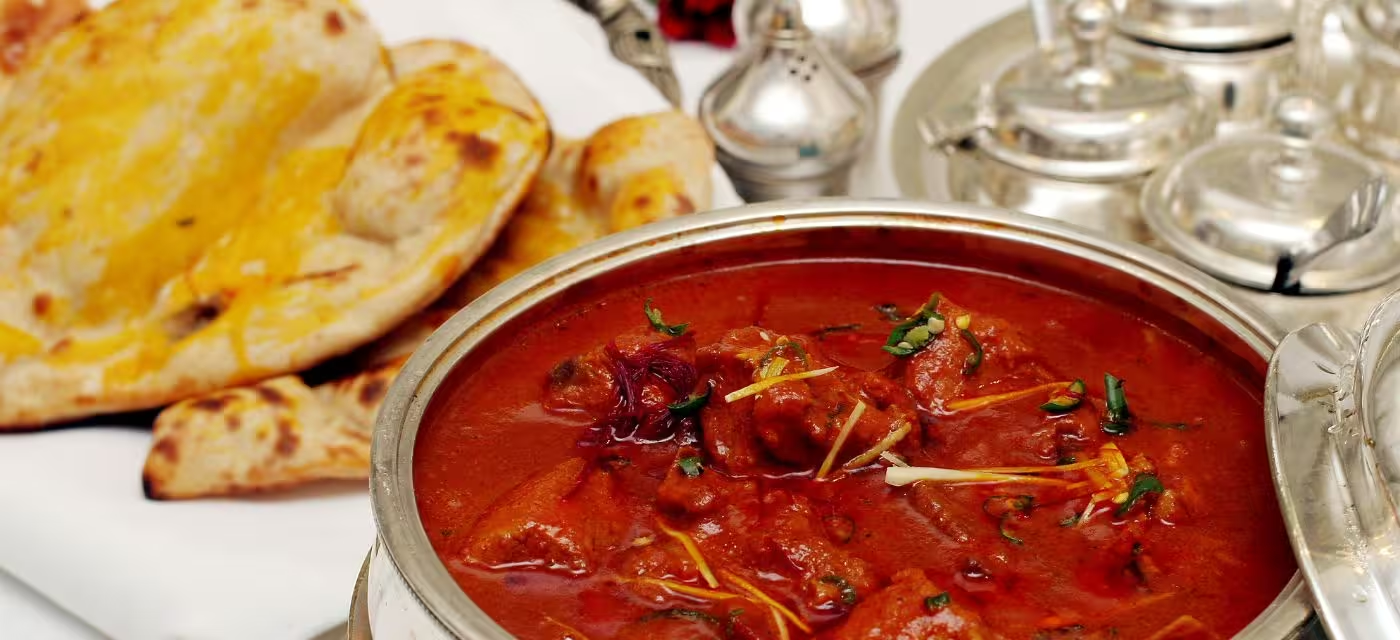
An essential part of the Awadhi dastarkhwan is korma.
Korma is actually the term used for the technique of braising meat. In Mughal cuisine, lamb or chicken was braised in velvety, spiced sauces textured with ground nuts, cream, and butter.
Essentially rich curries, kormas are generally mild and contain little or no chillies.
Awadhi cuisine includes both vegetarian navratan korma and non-vegetarian versions made with chicken, lamb, beef, or fish.
Pulao and Biryani
Pulao is a rice preparation made by cooking meat in ghee with warm, aromatic spices until the meat becomes tender. Rice is then slowly added and cooked in a sealed pot over low heat.
The beloved biryani, which apparently made its way from Persia via Afghanistan, is prepared by boiling or parboiling rice separately in spiced water. The rice is then layered with meat curry or marinade, depending on the style of biryani, before being sealed and cooked slowly.
The vegetarian version is known as tehri.
Both pulao and biryani are classic examples of Awadhi food prepared in the dum style.
The Breads of Awadh
Roti and other breads are an essential part of Awadhi cuisine, since wheat is the staple crop of the state.
Some of the best-known breads include:
- Roomali Roti – literally meaning “kerchief”, because of its extraordinary thinness
- Tandoori Roti
- Naan
- Kulcha
- Lachha Paratha
- Sheermal
- Baqarkhani
Sheermal and baqarkhani are made with flour, milk, sugar, and saffron, with one baked and the other cooked on a griddle.
The Halwas of Lucknow
Winter in Lucknow is the season for delicious halwa, the dense and sweet confection that has long been part of the region’s culinary tradition.
Over the years, halwas from Arabia and Persia made their way to India and became an established part of Indian cuisine.
Halwa can be made from cereals such as gram flour, semolina, and wheat, as well as nuts and even eggs.
Awadhi cuisine is particularly famous for:
- Papadi Halwa
- Jauzi Halwa
- Habshi Halwa
- Dudhiya Halwa
The Street Food Legacy
If you love the street food enjoyed throughout North India today, you have the cuisine of Uttar Pradesh to thank for much of that tradition.
Foods such as chaat and samosa became part of Awadhi cuisine and eventually household names across India.
The original chaat is a wonderfully tangy combination of potato pieces, gram or chickpeas, and aromatic spices. It is served with saunth, a sweet-and-sour chutney made with chillies, dried ginger, and tamarind, and garnished with fresh coriander leaves and yoghurt.
Other popular varieties include:
- Aloo Tikki
- Dahi Puri
- Golgappa
- Dahi Vada
- Papri Chaat
Each one delivers an explosion of flavours.
The Culinary Legacy of Awadh
The Mughals and the Nawabs of Oudh took food in Lucknow beyond simple eating and transformed it into a patient art—a complete lifestyle and a tradition mastered and perfected over generations.
Today, the culinary traditions of Awadhi cuisine tell the story of a beautiful, classic, and elegant era gone by.
They evoke the glorious royal evenings of Awadh.
From saffron, cardamom, nutmeg, cloves, and dried fruit in the exquisite royal banquets of emperors to the bustling corners and streets of Lucknow, the unique and marvellous legacy of Awadhi cuisine remains everywhere.
Related Posts