
 English
 Deutsch
 Italia
 August 27, 2026 By admin
Heritage Home in India
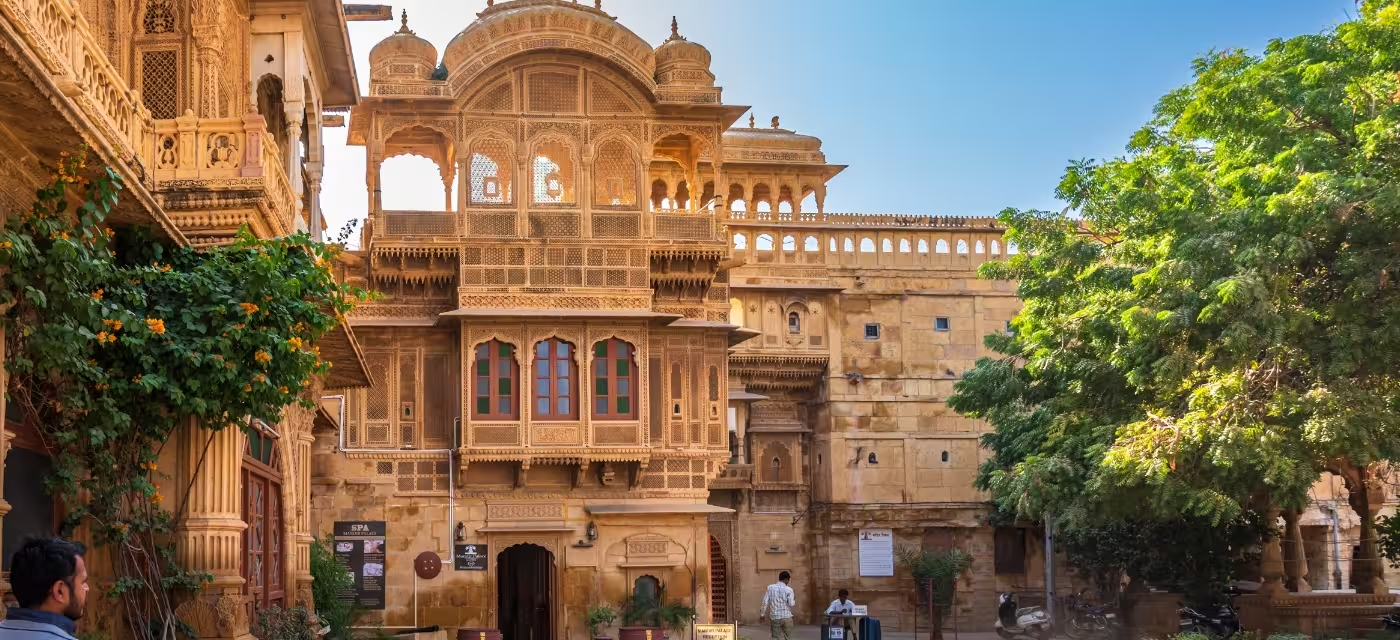
LIVING TREASURES: INDIA’S HERITAGE HOMES
The whole difference between construction and creation is exactly this: that a thing constructed can only be loved after it is constructed; but a thing created is loved before it exists.
– Charles Dickens
India’s incredible diversity can be seen in the rich cultural and architectural heritage of ancestral homes in every region. Their value and legacy aside, India’s splendid heritage homes are serene, glorious living spaces where the walls hide history and time seems to stand still.
Kerala’s stunning Nalukettu houses, the elegant colonial-era bungalows of Bengaluru, Chennai, and Mumbai, the sprawling colonial-era tea estates of Coonoor, Valparai, Darjeeling, and Assam, Kolkata’s rambling old villas, Chettinad’s palatial mansions, Goa’s colourful Portuguese-era casas, Rajasthan’s lavish fresco-embellished havelis, Old Delhi’s evocative havelis, Lucknow’s refined Nawabi havelis… all are quintessential examples of the country’s many homes that stand testament to, and offer glimpses of, a bygone era and way of life.
These homes tell the journeys of families who have not only stayed on for generations but have also restored them to their former glory with great love and labour. Evoking nostalgia and affording extraordinary visual experiences, these are homes that are magnificent and distinct.
More and more travellers to India are showing interest in staying on heritage properties – places that have stories to tell and offer intimate travel experiences and voyages of discovery in real India. Guests expect grandeur, history, and great architecture, but elements such as location, heritage, and the host living on the same property are equally significant. For they are key to deeper insights into local customs, culture, and food.
Tourists visiting the country, even seasoned India travellers, are unlikely to have heard of Murshidabad, a charming and atmospheric town in central West Bengal, some 200 km north of Kolkata, the capital city.
Murshidabad is a lost gem. Today, it stands as a near-forgotten story of the past.
Murshidabad was the last capital of Bengal before it came under British rule. It was made the capital in 1704 by Murshid Quli Khan, the Mughal governor of Bengal under Mughal Emperor Aurangzeb, and was named after him. Murshidabad is especially noted for its history, culture, architecture, food, silks, and as the home of several families of nobility and royalty.
The drive from Behrampore – another famous colonial cantonment town – takes around 25 minutes, with the River Bhagirathi to the left and lush rural landscapes all around. The narrow streets of the old imperial area of Lalbagh project a picture of rural idyll. The natural opulence of these parts is highlighted by lovely mango orchards and fields of crops interspersed with fruit-laden trees; west of the Bhagirathi are mulberry groves where some of the finest silk in India is still cultivated.
The Katra Masjid, Hazarduari Palace, Imambara Mosque, Motijheel, and the Kathgola Palace and Gardens are among Murshidabad’s finest attractions.
BARI KOTHI
Bari Kothi is a unique luxury boutique heritage hotel in Azimganj, Murshidabad.
The Bari Kothi, literally meaning the ‘Palace of the Elder’, was built in the late 1700s by the Dudhoria family of zamindars (landowners), who moved to Azimganj from Rajasthan in western India. The sprawling ancestral home is one of the most architecturally significant houses in the region – a remarkable amalgam of Greek, Roman, and French architectural styles.
The nearly 300-year-old mansion lies spread across three-fourths of an acre. Inside, you can explore the Sheesh Mahal (Hall of Mirrors), Music Room & Library, Durbar Hall (main hall/ballroom), Gaddi Ghar (work area), Strong Room (a unique locker room), Central Aangan (central courtyard), Clock Tower & Indaara (well) – each space showcasing fascinating design elements such as hand-painted tiles and stained-glass windows, uniquely carved Burma teak pillars, steel walls, signature marble floors, and much more.
Outside, you can sit on the steps of the scenic Bari Kothi Ghaat. It stretches almost 100 feet across the length of the River Ganges and is set against the backdrop of a beautifully earthy landscape.
For guests, a stay in Bari Kothi goes far beyond the comfort and pleasures of its luxurious Heritage Suites. The idea is to introduce guests to unforgettable local experiences and help them discover the lost heritage of Murshidabad. For lovers of art, architecture, food, culture, and exploratory travel, this is nothing short of perfect.
Guests can enjoy heritage walks, heritage tours of Azimganj’s historic temples and palaces, unique boat rides on the Ganges, visits to a weaver’s village and interactions with villagers, cultural programmes featuring the region’s traditional dance and music, and delicious Sheherwali fare of the resident community.
Bari Kothi also intends to involve the local community in its day-to-day operations, making tourism a meaningful social tool for the development and empowerment of village and local communities. This can provide additional income and better livelihoods while helping sustain the social and environmental equilibrium of the region.
Related Posts