 English
 Deutsch
 Italia
 August 27, 2026 By admin
Gaon Cuisine Portuguese Influence
A LATIN REPAST
Tiny Goa lies on the splendid Konkan Coast, bordered by the sparkling Arabian Sea on its west and flanked by the magnificent Western Ghats on its east. Forests, waterfalls, mangroves, and wildlife are the hidden natural riches of Goa’s rugged, mountainous interior. Such astounding natural beauty assembled together in such a short spit of land and such a wild exuberance for life…colour and calm and celebration – that’s Goa.
Centuries ago, the Portuguese were in search of a sea route to India. Portuguese navigator and explorer Vasco da Gama was the first European to reach India by sea on May 20, 1498, landing in Calicut (now Kozhikode) in Kerala. In 1510, Goa became one of the Portuguese holdings in India and was later the capital of the Portuguese Estado da India (State of India). 16th-century Goa was a magnificent Portuguese enclave – their province for over 450 years until it was annexed by India in 1961.
You can’t just eat good food. You’ve got to talk about it too. And you’ve got to talk about it to somebody who understands that kind of food.
– Kurt Vonnegut
Portuguese heritage still runs strong in this erstwhile Latin headquarters – especially in Fontainhas and Old Goa or Velha Goa – and is evident in the atmospheric colonial architecture of its elegant casas, crumbling forts, white-washed churches and chapels, and buildings in their traditional coats of pale yellow, ochre, green, or blue. In soulful fado music and rich Catholic ceremonies. Even today, many among the older Goans speak Portuguese.
The legacy of the Portuguese lives on beautifully in Goa’s unique food as well. Eclectic and continuously evolving, this is a cuisine that is piquant, sweet, hot, pungent, spice-rich, fresh, and multi-flavoured…all at once. You only have to taste it once to know why! All thanks to the Portuguese who introduced gastronomic treasures such as vinegar marinades, Piri-Piri chillies, potatoes, tomatoes, pineapples, cashew fruit, mangoes, fennel, guavas, and more when they landed on India’s coast.
In style and techniques, Goan cuisine is a distinctive amalgam of Portuguese, Indian, and even British influences. As Goa was a Portuguese colony for four centuries, Goan Catholic cuisine imaginatively absorbed local culinary influences and ingeniously adapted recipes by adding kokum (a sour/astringent fruit native to the western coastal regions of southern India), coriander leaves, green chillies, ginger, and garlic.
A traditional Goan meal would be incomplete without rice and fish curry. And we doff our hats to fresh fish, a serious fetish with Goans! Seafood, coconut, coconut milk, spices, cashew, and fruit are also Goan staples; and meat plays an important role, significantly beef, chicken, and pork. Classic Portuguese dishes such as chorizo (garlicky pork sausage), caldo verde (a chicken and spinach soup flavoured with black pepper and ginger), pork pie, pork assad (pan-roasted meat), pork sausages, and sopa de camarao (shrimp soup) are lifted by aromatic spices.
Hotter and spicier dishes include favourites such as vindaloo (the Portuguese word vindalho originates from vin (wine) and alho (garlic); vindaloo is a sweet-sour fiery pork curry made with coconut, vinegar, sugar, spices, and red chillies), sorpotel (a savoury pork stew flavoured with spices, vinegar, ginger, onions, garlic, and red chillies), and chicken xacuti (chicken pieces sautéed in a paste of roasted coconut, spices, poppy seeds, peanuts, ginger, garlic, and onions, simmered in water; vinegar added finally).
All washed down with local cashew brew, feni.
Baking is a Goan specialty. And yet another Portuguese legacy that rules the Goan table. For it was the Portuguese who introduced oven-baked bread to India; in fact, it was the Portuguese Jesuit missionaries who taught bread baking to locals in the villages of Salcete in South Goa in the 16th century. Even today, poders – as bakers skilled in bread-making are known locally – operate out of holes in the walls with traditional coal- or wood-fired ovens.
Since the bread needed toddy for fermentation, the locals also learnt the art of distilling alcohol from the Portuguese. Traditional village bakeries make up to five varieties of bread: the pao, undo, poee or polie, katricho pao, and kankon.
Slow cooking and freshness of spices are key to Goan cuisine; and whole spices are best when freshly ground. Because it is dishes such as these that are redolent of the real flavours of Goa.
Here are some recipes of classic favourites for you to try:
BACALHAU À BRÁS
Preparation time: 20 minutes
Cooking time: 20 minutes
Serves: 4
Ingredients
- Salt cod – 400 gm
- Potato – 500 gm
- Onion – 1 large
- Garlic head – 1
- Eggs – 6
- Pepper – to taste
- Parsley – to taste
- Oil – to taste
- Salt – to taste
- Black olives – to taste
Method
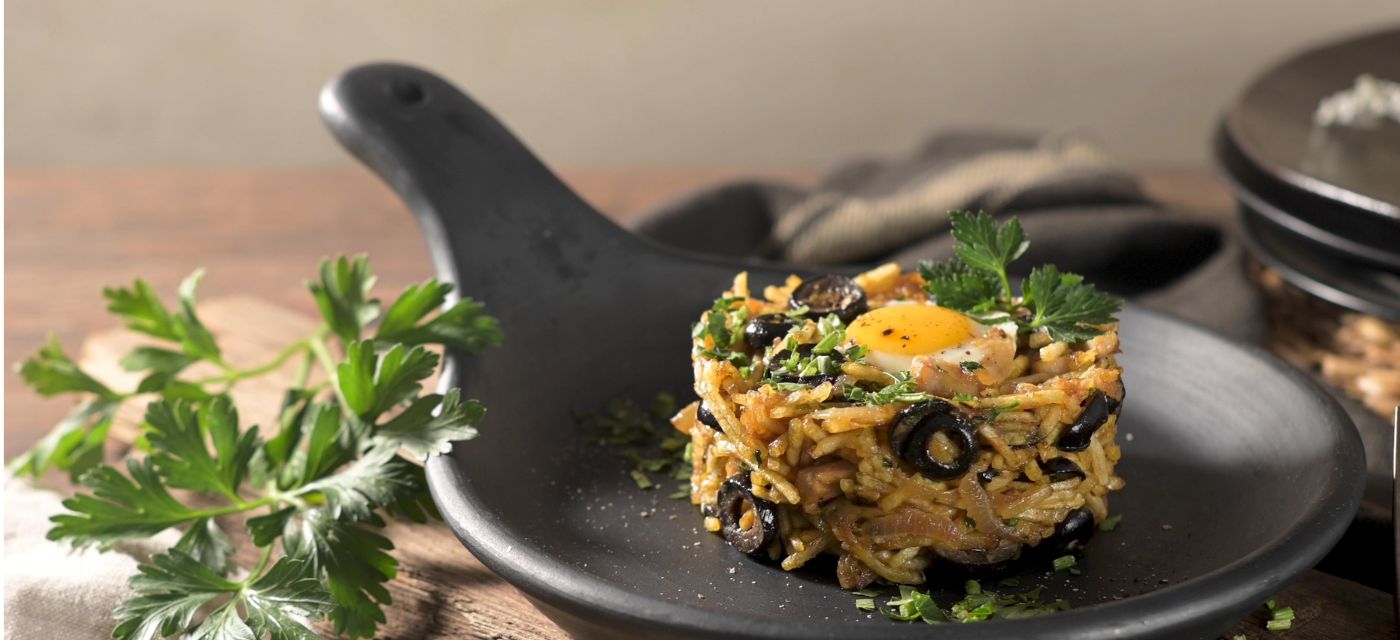
To prepare the Portuguese Bacalhau à Brás recipe, start with soaked salt cod. Remove the skin and bones and break it apart with your hands. Meanwhile, chop the potatoes into matchsticks and the onion into fine rings.
Fry the potatoes in a pan and set them aside, drying them on kitchen paper. At the same time, in a deep pan, sweat the onions and garlic until golden. Add the pieces of salt cod and cook for a few minutes until they soak up the oil.
At this stage, add the potatoes and stir while adding the lightly beaten eggs with salt and pepper. Stir for a few minutes, turning off the heat before the eggs solidify and become an omelette!
The Bacalhau à Brás has to be served hot, with parsley and black olives.
BALCHAO
Preparation: 20 minutes
Cooking: 60 minutes
Total: 80 minutes
Yield: Serves 4
What You’ll Need
- 2 pounds (1 kg) small to medium-sized prawns, cleaned and deveined
- 4 tablespoons vegetable, canola, or sunflower cooking oil
- 2 large onions, chopped fine
- 3 large tomatoes, chopped fine
- 2 tablespoons garlic paste or 7–10 garlic cloves, chopped
- 1 tablespoon ginger paste or a 1-inch piece of ginger, chopped
- 10–12 dried red chillies
- 1 tablespoon cumin seeds
- 1 tsp mustard seeds
- 2-inch stick of cinnamon
- 8–10 cloves
- 2 tablespoons sugar
- ½ cup vinegar
- Salt to taste
How to Make It
Clean and devein the prawns. Put the prawns in a large bowl and sprinkle salt over them. Set them aside.
Using a dry pan over medium heat, roast the dried red chillies, cumin seeds, mustard seeds, cloves, and cinnamon until they begin to release their aroma. Remove from the heat and cool.
Grind the ginger, garlic, and roasted spices into a smooth paste using the vinegar. You can do this with a small food processor or a mortar and pestle.
Heat the oil over a medium flame in a wok-style pan. Add the prawns and stir-fry until opaque. Remove from the pan and set aside.
In the same pan, fry the onions until light brown. Add the tomato and fry until soft.
Now add the spice-vinegar paste, sugar, and salt to taste and fry until the oil begins to separate from the masala.
Add the prawns to this masala, mix well, and cook for 2–3 minutes.
Serve with piping hot, plain boiled rice.
You can enjoy this prawn pickle immediately or refrigerate it to enjoy the next day as all the spices mingle and blossom. It can keep for a long time in the refrigerator, so if you can resist eating it all at once, you can enjoy it with meals for days to come.
You can adjust the amount of heat in this dish by varying the amount of red chillies, which is the only hot, spicy element. If you have a source of fresh curry leaves, add a few with the tomatoes to fry with the onions. They add a wonderful pungent element.
SERRADURA
EASY GOAN DESSERT
Recipe type: Dessert
Serves: 2–3
Ingredients
- Marie biscuits – 10–12
- Roasted cashew nuts/peanuts – a handful
- Whipped cream – ½ cup
- Vanilla essence – ½ tsp
- Powdered sugar – 2 tablespoons
- Condensed milk – 6 tablespoons
- Chocolate shavings/cherry – to garnish
Instructions
Roughly break the Marie biscuits and put them in a blender.
Add roasted nuts to the broken biscuit pieces and coarsely grind.
To make the fresh cream, keep the steel bowl, whisk of the hand mixer, and whipped cream in the freezer for 20 minutes.
Just before you begin, remove them from the freezer and pour the whipped cream into the cold bowl.
Start the hand mixer at medium speed first, then slowly increase the speed.
When the cream starts to increase in volume, add vanilla essence and powdered sugar and continue to whisk.
Continue to whisk until it almost doubles in volume and soft peaks are formed. Now the cream is ready.
Add condensed milk and gently fold the fresh cream into the condensed milk.
Take 2–3 small glasses and pour a good layer of biscuit-nut powder.
On top of this layer, pour a layer of the whipped cream and condensed milk mixture.
Repeat the above two steps until the glass is filled to the top.
Garnish with chocolate shavings and cherry and serve immediately or chilled.
PORTUGUESE FEIJOADA
Preparation: 20 minutes
Cook time: 4 hours
Total time: 4 hours 20 minutes
Serves: 8 people
Ingredients
- 2 pounds white beans or Canario yellow beans
- 1 ham hock or smoked turkey leg
- 2 pounds Linguiça sausage
- 2 pounds pork shoulder or chopped heart or shanks, cut into large chunks
- 1 pig’s trotter (optional)
- 2 large carrots, sliced into rounds
- 1 large onion, chopped
- 1 head garlic, peeled but otherwise whole
- 1 tablespoon hot sauce or chilli paste
- 1 tablespoon ground coriander seed
- 3 bay leaves
- ½ cup crushed tomatoes
- Black pepper and chopped parsley to garnish
- Salt
- 2 quarts pork broth or water
Instructions
Soak the beans for at least 8 hours. If you don’t have 8 hours, soak repeatedly in the hottest water you can get from the tap, replacing it when it cools. This second method should take about 3 hours.
In a large pot or Dutch oven, gently brown the pork shoulder in a tablespoon or two of olive oil. Do this in batches and don’t crowd the pot. While doing this, preheat the oven to 300°F.
Hack at the trotter with a cleaver or heavy chef’s knife to open it up in many places – this is to infuse the stew with collagen and fat.
When the pork shoulder has browned, remove it for the moment and add the onions. Cook until translucent. Add back the browned pork shoulder, the trotter, ham hock, coriander, bay leaves, and a healthy sprinkling of salt, then add the beans and mix everything together.
Cover by 1 inch with pork broth or water. Ideally, you are making this as an adjunct to making stock, such as when you have large pieces of a hog, like, say, a head. The feijoada will be better with pork broth, but don’t despair if you don’t have any. Use water or vegetable broth. Do not substitute beef or chicken broth.
Bring to a simmer and cover. Put in the oven for 90 minutes.
Remove from the oven and test the beans. If they are somewhat tender, you’re good. If they are still hard, return them to the oven for another 20 minutes.
If the beans are getting tender, add the carrots, garlic cloves, chilli paste, and tomatoes. Cover and return to the oven for 30 minutes.
Check to see how the carrots are doing. The beans should be tender by now. Once the carrots are soft but not falling apart, add the sausage.
Pull out the shanks and trotter, if using, and pull off all the meat and fat. Chop as coarsely as you like and put it back into the stew. Return to the oven for 10 minutes.
Remove and, still covered, leave the pot on top of the stove for up to 20 minutes, although you can serve immediately.
Slice the sausages into disks before serving. Ladle into bowls, garnish with chopped parsley and black pepper, and serve with crusty bread and a lusty Portuguese wine, such as Touriga Nacional.
Related Posts