 English
 Deutsch
 Italia
 August 27, 2026 By admin
Ardha kumbha Mela Allahabad
ARDHA KUMBHA MELA: A COSMIC FAIR OF FAITH, PILGRIMAGE, AND IMMORTALITY
January 15 – March 04, 2019
Allahabad, Uttar Pradesh
It is wonderful, the power of a faith like that, that can make multitudes upon multitudes of the old and weak and the young and frail enter without hesitation or complaint upon such incredible journeys and endure the resultant miseries without repining. It is done in love, or it is done in fear; I do not know which it is. No matter what the impulse is, the act born of it is beyond imagination, marvellous to our kind of people, the cold whites.
– Mark Twain in Following the Equator: A Journey Around the World
THE LEGEND
The gods and the demons churned the ocean in their quest for amrit – the celestial nectar – which was believed to bestow immortality on those who drank it. What emerged first from the churned waters was poison, which Lord Siva drank, then the 12 gems, and finally, the long-awaited pitcher of ‘eternal’ elixir.
A fight broke out between the gods and the demons for possession of the precious pitcher (Kumbha). It was during the course of this tug of war that drops of the immortal nectar fell at four places – Ujjain in Madhya Pradesh, Haridwar in Uttarakhand, Trimbakeshwar near Nashik in Maharashtra, and Allahabad in Uttar Pradesh – sanctifying them forever.
Ujjain, Haridwar, Trimbakeshwar, and Allahabad thus became sites of great pilgrimage, and the Kumbha Mela (the festival of the sacred pitcher) is celebrated by turn in each of these four places over a course of twelve years.
The four pilgrimage sites lie on four sacred rivers:
- Haridwar on the Ganges in Uttarakhand
- Ujjain on the Shipra in Madhya Pradesh
- Trimbakeshwar/Nashik on the Godavari in Maharashtra
- Allahabad at the confluence of the Ganges, the Yamuna, and the mythical Saraswati in Uttar Pradesh
Allahabad and Haridwar also host an Ardha (half) Kumbha every six years.
The Kumbha is held when Jupiter, the Sun, and the Moon are aligned in a distinct astrological position in the almanac – since all three celestial beings had a significant role to play in protecting the Kumbha from the demons during the fight. The celebrations occur at the exact moment that these positions are fully occupied, as it is considered to be the most auspicious time in Hinduism.
THE MELA
The Kumbha Mela is the largest public and religious gathering, and collective act of faith, anywhere on earth. It is a virtual mega township!
The larger-than-life event deploys its own roads, pontoon bridges, and tents that serve as residences and venues for spiritual assemblies; and social infrastructure such as food outlets, hospitals, sanitation outlets, and vaccination clinics – like an actual city.
The temporary settlement seamlessly serves the millions who throng here for 55 days, not to mention the additional millions who come for 24-hour cycles on the six main bathing dates.
The Kumbha Mela has been recognised by UNESCO as an Intangible Cultural Heritage.
Allahabad is the site of the Ardha Kumbha Mela to be held in 2019.
The Mela draws millions of devout believers over the course of approximately 55 auspicious days to bathe at the city’s fabled Triveni Sangam – the confluence of the three sacred Indian rivers, the Ganga, the Yamuna, and the mythical Saraswati.
It is believed that bathing in these holy waters cleanses the soul and accrues great spiritual merit.
The main bathing days are known as Shahi Snans, or Royal Bathing Days:
- January 15 – Makar Sankranti (first Shahi Snan)
- January 21 – Paush Purnima
- January 31 – Magh Ekadashi
- February 04 – Mauni Amavsya (second Shahi Snan)
- February 10 – Vasant Panchami (third Shahi Snan)
- February 12 – Rath Saptami
- February 19 – Magh Purnima
- March 04 – Maha Sivaratri
Sadhus (ascetics), pilgrims, and seekers of spirituality from all walks of life and from all over the country assemble at the Kumbha and take up residence here, not to mention the scores of tourists who come here to be part of this unique and spectacular experience.
But it is really the akharas (homes/sects of sadhus) – essentially specific groups of religious warriors, also famous for their inter-sect rivalries – who dominate the festival.
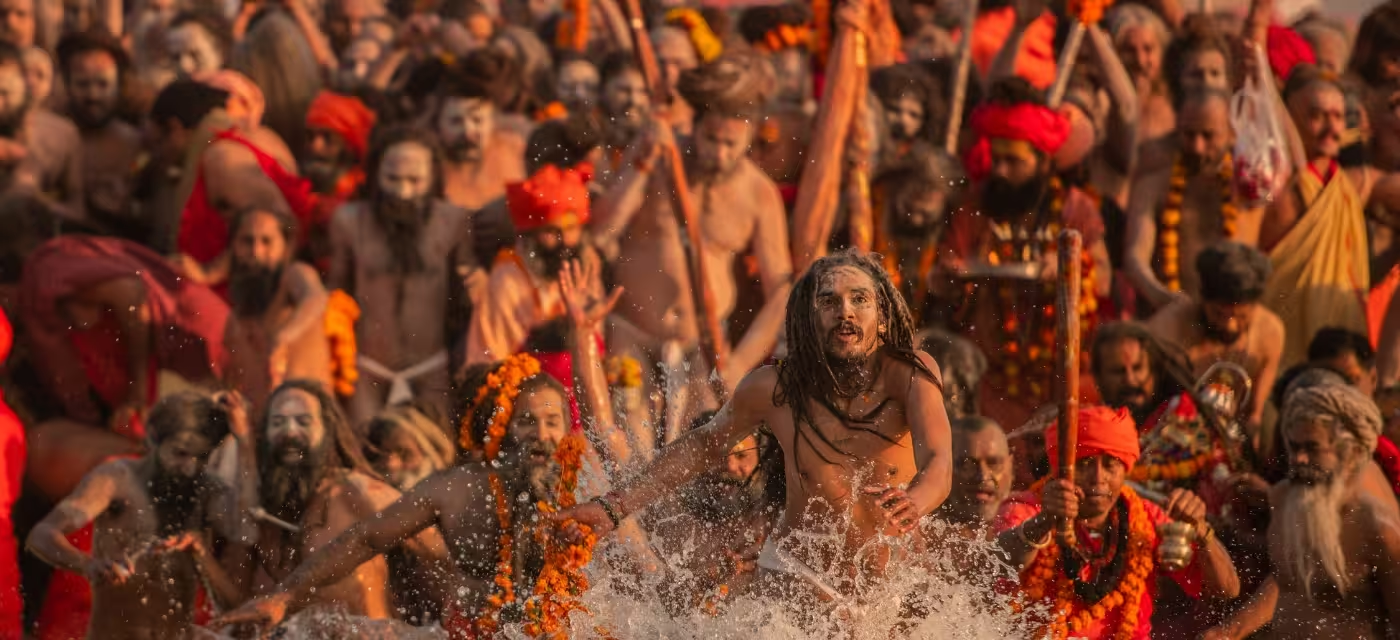
The most visible sect at the Kumbha, however, are the Naga Babas or sadhus. Synonymous with the Kumbha, the naked sadhus cover their bodies only with ash and wear their hair in dreadlocks.
The devout – entire families even – come and stay on the riverbanks for a month, leading a highly spartan and spiritually disciplined life. They bathe thrice, perform day-long pujas (acts of worship), and eat only once a day.
The atmosphere is deeply moving as the fragrance of incense and flowers engulfs you. Langars or community meals are organised to serve Prasad (blessed food offerings).
THE EXPERIENCE
Sadhus perform seemingly impossible tasks of endurance – those who have stood on one leg for decades; those who can stay under water for hours; who can read your mind; who stay buried in the sand upside down; who meditate whilst standing on their heads and sleep in an upright position by taking the support of a pole or wall; and yet others who are bound by the vow of maintaining eternal silence!
Ceaseless echoes of chanting and exultant shouts rend the air. Religious pictures, garlands of marigolds, heaps of dazzling red vermillion, rudraksha beads, saffron threads, amulets, sandalwood, incense, oil lamps, and all sorts of other wonderful bits and pieces engulf the senses.
Along the riverbank, a sea of humanity stands waist-deep, plunging in, hands lifted in prayer to the setting sun, blissfully oblivious to all else.
On the sands, crowds camp with their belongings as smoke swirls from cooking fires. The golden light of sunrise and later sunset shimmers on the water, boats with colourful awnings float past, flags flutter, sarees dry in the breeze.
Meet people from all over the world. Make new friends. Take a dip in holy waters. And eat! Because only in spiritual India can the best-tasting food be experienced. Take photographs. And make memories.
The Kumbha is about age-old rituals. But above all, it is about unwavering faith in the face of all odds, the instant sense of connection, and a feeling of human solidarity. And ultimately about shared experiences in a splendid natural setting.
Astounding, captivating, and incredibly humbling…the Kumbha has been uniting people for centuries, and will continue doing so for years to come. It takes its place amongst the greatest and most extraordinary journeys in the world.
Be there.
Related Posts