 English
 Deutsch
 Italia
 August 18, 2026 By admin
The Kingdom Between the Earth and the Sky
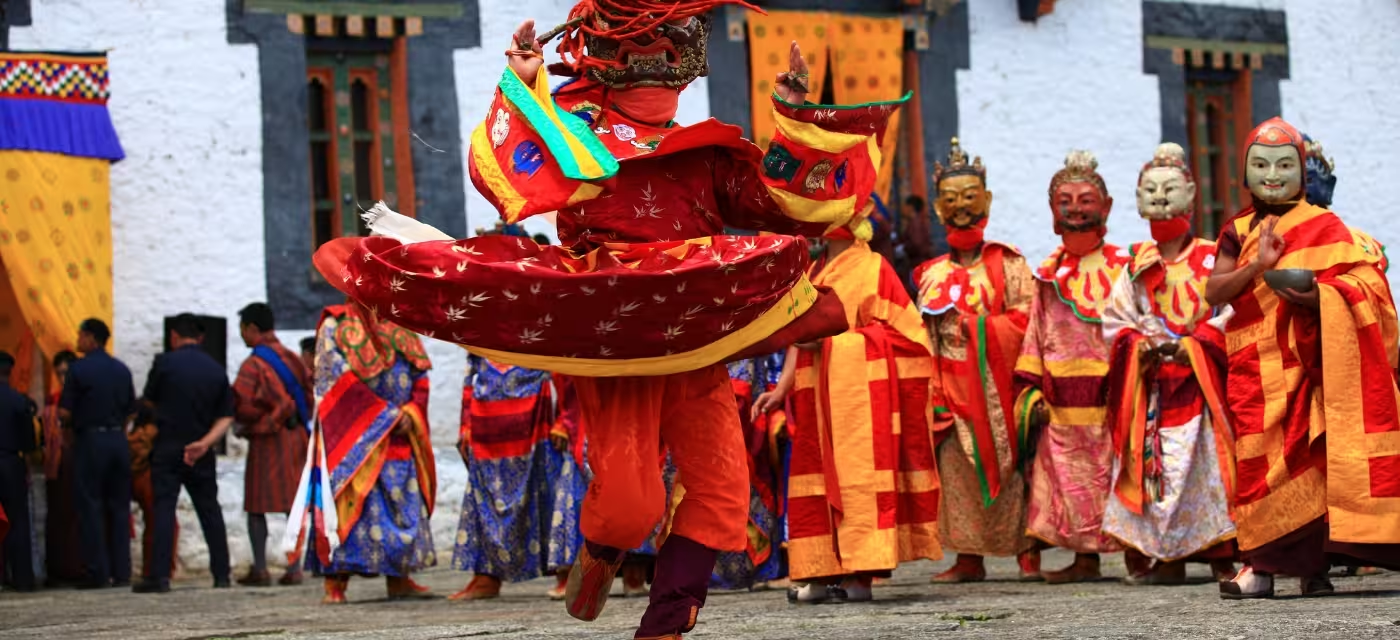
The Kingdom between the Earth and the Sky
“The world has few secrets left, but Bhutan is one of them. This is why I went there. Isolated from the outside for three centuries, this forbidden Kingdom in the Himalayas provides the setting for a bewitching adventure amongst widely varying peoples and terrain”. —Kartie Hickman, Author – Dreams of the PEACEFUL DRAGON, A Journey into Bhutan
Eastern Bhutan is one of the least explored regions of Bhutan, making it reason enough to discover and experience.
Nature and adventure loving travellers who visit this remote part of Bhutan that is off the beaten track, will be rewarded with wild, rugged, unspoilt beauty; dzongs (forts) and temples; gorgeous silk and embroidery work; towering cliffs, pristine emerald forests; and a terrain with great variations in altitude and climate, giving them an array of destinations to choose from.
The region is a perfect location for day hikes or longer treks.
Accommodation in this rustic part of the country could perhaps be a little spartan but, the experiences of camping out beneath the stars or the genuine warmth and hospitality of the locals at a homestay are moments you will always remember.
Eastern Bhutan is still nascent, but is slowly being promoted and opened up to tourism.
Efforts are being made to develop new hotels and trekking routes, and the east–west highway widened.
The Eastern circuit includes the districts of Mongar, Lhuntse, Trashiyangtse, Trashigang and Samdrup Jongkhar.
TRASHIGANG
Spanning the easternmost corners of the kingdom, Trashigang goes up all the way to the edge of the state of Arunachal Pradesh in India.
It is Bhutan’s largest district.
Bhutan’s largest river, the Dangmechu, flows through Trashigang.
The town sits on a picturesque hillside and was once a major hub for trade with Tibet.
Today, Trashigang is the junction of the East-West highway, with road connections to Samdrup Jongkhar, and also into Assam in India.
TRASHIYANGTSE
Brimming with sub-tropical and alpine forests, Trashiyangtse, is a treasure trove of natural, historical, and cultural resources, making it one of the most memorable destinations in Bhutan to visit.
A short drive from Trashigang is Chorten Kora, where local residents and the Dakpa people from Arunachal Pradesh gather in February/March for a festival that involves circumnavigating the chorten.
Bumdeling to the north is home to the black-necked cranes of the winter, and to Ludlow’s Bhutan Glory, the iconic butterfly of Bhutan.
Trashiyangtse’s people include the Yangtseps, the regions indigenous dwellers; Tshanglas, Bramis from Tawang in Arunachal Pradesh; Khengpas from Zhemgang; and Kurtoeps from Lhuentse.
This rich cultural and ethnic diversity has resulted in an interesting mix of languages and cultural practices in the region.
The people here are incredibly skilled at woodwork and paper making, and their traditional crafts are prized throughout the country.
To promote greater artisanship and traditional skills, an Institute for 13 Arts and Crafts (Zorig Chusum) has been established here.
North of Trashiyangtse is the Bomdeling Wildlife Sanctuary.
It has one of the richest temperate fir forests in the eastern Himalayas and is home to the blacknecked cranes, bar-headed geese, tigers, snow-leopards, red pandas, barking deer, Himalayan Black bears, and capped langurs, among other wildlife.
MONGAR
The road to Mongar is quite spectacular.
It passes over sheer cliffs and through beautiful fir forests and green pastures.
On the way lies the interesting Rhododendron Garden, with innumerable varieties of rhododendrons.
If you’re passing this way on a clear day, you may even manage to catch a glimpse of Gangkhar Puensum, the world’s highest unscaled mountain.
One of the six districts that make up Eastern Bhutan, Mongar borders Bumthang, Lhuentse, Pema Gatshel and Trashigang.
The landscape here is a marvellous mix of stark cliffs and deep gorges set amidst dense conifer forests.
Mongar is renowned for its weavers and textiles.
Some of the finest fabrics produced in the country come from here.
Mongar town sits atop a hill.
The town is considered an important trade and travel centre in Eastern Bhutan and works as a stopover for travellers passing through.
The main street is lined with traditionally painted stone buildings with wooden facades and verandas.
LHUNTSE
The ancient region of Kurtoe or Lhuntse lies in the north-eastern corner of Bhutan.
It is the ancestral home of Bhutan’s kings and is home to many sacred pilgrimage sites in the country.
Lhuntse is around 77 km from Mongar, and is one of the most remote districts in Bhutan.
The landscape sees stark cliffs towering above river gorges and dense coniferous forests.
Lhuntse is also famous for its weavers, and their distinctive textiles.
Kurtoep women are especially adept at weaving a textile called Kishuthara.
SAMDRUP JONGKHAR
Samdrup Jongkhar lies in the South Eastern region of Bhutan and borders the state of Assam in India.
It is the largest urban centre in Eastern Bhutan.
It also has the distinction of being the oldest town in Bhutan and is said to be the ‘gateway to Eastern Bhutan’.
The border town is a crowded, bustling little settlement of shopkeepers and hawkers, and is often used as the entry point for business persons and tourists entering Eastern Bhutan overland.
Today the road from Trashigang to Samdrup Jongkhar connects the eastern and southern regions of the country, allowing them to benefit from trade, especially from across the Indian border.
PEMAGATSHEL DZONGKHAG
Pemagatshel is in South Eastern Bhutan and over half of its landscape is covered by broadleaf and coniferous forests; the rest is mostly farmland.
Pemagatshel is famous for its artisans and weavers.
Religious musical instruments like Jalings (oboe-like instruments) and Dhungs (long ritual trumpets) are made here, and are highly prized and sold throughout the country.
The weavers of Pemagatshel produce fine Kiras (traditional dress worn by women) from Bura (raw silk).
The region is also famous for Tsatsi Buram, a local sweet made from sugarcane that grows in the district.
Related Posts