 English
 Deutsch
 Italia
 August 27, 2026 By admin
Sweet Celebration Desserts from Festive India
Sweet Celebration
All you need is love. But a little chocolate now and then doesn’t hurt.
— Charles M. Schulz
Desserts From Festive India
Festivals are incomplete without good food and sweet delights that simply enhance the festive spirit of sharing, giving, love, family, and friendship.
Ganesh Chaturthi
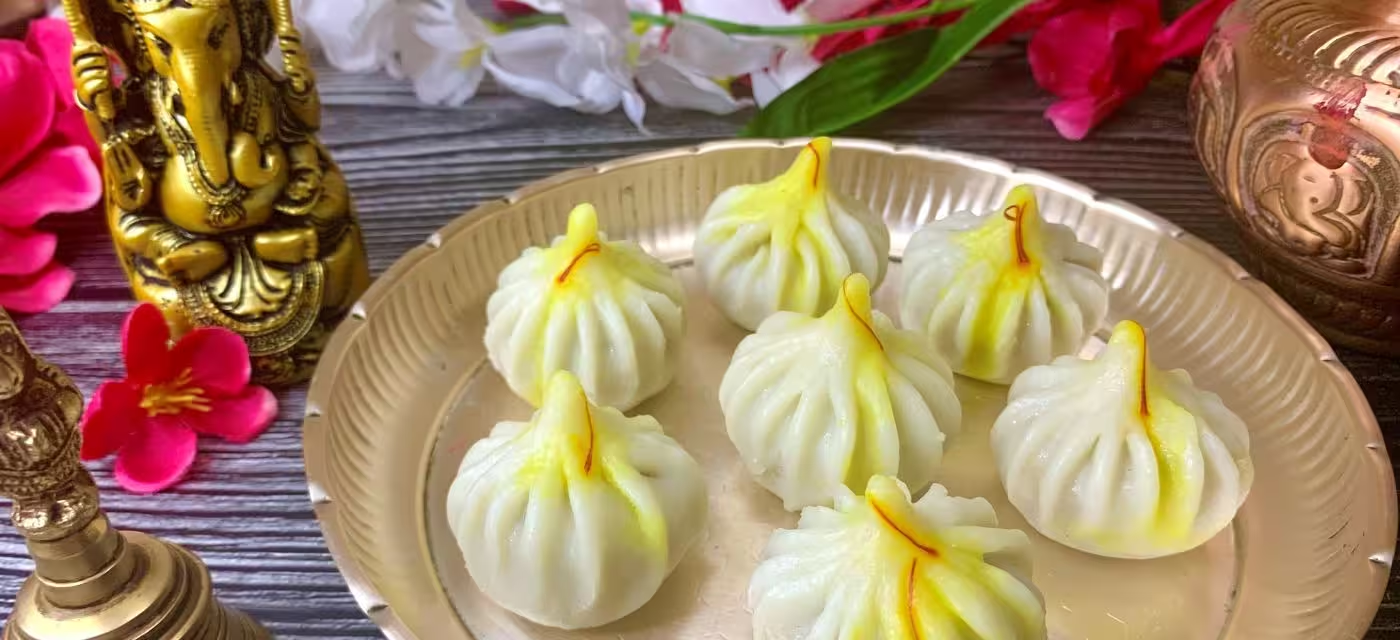
Modak is the signature sweet delicacy offered to Lord Ganesha during the magnificent Ganesh Chaturthi festival. The modak is a steamed or fried sweet dumpling stuffed with jaggery, rice flour, and coconut.
While the Marathi and Konkani name is modak, it’s also called modakam or kudumu in Telugu, modaka or kadubu in Kannada, kozhakatta or modakkam in Malayalam, and kozhukattai or modagam in Tamil.
Karanji, known as karjikai in Kannada, is another popular sweet dish. It is quite similar to the modak in terms of composition and taste, but has a semicircular shape. Called Nevri in Goa, it is synonymous with Ganesh Chaturthi amongst the Goans and the Konkani-speaking diaspora.
In Andhra Pradesh and Telangana, other sweets such as laddoo (a sphere-shaped sweet made of flour or semolina, fat such as ghee, butter or oil, and sugar, with other ingredients that vary by recipe, such as chopped nuts or dried raisins), panakam (a cooling summer drink made with lemon juice, jaggery, ginger powder, cardamom powder, and black pepper, and garnished with Holy Basil leaves), Mysore Paak (a hard fudge-like sweet known to have originated in the beautiful Mysore Palace; it is made with gram flour, ghee, and sugar), and Badaam Halwa (a dense, sweet confection made from blanched and peeled almonds, milk, sugar, and ghee, and flavoured with saffron and cardamom powder) are other sublime treats.
Holi
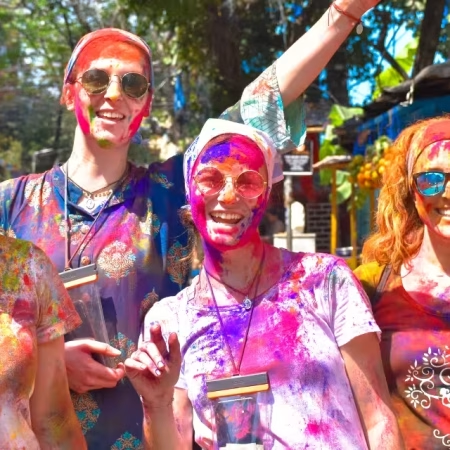
Holi, the vibrant ‘festival of colours’, is that time of the year when the kitchen comes alive with the aroma of good food throughout the week, as preparations for the festival begin well in advance.
The tradition of preparing family dishes on Holi is also a means to show off culinary skills! Sweet delicacies play a very important role in Holi. The traditional ‘muh meetha’ (Hindi) means no one will allow you to leave without treating you with sweets, which are said to bring happiness and good fortune.
Here’s a sample:
Shakarpara or Shankarpalli
The diamond-cut Shakarpara or Shankarpalli are bite-sized Indian-style cookies made with all-purpose flour, water, and sugar syrup. Crisp yet melt-in-the-mouth, and extremely addictive!
Rasmalai
Fattened puffed discs of paneer (cottage cheese) are made by curdling milk with lemon juice, then boiled in sugar syrup, and finally rested in creamy, rich rabri (thickened milk). Voila! You have the mouth-watering Rasmalai.
It is served both warm and chilled. Saffron and pistachios add great flavour to the garnish.
Malpua
The soft, velvety, syrupy Malpua is made with mawa or khoya (dried evaporated milk solids), sugar syrup, and flour, and is one of the finest Indian sweet delicacies.
Other variations of this wonderful sweet pancake can be achieved by adding saffron, dried fruit, fruit, coconut, condensed milk, or fresh cream.
Gujiya
Gujiya is a crisp, flaky flour pastry filled with sweet khoya and dried fruit stuffing.
Kheer
Kheer is India’s traditional rice pudding that is integral to all festivals and celebrations, and hence considered an auspicious dish.
Kheer is prepared by boiling milk and sugar with rice, and flavoured with cardamom, raisins, saffron, cashews, pistachios, almonds, or other dried fruit and nuts.
Christmas
Christmas, like most other festivals celebrated in India, is considered incomplete without tables laden with sumptuous food. People ‘spread the love’ with their neighbours by exchanging platters of sweets such as shakkarpara and other preparations. Many of the recipes have been passed down for generations.
Gujiya or Nuereos with Coconut Filling
These fluffy, crunchy pastry shells are filled with a sweet concoction of coconut. Traditionally, in Goa, these are filled with khoya, and dried fruit and nuts.
Kulkuls (Sweet Curls)
Kulkuls, bits of sweet dough moulded or shaped into small curls that look like butter curls or shells, are made all over India at Christmas time. But it is believed that the tradition first began in Goa as a variation of the Portuguese filhoses enroladas.
Making kulkuls – prepared with all-purpose flour, semolina, egg, fresh coconut milk, salt, and powdered sugar – is akin to a holiday project for the entire family.
Enormous batches are fried and included as part of a gift of sweets to friends and neighbours. Families sit around for hours, painstakingly rolling them out before frying and coating them with sugar.
Nowadays, there are even plastic, wooden, or rubber kulkul rollers available in stores!
Coconut Barfi (Coconut Fudge)
This is a must-have, especially for coconut and cardamom aficionados. The milk-based treat is sweet, fudgy, and absolutely lip-smacking. Besides Christmas, it is often made during Diwali too.
Marzipan Shapes
Marzipan, a smooth nut paste made with almond meal, sugar or honey, and egg whites, is often coloured with edible food dye and formed into all sorts of shapes such as fruits, flowers, stars, etc., as a traditional treat for New Year’s Day or Christmas. It is even used to make Easter eggs.
Diwali
Diwali or Deepavali, the spectacular ‘festival of lights’, brings family and friends together in prayer, celebration, firework festivities, and mouth-watering feasts that are made even more special with sweet delicacies such as:
- Kaju Katli – cashew fudge made with powdered cashew and sugar syrup, sometimes flavoured with rose petals or saffron strands.
- Besan Laddoo – made from gram flour and powdered sugar.
Eid al-Fitr
Eid al-Fitr is celebrated with great faith and joy in India. While it is a Muslim festival, people from other communities often join the festivities.
Lachcha or Sivayyan
A special celebratory dish is Lachcha or Sivayyan – a dish of fine, toasted sweet vermicelli noodles with milk and dried fruit.
Also often described as Sheer Khurma, this wholesome sweet milk pudding has vermicelli topped with chunky nuts and raisins.
Just like Sheer Khurma, the star ingredients of Kimami Sewaiyan are vermicelli and milk, but this one is slightly thicker. Lotus seeds, almond, coconut, cashews, and raisins are also added to the luscious mix of milk, khoya, sugar, and vermicelli.
Sheermal
Sheermal is a type of slightly sweet and chewy flatbread, made with sugar, saffron-enhanced milk, and other flavourful ingredients. Sheermal was a favourite of the Mughals and is usually accompanied by meat dishes.
Phirni
Phirni is thickened milk pudding with ground rice; the fragrant treat is garnished with lots of nuts and dried fruit such as raisins.
Shaahi Tukra
Milk, breads, nuts, ghee (clarified butter), sugar, and thick cream – that is all that goes into the absolutely simple-to-make yet delectable dessert called Shaahi Tukra.
Baisakhi
Phirni, the creamy concoction of rice, khoya (dried evaporated milk solids), and nuts, is extensively served during the festival of Baisakhi. This traditional sweet dish has a fine aroma. Its rich and creamy texture makes it perfect as a post-dinner dessert.
While Gud ka Halwa is also a very popular Baisakhi sweet dish, it is especially relished in Punjab. The dish is eaten as a dessert but is like a meal in itself – made with liberal amounts of ghee and jaggery.
Meethi Lassi
Meethi Lassi is a sweet homemade cold drink with excellent health benefits. One of the most popular versions is dry-fruit lassi.
No Baisakhi party is complete without gallons of Meethi Lassi for guests.
Parsi Festive Sweets
When it is time to celebrate, within Parsi homes everywhere, kitchens are lit up by the warm and comforting flavours of delicious desserts, to sweeten mouths and gladden hearts. Here are a few of those beloved Parsi sweet treats.
Ravo
Ravo is a wonderful traditional Parsi sweet dish that every Parsi knows and loves because of its association with happy occasions, festivals, and celebrations.
The creamy, porridge-like dish is prepared from fine semolina, milk, sugar, ghee, and powdered spices such as nutmeg and cardamom, and finally garnished with fried dried fruit.
Ravo is a Parsi staple, made virtually in every Parsi home on Navroz (the Parsi New Year), birthdays, Navjotes (ritual ceremony in which one is inducted into the Zoroastrian religion and begins to wear the sacred thread and shirt), weddings, anniversaries, Jashans (celebration of an event with prayer), and many other happy occasions.
Every Parsi household will also have its own version of Ravo, and depending on what the occasion is, this is a dessert that you can flourish with flair or keep subtle and simple really easily.
For instance, you can reduce the sugar and skip the dried fruit if you’d like to eat it just as a normal breakfast dish, which it actually is, or you could add generous sprinkles of raisins, cashews, pistachios, almonds, charoli (almond-flavoured seeds), and even some saffron or rose petals for those very special occasions!
Sev
Sev, a nutty vermicelli dessert, is a staple on festive occasions and is often served with yoghurt.
The sev (fine vermicelli) is roasted golden in ghee, then cooked in a syrup of sugar, cardamom powder, and nutmeg till it turns soft but not soggy.
Finally, it is garnished with raisins, charoli, sliced almonds, and a sprinkle of rosewater.
Mawa ni Boi
The fish is an ancient symbol of fertility, abundance, and regeneration, and not a single celebration in the Parsi home is complete without fish, served in some way on the menu.
The Mawa ni Boi is mawa (khoya) fashioned into the shape of the boi fish.
Malido
You are unlikely to come across Malido outside of a Parsi fire temple or home.
Malido is the result of grains, nuts, dried fruit, and eggs. The risotto-like dish is a difficult, remarkable dish that calls for great stamina; it comes in handy, literally, with all that stirring – constant stirring!
This fudge-type dessert is usually offered at Jashans as a consecrated dish.
Jain Festive Sweets
The Jain community is known for its sattvik (pure) foods. In keeping with the supreme Jain principle of non-violence or ahimsa, typical Jain fare falls back on the spiritual and philosophical belief that does not condone killing any being, including even the minutest living entity.
Typically, Jains do not eat meat, fish, eggs, root vegetables, or animal ingredients. Some Jains even stay away from mushrooms, fungus, and yeasts.
But these unique food habits, instead of restricting them, have only inspired them to create a wonderful culinary culture of their own.
Fruits and sweet food items are traditionally served during the Jain festival of Mahavir Jayanti, with each food item being donated to the poor as well.
The food is generally plain and simple fare in keeping with the austerity of the occasion. Sacrifice and penance are the pivotal themes on Mahavir Jayanti, and the thought is to attain freedom from temptation even when it comes to food.
Gulab Phirni
Gulab Phirni is a subtle and fragrant rose-flavoured rice pudding.
The addition of dried rose petals, alongside strands of saffron and nuts such as pistachios and almonds, brings on a delightful flavour and depth, making this creamy, nutty dish quite irresistible.
Gulab Phirni is easy to make and looks beautiful when served in small earthen pots.
Kalakand
The hugely popular Kalakand is a delicious and rich milk fudge cake made from solidified, sweetened milk (khoya) and homemade cottage cheese (paneer).
Cardamom powder and a few drops of rosewater lend it its delicate flavours. A sprinkle of chopped nuts such as almonds or pistachios gives it just the right amount of bite.
Shrikhand
Shrikhand is a delightful and refreshing yoghurt pudding made with powdered sugar, nuts, and spices.
The addition of mango pulp or pureed mangoes, or any other fruit pulp, to this sweet-tangy dessert, especially on those hot summer afternoons, makes for another classic version.
The rich and creamy Shrikhand is versatile and can be topped with nuts, fruits such as pomegranate, sliced green grapes, chopped mangoes, and anything else you fancy; they enhance flavours and make the dish rich and festive.
Sabudana Kheer
Sabudana Kheer is a creamy pudding made with sabudana (tapioca pearls) simmered in a hot sweet milk reduction to which is added cardamom powder.
This much-loved dessert is served with a garnish of raisins and almond slivers roasted in ghee.
Badusha
A hot favourite, Badusha is a deep-fried sweet made using all-purpose flour, chilled fresh yoghurt, and ghee.
Batches of the golden doughnut-like sweet balls are then left to soak for a bit in a warm syrup of sugar, cardamom powder, saffron strands, and a few drops of lemon.
Finally, they are ready to be served – sitting pretty with a generous sprinkling of pistachios, a few strands of saffron, rose petals, and cardamom powder all over.
Jewish Festive Sweets
Whatever their origins, India’s longstanding Jewish communities share a love of all foods sweet; confections are aplenty, often prepared for a festive holiday or celebration.
Here are a few of the customary delicacies that are most enjoyed:
Jalebis
Jalebis are made by deep-frying refined white flour in a pretzel or circular shape and then soaked in sugar syrup.
The ultimate jalebi is crisp on the outside, soft and chewy on the inside. This sweet, deep-fried preparation is simply heartwarming.
Gulab Jamun
The mouth-watering Gulab Jamun is a berry-sized ball that has a crispy covering made of pastry dough and filled with unsweetened khoya and nuts.
It is then soaked in a rose-flavoured syrup of sugar and cardamom powder and served.
Milk Halwa
Milk sets into a wiggly milk pudding called Milk Halwa. This delicious signature dish is served topped with pistachios and almonds.
Malida
Malida is a dish of flattened rice flakes that’s unique to the Bene Israel community of Mumbai.
The flakes are fluffed until they’re light and airy; then in goes a flavour-enhancing mix of sugar, spices such as cardamom, dried fruit such as raisins, nuts such as almonds and pistachios, and coconut.
Other Festive Delicacies
Padhar is a coconut-filled crepe.
Purim is a sweet pancake made with bananas, pineapple, and other fruit and served with a syrup.
Machboz is a pastry stuffed with dates, walnuts, and cheese.
Here’s hoping you will not only celebrate and enjoy India’s amazing festivals but are also inspired to try making the simply phenomenal array of sweet dishes that this incredible country has to offer.
Serve your loved ones some homemade goodness!
Related Posts