 English
 Deutsch
 Italia
 May 14, 2025 By admin
Southern Tales Quaint Journeys in Peninsular India
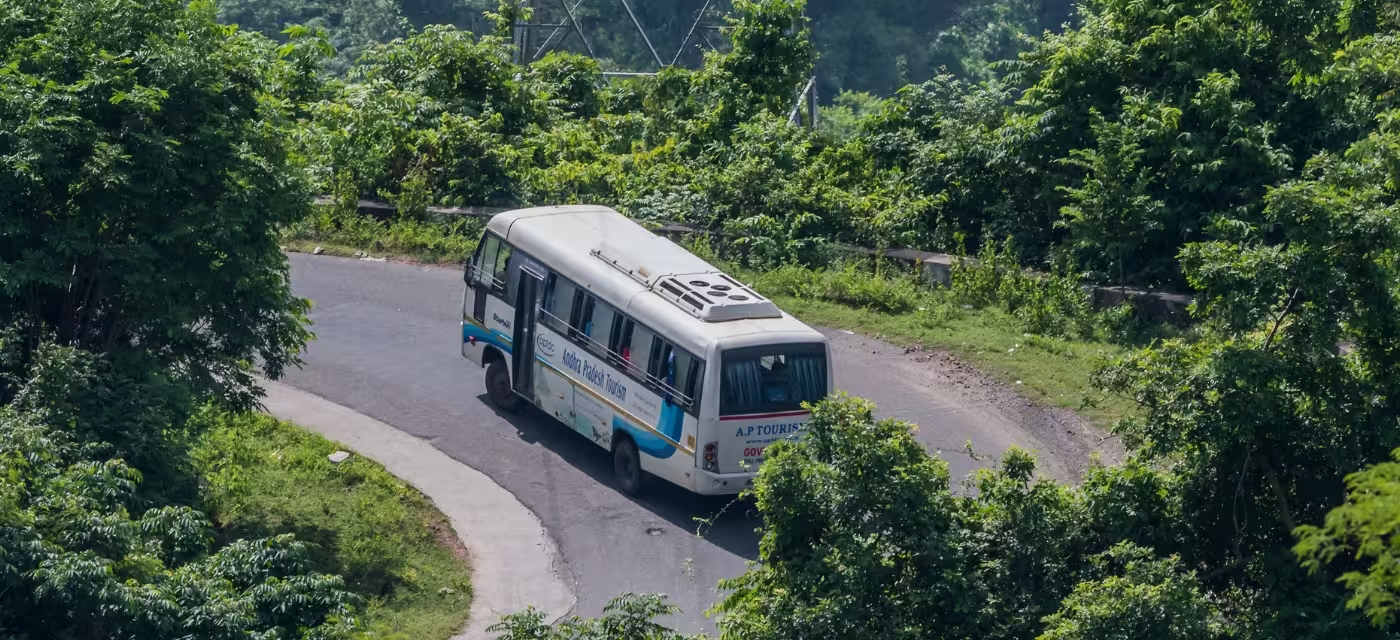
SOUTHERN TALES: Quaint Journeys in Peninsular India
“Do not follow where the path may lead. Go instead where there is no path and leave a trail.” —Ralph Waldo Emerson
It’s funny how India, that marvellous continent of sorts, is actually every bit the clichéd ‘land of mysteries and charms and fantasies and magic’ – it’s full of paradoxes, its bewildering, and seems to shift form each time you look away!
Truth be told, India holds the key to much more than you can possibly imagine…secret destinations that lie inbetween, travel experiences you never thought YOU would have, sights that give you the goose bumps in sheer pleasure, and memories that you would like to keep for many lifetimes…
For those travellers who think they’ve been everywhere and done everything there is to do in India…you couldn’t be more wrong! Because believe it or not, India is brimming with unseen places waiting to be discovered and explored.
We’re talking about offbeat destinations in India of course. But how do you actually define one? Is it any one or more or ALL of these: is not very popular among weekend travellers; does not feature on a tour operator’s usual itinerary; is not a major religious pilgrimage destination; is not a major vacation spot; has little or no accommodation; does not have easy transport options; is hard to access; is mostly favoured by foreign tourists but not Indians, or vice versa; is completely unheard of.
It’s true though, India is full of places like the ones mentioned above but, that’s precisely WHY they are offbeat, astonishing, and extraordinary. That’s why they deserve to be not just spoken about but also visited.
An offbeat destination, is somewhat like your own personal retreat, guaranteeing minimal or zero tourist crowds, perhaps even zero noise, and a great sense of space and privacy.
Your surroundings may not be the lap of luxury but they’re beautiful, warm, and comforting. Enjoying the flavours of different local delicacies and simple home cooked food is an experience you’ll never have in the big cities.
And every time you connect with real nature, the kind you find outdoors, you feel like you’ve discovered a little part of yourself.
This edition, a South India special, we showcase to you the region’s glorious hidden gems from its five states.
The five states of South India – Andhra Pradesh, Telangana, Karnataka, Kerala, and Tamil Nadu (and the Union Territories of Andaman and Nicobar, Lakshadweep, and Puducherry) – have each found their place to rest beautifully in the azure waters of the Indian Ocean.
South India is the subcontinent’s earthy, seductive half – luscious, green, bounteous, and simply magnificent.
The region’s marvellous multi-cultural heritage and ancient history stand testament to the centuries of splendid civilisations that made their home here.
Wherever you travel in South India, you will come across a piece of glorious history. Its coastline runs for thousands of kilometres, supported by lush plains and rolling hills; its dazzling, ever-changing landscape is nourished by the mighty monsoon – palm fringed beaches and backwaters give way to mangrove forests, waterfalls, canyons, mountains, hill stations, spice plantations, tea estates, tropical forests, and wildlife sanctuaries.
Add to this temples, churches, mosques, synagogues, palaces, forts, and Buddhist caves…! South India is a cultural treasure trove that is quite unsurpassed.
Here’s a look at some of South India’s finest offbeat destinations:
In Andhra Pradesh
ARAKU VALLEY
Celebrated for its pleasant weather, beautiful vast coffee plantations, quaint valleys, gentle hillocks, green forests, and fantastic waterfalls, Araku Valley is nestled in the Eastern Ghats of Andhra Pradesh, and has all the makings of the perfect holiday destination. You can take a train into the Valley or even take a fun road trip – both are wonderful ways to explore the place. Sights: Duduma Waterfalls; Padmapuram Gardens; Tribal Museum; visit a nearby village
LAMBASINGI
Thick fog, white mist, deep forests, dense vegetation, and green hills surround you as you drive down the winding road to the remote tribal hill village. A small village in the Eastern Ghats, Lambasingi lies in the Vishakapatnam district of Andhra Pradesh. Lambasingi is often referred to as the ‘Kashmir of Andhra’ and sits 1,000 metres above sea level. The only place in South India to experience snowfall in winter, the village experiences sub-zero temperatures at night during winter between DecemberJanuary! Lambasingi’s picturesque beauty, rich bio-diversity, lovely wildlife, coffee and pepper plantations, and the cool breeze which blows here throughout the year, make it ideal for a summer holiday destination. Lamabasingi is great for trekkers and adventure lovers.
VIJAYAWADA
The commercial and industrial hub of coastal Andhra, Vijayawada is spread over the coastal delta on the banks of the beautiful and famed Krishna River, and flanked by the cool Indrakiladri Hills. The Prakasam Barrage across the Krishna has irrigation canals that flow throught the city. Considered widely to be the very heart of Andhra culture and language, Vijayawada is a fascinating city to visit and experience. With its love for cinema, splendid temples, fabulous and authentic Andhra food, and its legendary Banganapalli mangoes, vibrant streets and bazaars, Vijayawada is a virtual kaleidoscope of adventures!
Sights: Kanakadurga Temple; Balasubramanya Temple; Prakasam Barrage; Moghalrajpuram Caves; Victoria Jubilee Museum; Gunadala and St Mary’s Church; around Vijayawada – Undavalli Caves; Kondapalli Fort.
KONASEEMA
Beautiful Konaseema is a coastal region that lies between the Godavari River’s branches and the Bay of Bengal. Gorgeous palms, paddy fields, villages, stunning temples, lush coconut groves, and a mighty river are to be seen in this tranquil oasis. Tourists here can enjoy a wonderful houseboat cruise and sample delicious local food/ seafood.
Sights: Sivakodilanka islet; temple town of Antarvedi; Adurru (Buddhist Site); Brahma Samvedyam; Bendamur Lanka Beach.
SURYALANKA BEACH (BAPATLA)
Suryalanka, one of Andhra’s unmatched destinations of great beauty on its almost 1,000 km-long coastline, surprises you with its golden sands and stunning sunrise views over the ocean. The monsoon season is a lovely time to visit this coastal spot. Sights: Bhavanarayanaswamy Temple.
CORINGA WILDLIFE SANCTUARY
Located in the East Godavari District of Andhra Pradesh, the Coringa Wildlife Sanctuary, off the city of Kakinada’s coast, is India’s second largest swatch of mangroves. It lies at the confluence of the delta of the mighty Godavari River, the second largest river in India, and the Bay of Bengal. The The Sanctuary has an impressive diversity of marine and avian fauna, and is home to almost 35 species of mangroves. Coringa is also where you will see the endangered fishing cat, and the smooth-coated otter, among other rare species.
PULICAT LAKE
A Ramsar Wetlands Site, and the second largest brackish water lagoon in India, the Pulicat Lake is separated from the Bay of Bengal by the barrier island of Sriharikota. Much of the Lake is a protected sanctuary, and is home to several migratory birds between November and February.
Sights: Boat ride from Buckingham Canal to explore the Lake and see birds; remains of Dutch and British settlements South of the Lake.
AHOBILAM
Situated amidst the magnificent Nallamala Hills, Ahobilam lies in the historic Rayalaseema region of Andhra Pradesh. Ahoblam is the stronghold of Narasimha – one of the most important reincarnations of Vishnu – and is on the list of the 108 Divya Desams, sacred spotsof Vaishnavite worship.
Sights: Ugra Narasimha Temple; Lakshmi Narasimha Temple; Nava (Nine) Narasimha shrines.
ETHIPOTHALA FALLS
The Chandravanka River rises as a rivulet from a spring in the gorgeous Nallamala Hills, and roars down the mountainside as the thunderous Ethipothala Falls in the famous Guntur District of Andhra Pradesh. The 70- foot high waterfall gushes down below into a lagoon that has crocodiles! Also here is a beautiful cave complex that houses the Dattatreya Swami Temple, where Guru Dattatreya, the son of sages, is worshipped as the incarnation of all three Gods – Brahma, Vishnu, and Siva. Two more temples, one dedicated to Vishnu, and the other to his consort Lakshmi, are in the same complex.
NAGARJUNAKONDA
It is believed that most of Nagarjunakonda, then called Vijayapuri, was built during the reign of the Ikshvaku Dynasty in the Krishna Basin around the 1st century CE. However, after the site was excavated in the 1920s, it was discovered that it had been occupied from the Stone Age itself, much before the Buddhist era. In the 1950s, when the Nagarjunasagar Dam was built here, the Nagarjuna Hill became an island in the huge lake caused by the dam. It is on this very island that you will see the incredible Buddhist site of Nagarjunakonda – abounding with ancient monasteries, temples, and stupas. And every visage of the Buddha here is wonderfully captured in the exquisite carvings.
Sights: Monuments and relics; amphitheatre; museum with sculptures and inscriptions ranging from 200 millenia to 200 years in antiquity; the Mahachaitya which is the earliest monument here.
PAPIKONDALU
Papikondalu (Papi Hills) is a fantastic gorge lying on a section of the Godavari River in the East Godavari district of Andhra Pradesh. The stunning mountain range is a part of the Eastern Ghats, and has tropical and deciduous rain forests that offer wonderful views of the surroundings. Tourists who want to explore the spot can take a boat journey either from Bhadrachalam or from Rajahmundry, which is the main gateway to the area. The waterfalls and the serene ambience of Papikondalu enhance the great natural beauty of this tribal area.
GANDIKOTA
The 12th century village of Gandikota in the Kadapa District of Andhra Pradesh, lies on the right bank of the Pennar River. Gandikota is also popularly called ‘the Grand Canyon of India’ because of the breath taking gorge formed between the Erramala range of hills (also known as Gandikota hills), and the Pennar. Situated amidst a beautiful landscape and wild forests, Gandikota is endowed with vast natural resources.
Sights: Gandikota Fort; Madhavaraya Temple; Jama Masjid; Granary; Ranganatha Swamy Temple; Gandikota Fort View Point; Fort Entrance; Gandikota Gorge View Point; Jail; Rayala Cheruvu.
BELUM CAVES
Deep inside the Kurnool district of Andhra Pradesh, sit the longest caves on the plains of India – the incredible Belum Caves. The Belum Caves were formed by the action of water flowing on limestone deposits over millions of years, forming stalactites, stalagmites, siphons, sink holes, and water galleries. Also known as the second largest caves in India, the stunning black limestone caves have a maze of 16 cavernous paths, and a pit cave entrance, that make them accessible to spelunkers and adventure seekers alike! In ancient times, caves were often used by sages and monks as abodes of meditation. Centuries ago, Jain and Buddhist monks meditated in the labyrinths of these caves; unique relics and remnants of vessels used by them have been unearthed here.
Today, due to the tremendous efforts of the Andhra Pradesh Tourism Development Corporation (APTDC), who cleared the mud and debris inside, built pathways, provided illumination, sank ventilation shafts, and built walkways, the caves are now open to the public as a unique tourist destination. The serene 40-foot Buddha statue built here by the APTDC is a beautiful symbol of the role of monks in the history of these caves.
This is definitely the experience of a lifetime – not to be missed!
In Telangana
NIZAMABAD
For those who have visited Hyderabad, Nizamabad may seem to have the same familiar ambience but the city holds its own with its many temples, a beautiful dargah, lake-side resorts, a dam, and a dense, deep forest! Sights: Qilla Ramalayam; Ali Sagar Reservoir; Deer Park; Ashok Sagar; Mallaram Forest; Balikonda Fort.
RAMOJI FILM CITY (RFC)
Ramoji Film City is like no other city you’ve been to India! Literally. That’s why RFC is simply not to be missed by those who would love to see how movies in India dominate every sphere of life, and how much joy they bring to us! Established in 1996 by Ramoji Rao, founder of the Ramoji Group, RFC is around 30 km from Hyderabad in Telangana. The amazing RFC is the largest film studio complex in the world and is sprawled across an incredible 1,666 acres! Comprising 47 sound stages, it has permanent sets ranging from railway stations to temples; and is one of the major film making facilities of the country offering everything related to pre and post film production.
With a capacity to accommodate several film units at the same time, RFC has remarkable film sets such as London streets, Hollywood signs, Japanese gardens, airports, hospitals, landscapes, buildings, laboratories etc.! Visitors and tourists will never get bored, and have plenty of recreation and entertainment options to choose from.
WARANGAL
Warangal was once known as the hotbed of the revolutionary movement of the 1980s and 1990s, and has been rarely well explored or talked about. But the historic city is a treasure trove of diverse and stunning architecture, and outstanding sculptures, that simply have to be seen. Warangal has a twin city called Hanamkonda. Sights: Thousand Pillar Temple; Bhadrakali Temple; Warangal Fort; Khush Mahal; Fathima Church; around Warangal – Ramappa Temple; Ramappa Lake; Pakhal Lake; Kolanupaka; Ethrunagaram Sanctuary.
POCHAMPALLY
Just an hour east of Hyderabad, Pochampally is a weavers’ village, where designs on cotton and silk are painstakingly woven on mechanised and pit looms. Pochampally is famed for its stunning ikat textiles, where the yarn, tie-dyed before weaving, produces jagged geometric patterns. Ikat sarees, in both cotton and silk, are renowned in India. The Rural Tourism Complex in Pochampally has a weaver’s museum. The guides here come from families of generations of weavers. To watch them demonstrate their craft is a lovely experience – you could even try your hand at the loom! Sights: Chenethakala Kendram (Weaver’s Museum).
In Karnataka
BR HILLS WILDLIFE SANCTUARY
The BR (Biligirirangana) Hills Wildlife Sanctuary, sitting in the lofty BR Hills in the Chamarajanagar district of Karnataka, was established in 1974. With its strategic location, it is considered to be an excellent wildlife corridor that connects the Eastern Ghats to the Western Ghats. The forest is home to large numbers of wild elephants and tigers; also to the giant flying squirrel, dhole (wild dogs) among other innumerable and diverse species of flora and fauna. The Sanctuary is a wonderful off-beat getaway for nature lovers and adventure enthusiasts. Sights: Jeep Jungle Safari; trekking in Boodipadaga area; Biligiri Rangaswamy Temple.
AGUMBE
Located in the Western Ghats in the beautiful Shimoga District of Karnataka, the village of Agumbe is perfect for some superb outdoor/nature adventures. It has waterfalls, pools, and is a trekker’s paradise with its many deep forest trails and winding hills. Agumbe is also one of the wettest spots on the planet, with an annual rainfall of over 8,000 mm! It is also noted for being the site of the Agumbe Rainforest Research Station, which undertakes research in rainforest ecology. But mostly, Agumbe is famous for being snake territory, and is home to the magnificent, fearsome King Cobra! Sights: Barkana Falls; Jogi Gundi Falls.
BALUR ESTATE
Situated in Mudigere in the Chikmaguluru District of Karnataka, Balur Estate is a 400 acre plantation that has been here since the 1840s. The plantation grows coffee, pepper, vanilla, and areca nut, and is nourished by the revered Hemavathy River that originates just above the Estate. The Planter’s Bungalow, standing here since 1853, is a piece of the wonderful ‘coffee heritage’ of Karanataka. The Estate was set to be a place for visitors to come and experience life on a coffee plantation. The original design of the house has been retained to the maximum. Balur Estate stands out for being truly down to earth – there’s no mineral water (they filter their own water), no television, hardly any mobile/Wi-Fi connectivity, and no geysers or jacuzzis! Instead, you will soak in the fantastic ambience of the Estate, its history and lifestyle.
Sights: Walks around the plantation; ancient shrines; treks; Charmadi Ghats; reserve forests; Bidurthala’s Waterfall; rock formations; lemongrass plantations.
MANGALURU (MANGALORE)
The lovely offbeat city of Mangaluru sits in the Dakshina Kannada (South Canara) District of Karnataka, at the estuaries of the Netravathi and Gurupur Rivers on the Arabian Sea coast. This primarily agrarian region has gorgeous temples and churches, and pristine beaches. Mangaluru was an important trade hub on international trade routes during the 6th century CE. It was ruled by the Portuguese during the 16th and 17th centuries, and consequently by the British.
Sights: St Aloysius Chapel; Kadri Manjunatha Temple; Pandava Caves on Kadri Hills; Sharava Maha Ganapathi Temple; Yakshagana performances; Talamaddalay performances; Milagres Church; Sri Mangaladevi Temple; Rosario Cathedral; beaches (Surathkal, Mukka, Panambur, Tannirbavi and Someshwar); around Mangalore: Ullal Dargah; Rani Abakka Fort; Abakka Basadi.
ANEGUNDI
The ancient town of Anegundi in the Uttara Kannada (north Canara) District, lies along the famed Tungabhadra River, and was once part of the mighty Vijayanagara Empire in Karnataka. Around 100 km west of Hampi, Anegundi is unique because it lies in the core area of the Hampi Heritage Zone. The Kishkinda Trust (1997) here, set up for the town’s preservation, saw the immense tourist potential of the place, and has initiated programmes in organic farming, a natural fibre cottage industry, traditional performing arts, and rural tourism.
Sights: Coracle ride from Hampi to Anegundi; Anegundi Fort; Pampa Sarovar Laxmi Temple; Anjaneya Hill; Gagan Mahal.
AIHOLE
Originally called Aryapura, the ancient town of Aihole lies in the Bagalkot District of Karnataka, at the southern end of the Deccan Trap. Aihole is legendary as the birthplace of temple architecture in Karnataka – its outstanding temples and ruins from the 6th – 12th centuries CE the dot the area, have put it on the list of potential UNESCO World Heritage Sites.
Sights: Ravanaphadi Cave; series of temples; Buddhist ruin.
PATTADAKKAL
Pattadakal in the Bijapur District of Karnataka was not only the second capital of the Chalukyan Empire but also considered a holy place for royal coronation. The Chalukyas were great patrons of art and architecture; evidence of their architectural styles can be seen in the town’s incredibly beautiful temple structures that date back to the 7th – 9th centuries CE. Pattadakkal is a UNESCO World Heritage Site.
VIJAYAPURA (BIJAPUR)
Dating back to the Deccan’s Islamic era, Vijayapura’s identity and character are defined by the Adil Shahi dynasty that ruled it for nearly 200 years, till 1686, when it was conquered by the Mughal Emperor Aurangzeb. Its glorious history can be seen in its fabulous mosques, mausoleums, palaces, temples, step-wells, and forts.
In Kerala
GAVI
Exclusive eco-tourist destination Gavi is a village in Kerala’s Pathanamthitta District, spread across the gorgeous Periyar Tiger Reserve, around 28 km from Vandaperiyar. Run by the Kerala Forest Development Corporation (KFDC), the serene, untainted, and stunning forest retreat is lush with evergreen forests and abundant with lovely flora, and magnificent wildlife and many endangered species. For bird watchers, Gavi is paradise. The forests around Gavi are home to over 300 species of birds. Gavi often serves as a base camp for deep jungle trekkers, birdwatchers, adventure lovers, and nature lovers. The road leading to Gavi is dotted with tea plantations, hills, valleys, tropical forests, sprawling grasslands, cascading waterfalls, and cardamom plantations. The active involvement of the tribals here makes Gavi truly unique.
Sights: Jeep Safaris; treks; birding; boat ride and canoeing; Sabarimala view point from Pullumedu Peak; camping at Meenar and Valley View forest sites; night safaris; Paradise Cove at Ninnumulli; Cardamom factory visit; plantation visit; around Gavi: Thekkady; Peermade; Kuttikanam.
THALASSERY
Situated on the beautiful and historic Malabar Coast of Kerala, Thalassery is a remarkable town by the Arabian Sea, throwing up many lovely surprises to all who visit it. Ancient Thalassery was once one of the major centres of the pepper trade centuries ago. Thalassery is noted for its long association with cricket, introduced here by Colonel Arthur Wellesly, the commanderin-chief appointed by the British. The first Thalassery Town Cricket Club was formed in 1860. The town’s other claim to fame is that it is also known as Kerala’s nurturing ground for circus! Another wonderful aspect of Thalassery is its delicious cuisine, and British era bakeries. Then there are the alaripayattu (ancient martial art form of Kerala) and theyyam (ancient folk art form of Kerala) performances that are not to be missed here!
Sights: Tellicherry Fort; Holy Rosary Church; Anglican Church; Overbury’s Folly; Gundert Park; Muzhappilangad Beach; Mambally’s Royal Biscuit Factory (Bakery); Suryanarayana Temple, Kadiroor; CVN Kalari.
KANNUR
Bounded by the Western Ghats in the east and the Lakshadweep Sea in the west, Kannur’s rich multi-faceted history and remarkable heritage is showcased in its lovely paddy fields, coconut groves, colonial buildings, churches, mosques, forts, temples, and revered cultural and educational institutions. Kannur is believed to be the ancient port of Naura, which had trade links with the Greeks, Romans, and Arabs; and was described by explorer Marco Polo as one of the greatest centres of the ancient spice trade. This beautiful town in the North Malabar region of Kerala is famed for being the cradle of theyyam.
Sights: Fort St Angelo; Sri Muthappan Temple; motorboat cruises; Payyambalam Beach; Baby Beach; theyyam performance.
KOLLAM
Once one of the major spice trade hubs of the Old World, Kollam is still an important commercial, industrial, and trading centre. Kollam is one of the oldest PortugueseDutch-English settlements in Asia. It was one of the early centres of Christian activity in Kerala as well. It is also the headquarters of the Kerala State Cashew Development Corporation. A large part of the historic town is covered by the famous Ashtamudi Lake, making it the gateway to the magnificent backwaters of Kerala. The eight-hour boat ride from Kollam to Alappuzha is the longest and most enchanting experience on the backwaters of Kerala. Kollam is about 71 km north of Thiruvananthapuram.
Sights: Ashtamudi Lake; Thangasseri Lighthouse; Thangasseri Fort; British Residency; Thevally Palace; Portuguese Cemetery; Sardar Vallabhbhai Patel Police Museum; around Kollam: Alumkadavu; Sasthamkotta Lake.
PALAKKAD
Known as the ‘Rice bowl of Kerala’, the quiet town of Palakkad is a vast expanse of breath taking plains dotted with hills, rivers, mountain streams, and forests. It is the gateway between Tamil Nadu and Kerala because of the famous Palakkad Gap in the Western Ghats mountain range, which also makes the region perennially windy! Today, this primarily agrarian region is a beautiful blend of Tamil and Kerala culture, and is renowned for Carnatic music (classical music of South India); some of the finest Carnatic musicians of the country hail from this region. Palakkad’s lovely festivals, temples, agrahaarams (centuries-old Tamil Brahmin villages that still preserve their unique way of life), cuisine, and folk art forms are to be absolutely seen and experienced.
Sights: Tipu’s Fort; Kalpathy; Kunchan Smarakam; Ottappalam; Gandhi Seva Sadan Kathakali and Classic Arts Academy; Malampuzha Garden; Parambikulam Wildlife Sanctuary.
CHITTAR
Situated in the Pathanamthitta District of Kerala, Chittar lies on the lush border of Southern Kerala and Tamil Nadu in the Western Ghats mountain range. It is surrounded by the Chittar Lake, rubber plantations, and a pristine countryside. Chittar is predominantly a plantation town. Earlier famous for tea/coffee plantations, Chittar’s beautifully fertile land and rich ecosystem now also produce rubber, pineapple, tapioca, nuts, ginger, and pepper. Chittar is one of the most sought after plantation getaways for travellers seeking wellness, tranquillity, and a destination away from the usual, crowded touristy places.
Sights: Chittar Lake.
PALA
The stronghold of the Syrian Christian Community in Kerala that traces its roots to St Thomas the Apostle in the 1st century CE, Pala was also once the headquarters of the Meenachil region – the Meenachil karthas (local chieftains) were patrons of several churches in the area. Around 28 km east of Kottayam District, Pala is one of the main gateways to the southern high ranges of the Western Ghats in Kerala, and is blessed with extraordinary natural beauty and abundance – rain-soaked fields, palmfringed backwaters, and expansive rubber and spice plantations that are the hallmarks of Kottayam itself.
Sights: St Alphonsa Church at Bharananganam; St Thomas Cathedral at Pazhayapalli; St Mary’s Forane Church at Kuravilangad; Kadappattor Mahadeva Temple.
In Tamil Nadu
HOGENAKKAL FALLS
The small town of Hogenakkal on the Tamil Nadu-Karnataka border is nondescript but just a short distance from the town centre, and you find yourself beholding the stunningly dramatic Hogenakkal Falls, and the mighty Cauvery River! The magnificent Falls don’t simply gush out of a single point – they are a snaking labyrinth of high, narrow canyons through which the Cauvery winds its way, and from which it roars and falls!
Sights: Hanging Bridge; Bathing Falls; parisal (coracle) ride on the Cauvery; parisal ride through secluded river and forest from the nearby town of Billigundu.
POLLACHI
Lying 50 km to the south of Coimbatore in Tamil Nadu’s little explored Kongunadu region, Pollachi is the favourite spot of Tamil filmmakers – they love it for its natural beauty and superb connectivity. Pollachi is wonderful for those who want a relaxed holiday filled with long walks and bird-watching.
Sights: Topslip; Annamalai Tiger Reserve; Amaravathi River; Aliyar, Sholayar, and Kadamparai Dams.
VALPARAI
Situated in the lap of the Annamalai Hills in the Western Ghats mountain range, along the Tamil Nadu-Kerala border, Valparai looks like a vast tea garden! Valparai is one of the youngest planting areas of South India – the first factory here was set up here only in 1910. Still, it is the South’s largest tea district today with several tea gardens, mostly owned by business houses. What makes Valparai stand out is that it has continued to preserve its natural, pristine locales, thanks to strict forest and zoning laws that protect the area from the bane of constructions. The highlight of your trip would certainly be to spot the Giant Malabar Squirrel and the small grey hornbill!
Sights: Nature Conservation Foundation (NCF); explore Valparai with NCF’s excellent guides.
PALANI HILLS
The Dindigul District in the Kongunadu region of Tamil Nadu is home to the gorgeous Palani Hills that are a part of the oldest mountain range in India – the Western Ghats. The Hills in turn are home to the legendary town of Palani, which has the holiest shrines of Murugan, worshipped and revered as the patron deity of Tamil Nadu. These antiquated hills date back to the Pre Cambrian period. Palani has over 20,000 recorded species of flora, and is where the mighty Indian Bison and the endangered Nilgiri tahr (the only wild mountain goat in south India) have found a home. It is also wonderful for birdwatchers and trekkers. Palani is renowned for its festivals – Thaipusam, Vaikasi Vishakam and Thirukartikai – which are celebrated with tremendous pomp and glory, and draw many tourists.
Sights: Dhandayuthapani Swamy Temple; Thiruavinankudi Temple; Shola forests.
KAMARAJAR VALLEY
With its rustic ambience and serene beauty, Kamarajar Valley is a must-visit in Tamil Nadu. The Valley lies in the scenic Kongunadu region – amidst the Western Ghats mountains, and is around 73 km from Madurai. Kamarajar Valley is surrounded by fragrant coffee, pepper, and cardamom estates, and holds an idyllic lake.
Sights: Kamarajar Lake; Sadayandi Cave Temple; Hiking through forests and mango groves; walk through farms, orchards, and estates.
RED HILLS
Sitting beautifully in the Nilgiri Biosphere Reserve, 27 km from the more commercialised hill station of Ooty, Red Hills casts a spell on you with its extraordinary landscapes – its stunning lakes, wonderful forests, and absolutely pure air are magical suprises! During the monsoon especially, Red Hills receives heavy rainfall, filling the lakes – this is the perfect time to witness this remarkable sight. Red Hills is also home to one of the oldest tribes of the Nilgiris – the Todas, who continue to preserve their remarkable way of life, uninterrupted, and undisturbed. Primarily cattle breeders, the Todas have a rich culture and heritage. Their bamboo and cane huts, shawls and jewellery, long-horned buffaloes, customs and legends are simply fascinating. Sights: Emerald, Avalanche, Upper Bhavani, Parson’s Valley, Porthimund, Western Catchments 1, 2, and 3 (all lakes); visit the Todas; mountain biking; fishing; trekking; bird watching.
THENI
Theni lies in western Tamil Nadu’s Kongunadu region, close to the Kerala border. Often called ‘earth’s hidden paradise’, Theni is a major trading centre with markets for chilli, cardamom, garlic, grapes, and cotton. It hosts the second largest weekly market/bazaar in Tamil Nadu and the fourth largest in South India. Theni’s enchanting landscape begs to be captured by photographers and seen by travellers who love offbeat destinations and wild natural beauty. Sights: Suruli Aruvi Falls; Meghamalai and Vellimalai hill stations; Vaigai, Sothuparai, and Shanmuganadhi Dams; Kumbakkarai Falls; Kamabam Valley; Veerapandi; Kurangani; Kolukkumalai; Top Station View Point; temples.
THARANGAMBADI (TRANQUEBAR)
Not many know that a group of Nords – the Danes – discovered this part of the world well before the French or the British, leaving behind a remarkable architectural and cultural legacy! Tharangambadi is a small wind-blown town in the Nagapattinam District in the south eastern part of Tamil Nadu. The Indian Ocean town was discovered by sheer providence by the trading ships of the Danish king Christian IV. After signing an agreement with the ruler of Thanjavur (Tanjore), the Danes established the foundations for their outpost here in the early 1600s. In 1845, the colony was sold to the British. The quiet town has today become a fascinating tourist spot for travellers, especially Danes, who want to discover the quaint Indian legacy of their ancestors! Tharangambadi’s wonderful gift is its spectacular location.
Sights: Dansborg Fort; King Street (or Kongensgade); Governor’s House; the Bungalow on the Beach; Masilamani Nathar (Pandya) Temple; Lutheran New Jerusalem Church; Church of Zion.
Any ‘getaway’ – true to its spirit – must be one that has you coming back feeling not just rejuvenated and energised but also astonished, humbled, and happy. But more than anything, it must be one that has you coming back for more new and exciting adventures.
Travel brings with it a deep sense of how much of the world outside is available to us for our learning and growth. We often say we “don’t have the time…” But do try and make that time.
Find a place that feels like YOU and go to it. Because the best gift you can give yourself is your own time!
Related Posts