 English
 Deutsch
 Italia
 August 27, 2026 By admin
Mappila Cuisine Malabar Kerala
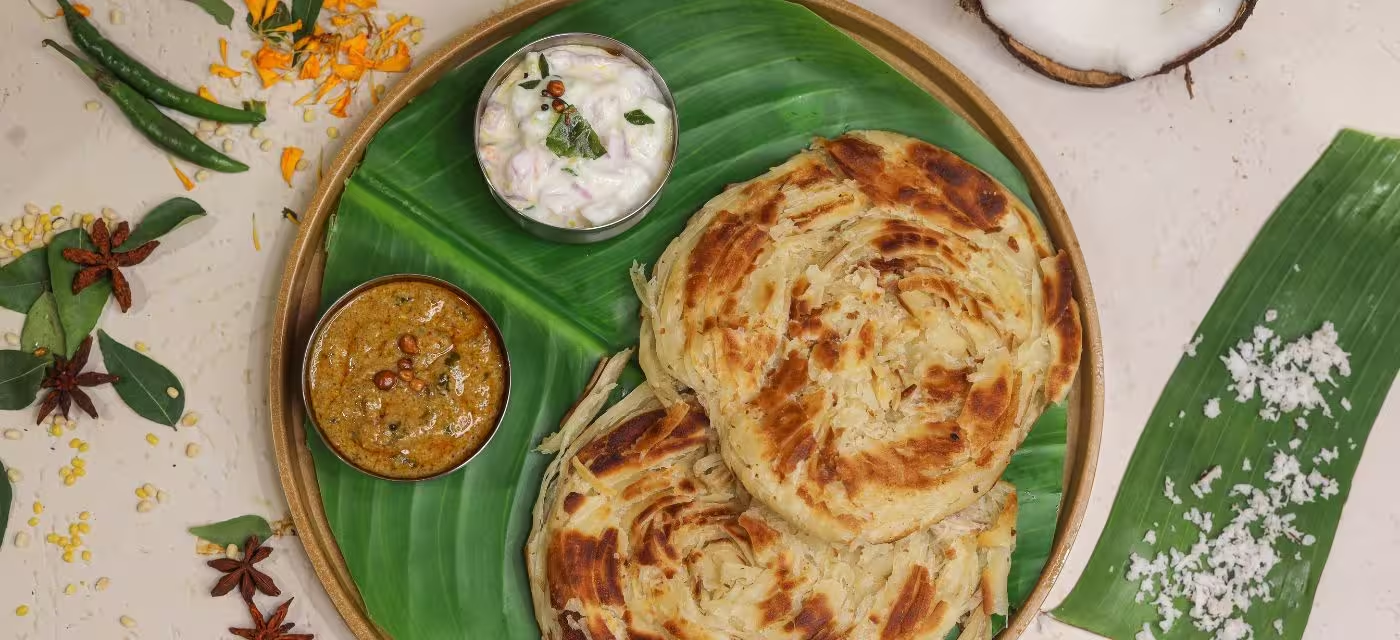
AT THE SPICE COAST TABLE: THE ART OF MAPPILA CUISINE
If you really want to make a friend, go to someone’s house and eat with him – the people who give you their food give you their heart.
– Cesar Chavez
Kerala’s beautiful Malabar Coast is flanked by the magnificent Western Ghats on one side and the shimmering Arabian Sea on the other. The Malabar region has made some exquisite contributions to Kerala cuisine. For here, Arab flavours from the seventh century still sparkle in the food that carries legacies of the merchant traders who visited the region centuries ago.
The Mappilas are a community of Muslims who live on the Malabar Coast. The community is mostly concentrated in the northern Kerala towns of Kannur, Kozhikode, and Thalassery, from Kasaragod to Thrissur, and trace their origins to trade with West Asia. Kerala’s strategic location on the coast, and its layered history as a major ancient maritime trading post on the enigmatic Spice Route, ensured that the region was exposed to influences from cultures and peoples across the Indian Ocean.
It was no accident then that India’s first synagogue, church, and mosque were all built in Kerala. Kerala had long been a major spice exporter, as early as 3000 BCE. After the Roman Empire collapsed, traders from Assyria, Babylon, and Egypt as well as Phoenician and Arab traders travelled across the Indian Ocean to Kerala to find and carry back the famed black gold (black pepper), the king of the flourishing spice trade. By the seventh century, and later, the Arabs were trading spices, textiles, and precious stones with Kerala. As they mingled, there was a sharing of culture, and intermarriages with the locals followed.
The Mappilas share a language and a love of coconut with the rest of Kerala but, their cuisine, carried across time, remains original and distinctive. And strikingly different from the Muslim cuisines in the rest of the country.
Malabar’s famous restaurants, in Kozhikode especially, may well be your introduction to Mappila food. They serve assortments of seafood, the exceptional Thalassery biriyani, and a fantastic range of stuffed, steamed, and deep-fried breads. Arikadukka or rice-coated stuffed mussels, fresh oysters, and sweet-fleshed shrimp are in plenty here. Unnakkayi (a plantain sweet) and Meen Pathiri (steamed rice pancakes stuffed with fish) are favourites too.
Ask for a ‘Sulaimani’ in any tea shop in Malabar and you will be served sweet black tea with lemon. The name is believed to have been lent to this simple beverage by the Sulaimani Bohras (Sulaymanis), a Musta’lī Ismaili community from Saudi Arabia and Yemen.
But the true flavour, richness, and range of Mappila food can only be experienced in a traditional Mappila home. A regular day could feature ari pathiris (delicate rice breads) and fiery muttakakkam (egg roast), prawn puttu (prawn in steamed cylinders of ground rice layered with coconut) and mutton stew, biriyani (dish of fragrant rice, layered with spices and either meat, fish, vegetables, or egg), neichoru (a simple but mouthwatering combination of ghee and rice), and the much-loved red fish curry.
Alissa, a wheat, meat or chicken, ghee, sugar, and cinnamon porridge, is similar to harisa, a recipe preserved over centuries by the people of the Middle East. The layers in the Malabar parotta (a layered flaky flatbread) mimic the Middle Eastern filo pastry.
The aromatic and flavour-rich mandi, a distant cousin of the biriyani, is said to be a traditional Yemeni dish and is among the little-known delicacies found in Malabar kitchens. Very few outside of Kerala have heard of it but it is an extraordinarily popular item in Malabar.
Mandi is a mixed preparation of rice, spices, and chicken or lamb, and is made in an oven in the ground tiled with clay bricks. The rice, spices, and water are cooked in this oven, while wood coals are placed on top to make sure that steam does not escape. The coal lends a smoky flavour to the meat which is also cooked in the oven. The meat of a young goat is preferred since it is much tender than regular mutton. Mandi has to be cooked for at least two and a half hours for the flavours to seep in.
Celebrations in a Mappila home – especially weddings – call for splendid, elaborate, and extravagant feasts. Meat is pivotal to the cuisine, as is egg. The mutta mala or egg necklace, is an intricate noodle-like dessert made with copious amounts of egg yolk.
Thin filaments of egg yolk are painstakingly dripped through a wooden spoon with a bamboo ladle at one end, and a coconut shell with a hole in the centre at the other. They are cooked in sweet sugar syrup and served over Pinnanathappam, steam-cooked cardamom-scented egg white pudding. You can be sure that making the mutta mala requires patience, stamina, and dexterity!
During the holy month of Ramzan, the daily fast is broken with dates, followed by a spread of pathiri, meat, chicken, and chai (tea). The Malabar biriyani, emblematic of any iftaar (evening meal with which Muslims end their daily Ramzan fast at sunset) table has a distinct Arab influence. The rice and the meat are cooked separately and then layered and cooked. The Mappila biriyani is made with short-grain kaima rice, which is softer and enhances the flavour of meat.
Biriyani ustaads or specialists in biriyani are hired to prepare it for weddings, special occasions, and iftaars, while ‘pandaaris’ or executive chefs rustle up other main course dishes.
The Mappilas were legendary for their hospitality and generosity and would share their food with everyone in the neighbourhood. Their wonderful biriyani became a staple in Hindu Thiyya homes as well, especially in the Thalasserry area. Hence, the name Thalassery biriyani.
Malabar or Thalassery biriyani is served with date pickle, raita (a cooling side dish made with yoghurt together with raw or cooked vegetables, and sometimes fruit), and coconut chammanthi (chutney) – again a blend of West Asia and Kerala.
The beauty of Mappila cuisine is that it has always been traditional home-style cooking; food is made by the women of the family with recipes handed down for generations. And it is in the cooking of this everyday food that you discover artfulness, innovation, and skill.
For you must use the same handful of ingredients in various permutations and combinations to create dishes that taste completely different from each other. The essence of Mappila cuisine is in the successful blend of fresh, aromatic local spices such as pepper, cardamom, cinnamon, clove, aniseed, ginger, turmeric etc. with fresh produce to create a fascinating array of seafood, meat, vegetable, and grain delicacies. And almost all prepared in that other Kerala kitchen staple… coconut oil.
Centuries before Abu Fazl wrote about the prodigious master chefs of the imperial Mughal kitchens of Akbar in his Ain-i-Akbari, the southwestern coast of India was savouring culinary delights from recipes brought across the seas from West Asia.
Over 2,000 years after they sailed to southern India, the legacy of the peaceful traders of West Asia continues to live on in the unforgettable cuisine of Malabar.
Ummi Abdulla is known as the ‘matriarch’ of Mappila cuisine. Mappila cuisine was first introduced to the world through the pioneering work of Ummi Abdulla, whose anthology of cookbooks spans several decades. She is now 84 years old and lives in Kozhikode. Ummi Abdulla’s first book Malabar Muslim Cookery was published by Orient Longman in 1981. The tome of recipes is the beloved and cherished guide of many expatriate Mappilas. It evokes the taste of home – with its golden sunlight and emerald greenery – through a Mappila meal.
HERE ARE TWO MAPPILA RECIPES
CHEMEEN PORICHATHU (FRIED PRAWNS)
Ingredients
- 200 g shelled prawns
- 3 tsp chilli powder
- 4 cloves garlic
- 4 cm piece cinnamon
- 2 cloves
- ½ tsp turmeric powder
- ½ tsp aniseed
- Salt to taste
- Oil for frying
Method
Clean and wash the prawns with a little salt.
Grind all the ingredients with salt.
Cook the prawns with the ground ingredients in a little water till the prawns are cooked and the water absorbed.
Heat the oil in a pan. Add the prawns and fry till the prawns are crisp.
UNNAKKAYI (BANANA PODS)
Ingredients
- 2 half-ripe, firm Kerala or Nendran bananas
- 1 cup coconut
- 4 tbsp sugar
- 1 tbsp raisins
- 1 tbsp chopped cashew nuts
- 1 tsp ghee
- ½ tsp cardamom powder
- Oil for frying
- Salt to taste
Method
Cut bananas horizontally, along with the peel, into three to four pieces.
Cook in boiling water till the peel separates slightly. Alternatively, steam it for a couple of minutes.
Remove the peel and grind the banana to a smooth paste without adding water.
For the Stuffing
Add sugar to two tablespoons of warm water and stir till the sugar melts.
Stir the coconut in. Add the ghee, chopped cashew, raisins, and cardamom powder. Stir well and remove from the stove.
For the Preparation
Oil your palm lightly. Take small lemon-sized balls of the ground banana and flatten them in your palm.
Put two teaspoons of the coconut mixture in it. Fold the edges and press lightly.
Now roll it with both your hands, to get a cylindrical shape pointed on both ends. Repeat for the remaining banana dough.
Deep-fry the banana buds to golden brown.
This high-calorie snack tastes best when eaten hot.
Related Posts