 English
 Deutsch
 Italia
 August 19, 2026 By admin
By The Narmada into the heart of India
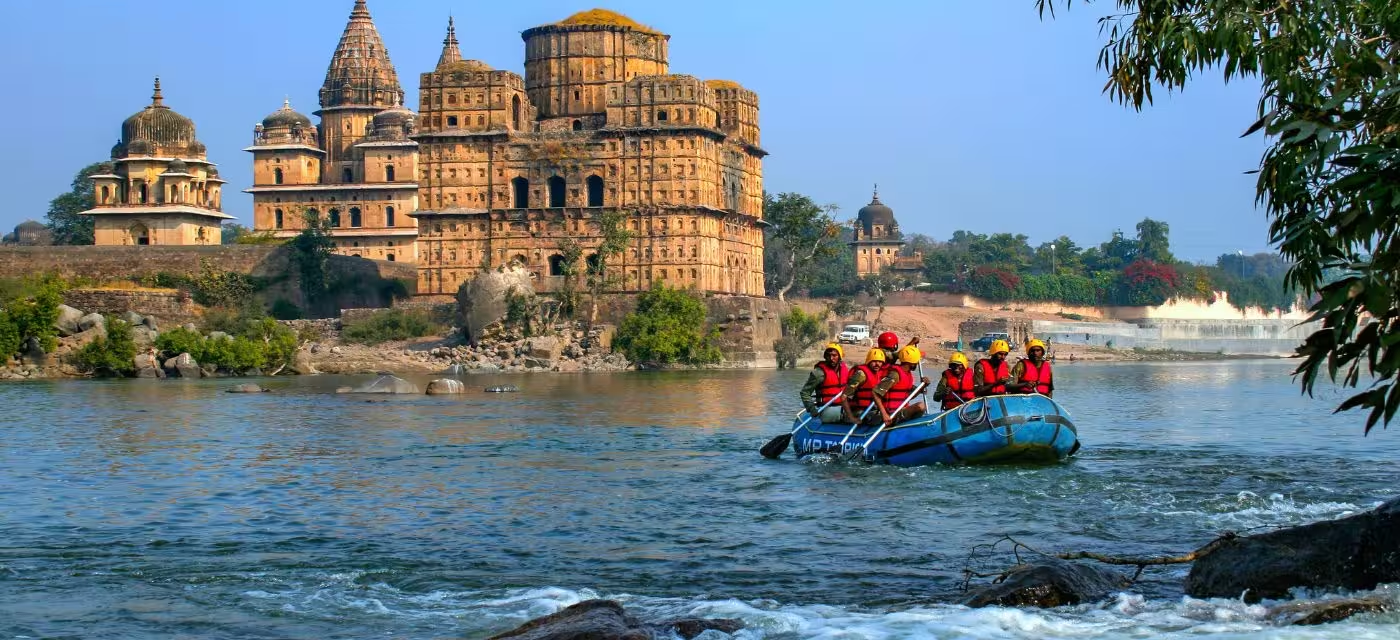
By the Narmada – Into the Heart of India
“Like all great travellers, I have seen more than I remember, and remember more than I have seen.”
— Benjamin Disraeli
Central India – Madhya Pradesh
Known as the “Heart of India,” Madhya Pradesh lies in Central India, straddling the magnificent River Narmada.
Its diverse landscape brings together extraordinary historical heritage, sacred places, wildlife, natural beauty, art, crafts and architectural treasures.
From intricately carved temples and magnificent mosques to regal palaces and imposing forts, Madhya Pradesh preserves the legacy of some of India’s most important historical periods.
Its monuments are filled with graceful sculptures, elaborate patterns and remarkable architectural traditions — each telling stories of kingdoms, warriors, saints, artists and builders.
Orchha
Orchha combines the architectural grandeur of a medieval capital with the quiet charm of a rustic village.
Situated beside the River Betwa, Orchha was founded in the 16th century by the Bundela dynasty and served as their capital.
Today, the town seems wonderfully suspended in time, surrounded by an atmosphere of romantic nostalgia.
Must See
- Raja Mahal
- Diwan-i-Khas
- Rani-ka-Mahal
- Dauji-ki-Haveli
- Jehangir Mahal
- Rai Praveen Mahal
- Laxmi Narayan Temple
- Chhaturbhuj Temple
- Ram Raja Temple
- Oont Khana
- Royal Cenotaphs
The royal cenotaphs stand along the riverbank, their elegant chhatris commemorating the kings of Orchha.
Khajuraho
In the heart of India lies one of the world’s most remarkable collections of temple sculpture.
Khajuraho is home to an extraordinary complex of temples dating from the 8th and 9th centuries CE, built by the Chandela dynasty.
Now a UNESCO World Heritage Site, the temples are celebrated for their intricate sculptures and exceptional architectural craftsmanship.
The artwork depicts far more than eroticism. Scenes of meditation, spiritual teachings, royalty, wrestling, everyday life and human relationships are also beautifully represented.
Must See
- Eastern Group of Temples
- Western Group of Temples
- Southern Group of Temples
- ASI Museum
- Jain Museum
- State Museum of Tribal and Folk Art
The Western Group also hosts an evening sound and light show.
Sanchi
Sanchi radiates an extraordinary sense of serenity.
On a hill surrounded partly by woodland stands a remarkable collection of ancient Buddhist monuments, together forming a UNESCO World Heritage Site.
Emperor Ashoka is traditionally associated with establishing Sanchi as an important Buddhist centre in the 3rd century BCE.
The Great Stupa, commissioned by Ashoka, is regarded in the source as the oldest stone structure in India and one of the oldest Buddhist archaeological sites.
Must See
- Great Stupa
- Stupa 3
- Ashokan Pillar
- Ancient monasteries
- Gupta-era stone temple
- Sanchi Museum
- Udaygiri Caves nearby
If possible, experience the Chethiyagiri Vihara festival, when Buddhist monks and pilgrims gather to see the relics associated with two of Buddha’s earliest disciples, Sai Puttha and Maha Moggallana.
Chanderi
Famous for its beautiful handwoven sarees, Chanderi is surrounded by hills, lakes and historic forts.
Walking through its streets offers a glimpse into an 11th-century town where traces of its royal past remain visible.
Must See
- Chanderi Fort
- Jama Masjid
- Badal Mahal
- Chanderi Museum
- Raja-Rani Mahal
- Khilji Mosque
- Nokhanda Palace
- Buddhi Chanderi
- Battisi Baoli
Around Chanderi, explore Koshak Mahal and Kadavya, with its remarkable collection of temples dating from the 8th to 12th centuries CE.
Pranpur
A walk through Pranpur is almost a journey through its traditional crafts.
The sound of weaving looms, the gentle movement of the potter’s wheel, the chisels of stone carvers and the clang of metal craftsmen reveal a village where traditional skills remain part of everyday life.
Pranpur was selected as one of the villages under the Endogenous Tourism Project of the Ministry of Tourism and UNDP.
The Amraee Rural Heritage Resort, surrounded by fruit orchards and backed by the Vindhyachal hills, provides an example of community-oriented and ecologically responsible tourism.
Must See & Do
- Meet local craftspeople and their families
- Try weaving on a traditional loom
- Design your own saree
- Enjoy Bundelkhandi folk performances
- Trek along the River Babhutia
- Explore nearby waterfalls
- Climb surrounding hillocks
- Watch sunrise at Rajghat Dam
- Watch sunset from Chanderi Fort
Gwalior
Today, Gwalior may be a relatively small city, but its landscape is still dominated by reminders of its regal past.
Once associated with the Marathas and Mughal emperors, Gwalior later became the seat of the Scindia royal family.
The city also possesses a remarkable musical heritage.
Gwalior has preserved centuries-old traditions of Hindustani classical music, and legendary musicians such as Tansen and Baiju Bawra are associated with the Gwalior tradition.
Must See
- Gwalior Fort
- Tomb of Sheikh Mohammed Ghaus
- Jai Vilas Palace
Music lovers should try to attend the Tansen Samaroh, held every December in Gwalior in honour of the legendary musician Tansen.
Mandu
Surrounded by baobab trees and filled with elegant monuments, Mandu is a spectacular hill fortress spread across a flat hilltop.
Its origins are associated with the Paramara kings, who established an independent kingdom here in the 8th century CE.
Later, the Afghan Sultan Dilawar Khan established a new fort in the early 15th century.
Mandu subsequently became known as Shadiabad — the City of Joy, marking the beginning of its golden age.
Must See
Royal Enclave
- Jahaz Mahal
- Taveli Mahal
- Rupayan Museum
- Hindola Mahal
- Champa Baoli
- Khan Mosque
Village Group
- Mandu village square
- Jami Masjid
- Hoshang Shah’s Tomb
Sagar Talao Group
- Sagar Talao
- Dai ka Mahal
- Dai ki Behen ka Mahal
- Malik Mughith Mosque
- Nilkantha Palace
Rewa Kund Group
- Rewa Kund
- Chhatris
- Palace of Baz Bahadur
The historic 12 Darwazas surrounding Mandu’s walls reveal the town’s former importance as a military stronghold.
The Mandu Festival, celebrated around September and October, showcases the traditional art and cultural heritage of the region.
Burhanpur
Once an important strategic outpost of the Mughal Empire, Burhanpur is filled with fascinating reminders of its historic importance.
The town is particularly notable for its unusual combination of Mughal history, engineering and religious heritage.
Must See
- Jami Masjid
- Shahi Qila
- Hammam in the Qila
- Chhatri of Raja Jai Singh of Amber
- Gurudwara Bari Sangat
- Mahal Gulara
The Gurudwara Bari Sangat houses a handwritten Guru Granth Sahib, associated with Guru Gobind Singh and marked with his insignia in gold.
Burhanpur is also known for its historic underground water-supply system and the hammam associated with Empress Mumtaz Mahal.
Maheshwar
Serene and beautiful, Maheshwar sits beside the River Narmada.
The town is filled with tranquil temples and picturesque ghats, all protected by a magnificent fort.
But Maheshwar’s cultural importance extends beyond architecture.
The town is renowned for its exceptional handloom tradition and its Maheshwari sarees.
The tradition is strongly associated with Queen Ahilya Bai Holkar, the 18th-century Maratha ruler who encouraged weaving and supported the livelihoods of local craftspeople.
Maheshwari sarees combine silk and cotton and are celebrated for their elegant colours, zari motifs and distinctive reversible borders.
Must See
- Ahilya Bai Fort and Palace
- Ahilyeshwar Temple
- Rajarajeshwara Temple
- Narmada boat rides
- Local handloom shops
A visit to Maheshwar is an opportunity to experience the meeting point of river, royalty, spirituality and craftsmanship.
The Many Faces of Madhya Pradesh
Madhya Pradesh offers an extraordinary concentration of India’s cultural and architectural heritage.
Its landscapes preserve the legacies of Hinduism, Buddhism, Jainism and Islam, alongside prehistoric traditions and tribal cultures.
Its forts recall powerful kingdoms.
Its temples preserve centuries of devotion.
Its palaces speak of royal grandeur.
Its villages continue traditional crafts.
Its rivers, forests and hills provide an extraordinary natural setting for all of it.
And perhaps that is the greatest charm of Madhya Pradesh: the past does not feel distant here.
It remains present in the architecture, music, textiles, rituals, landscapes and everyday lives of its people.
Come and experience the magic of India’s heart — by the Narmada, into the heart of India.
Related Posts