 English
 Deutsch
 Italia
 August 19, 2026 By admin
And the Gods Danced Kullu Valley
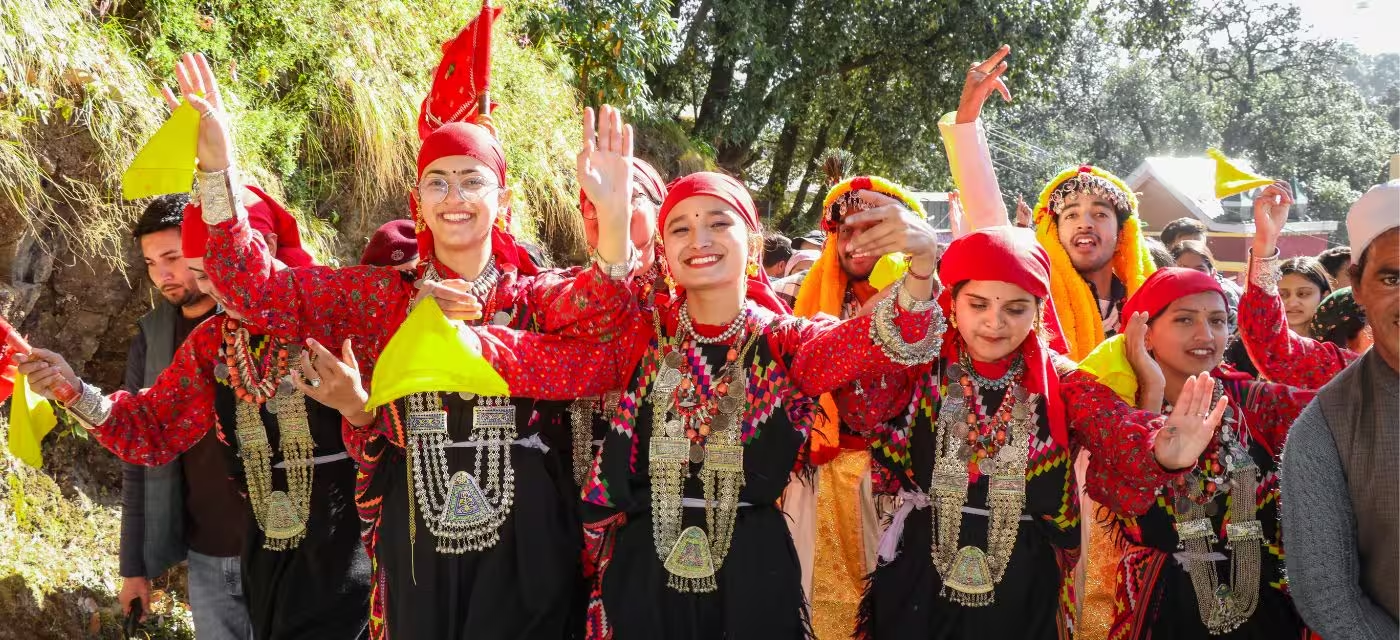
…And the Gods Danced
“Keep close to Nature’s heart… and break clear away, once in a while, and climb a mountain or spend a week in the woods. Wash your spirit clean.”
— John Muir
The sound of birds, the river and the wind is suddenly broken by the rhythmic beating of drums and the blowing of horns.
I wake up with a start.
The music comes from the village above.
A celebration?
Yes. The local village devta — the village god — is receiving visitors. Other devtas from neighbouring villages are arriving, each carried on a decorated palanquin.
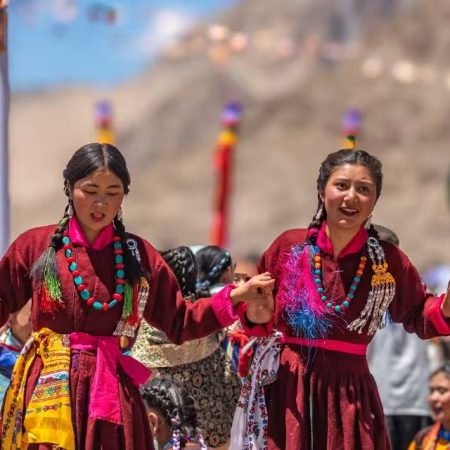
They will gather in the temple compound, where the entire village will come together for three days of dance, music and feasting.
This is the Kullu Valley.
The Valley of the Gods
Twenty years ago, the lure of trout fishing, crisp mountain air and the snows of the Western Himalayas brought my parents to settle in the small village of Bundrol, in the Kullu Valley.
Bundrol lies amid apple and plum orchards on the slopes of the Dhauladhar mountains, overlooking the River Beas as it winds its way through the valley.
Situated almost in the centre of the valley at around 5,000 feet, Bundrol is approximately 12 km upstream from Kullu.
To the east rise the Kothi Kharal mountains, while the Pir Panjal range stretches across the north. Beyond stands the perennial snow of Rohtang Pass, rising to around 13,500 feet above Manali.
The valley stretches from Rohtang in the north to Aut in the south, where the Beas enters a gorge formed by the meeting mountain ranges before continuing towards the plains of Punjab.
This extraordinary landscape has earned Kullu its most evocative name:
The Valley of the Gods.
Living Gods of Kullu
The richness of Kullu’s Himalayan culture becomes apparent wherever you travel.
Every village community traditionally exists under the authority of its own village god, or devta.
The temples dedicated to these gods represent an unusual form of devotion.
They rarely contain a conventional image or statue.
Instead, the gods are regarded as living, moving beings, carried from one place to another on magnificent palanquins.
The Sacred Devta Palanquins
The palanquins are beautifully decorated with metallic mohras, or masks, often garlanded with gold or silver.
Some are made using ashtadhatu, an alloy of eight metals.
The masks are attached to an underlying wooden structure using bolts of cloth. The entire ensemble is then decorated with colourful silk and satin fabrics, flowers and barley grass.
Mounted on poles, the palanquin is carried on the shoulders of men associated with the devta.
But the palanquin never travels alone.
It is accompanied by an entire group of people:
- The caretaker
- The priest
- The oracle
- Musicians
- Attendants
- Bearers of sacred artefacts
Together, they form a moving expression of the village’s spiritual and cultural life.
When the Gods Gather
Special fairs and ceremonies are held throughout the valley in honour of the devtas.
The greatest spectacle is Kullu Dussehra.
During the festival, the Raja, or king, of Kullu traditionally invites hundreds of gods and goddesses from across the valley to pay their respects to Raghunath Ji, the ruling deity.
A grand procession follows, accompanied by rituals and ceremonies.
It is not simply a religious gathering.
It is a spectacular expression of the living culture of the Kullu Valley.
Where Gods and People Meet
In villages throughout Kullu, the temple grounds serve purposes far beyond worship.
They become centres of social and cultural activity.
Here, people and gods come together through music, dance and ritual.
The relationship between the divine and the community is particularly fascinating through the village oracle.
The oracle enters a deep trance and is believed to communicate messages from the devta to the people.
These messages can concern almost every aspect of everyday life:
- Weather
- Harvests
- Property
- Health
- Relationships
- Stolen jewellery
- Misplaced documents
In this way, ancient spiritual traditions remain woven into the everyday lives of the people.
Orchards of the Himalayas
The Kullu Valley’s modern agricultural landscape also carries a historical legacy.
The region was encountered by colonial rulers in the late 19th century, who introduced fruits including:
- Apples
- Plums
- Pears
- Cherries
- Apricots
More recent additions include kiwi and persimmon.
Today, horticulture, along with weaving and tourism, forms an important source of income for the valley.
The orchards that colour the mountains are therefore not simply beautiful landscapes. They are an essential part of local life.
Beyond the Tourist Trail
For the discerning traveller, some of the greatest experiences in Kullu lie away from the familiar tourist routes.
The higher meadows and peaks offer breathtaking opportunities for trekking and hiking.
Along the river valleys, beautiful walking routes lead into villages where time appears to move differently.
Terraced hillsides are still cultivated by hardworking men and women.
Traditional wooden houses with slate roofs sit among the mountains.
Cattle continue to thresh grain.
And inside the homes, families gather around warm kitchen fires.
A Taste of Mountain Life
The hospitality of the Kullu villages is as memorable as the scenery.
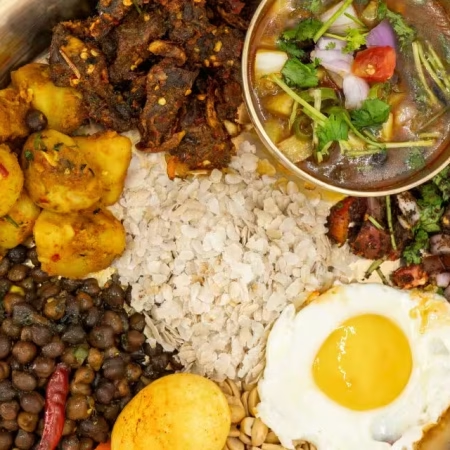
Travellers may be invited to share a local meal featuring dumplings stuffed with walnuts and poppy seeds, served with piping-hot ghee.
Mustard greens and red kidney bean curry complete the meal.
Children peek shyly and giggle from wooden balconies.
Weathered faces smile warmly at visitors.
There is something deeply moving about experiencing this simple, intimate way of life amid the extraordinary abundance of the Himalayas.
And Perhaps, If You’re Lucky…
Kullu is more than snow-covered mountains, orchards and rivers.
It is a landscape where ancient beliefs continue to breathe.
Where village gods travel through the mountains.
Where drums and horns announce celebrations.
Where temples become centres of community life.
Where music and dance bring people together.
And where nature remains deeply connected to culture.
So leave the crowded tourist trails behind.
Walk into the villages.
Listen to the drums.
Follow the sound of the horns.
And if you are lucky, you too may get a chance to see the gods dance.
Related Posts