 English
 Deutsch
 Italia
 August 27, 2026 By admin
Rajasthani Cuisine Food Traditional Dishes
THE CUISINE OF RAJASTHAN -AN UNFORGETTABLE REPAST ON THE SANDS
Food is everything we are. It’s an extension of nationalist feeling, ethnic feeling, your personal history, your province, your region, your tribe, your grandma. It’s inseparable from those from the get-go. – Anthony Bourdain
Rajasthan has long been a prime destination for tourists and travellers visiting India, and the subject of many travelogues and celebrated images. With its brilliant colours, stark and stunning landscapes, spectacular architecture, and rich history, the state is a dazzling tapestry of unforgettable experiences.
The cuisine of Rajasthan reflects the ingenuity of its people who have made their homes in this largely arid land for centuries. Rajasthani food offers a whole range of innovative dishes that were created to get around the paucity of water, and therefore, of vegetables. It naturally falls back on ingredients such as dried lentils, beans, berries, legumes, milk, yoghurt, and buttermilk. The staple grains of Rajasthan are the hardy millet, wheat, and gram.
Spices (such as tamarind, coriander, cumin, sesame, turmeric, ginger, garlic, cardamom, carom seeds, amchoor (dried mango powder), cinnamon, nigella seeds, aniseed, cloves, asafoetida, dried fenugreek) which grow well even in arid soil are widely used, along with oil and red chillies, which not only help preserve the food but also reduce the need for water which is a much-valued commodity in a desert economy.
The hunting expeditions and the ongoing battles waged in olden times, as also travels for purposes of trade required the menfolk to stay away from home for long periods. The food therefore had necessarily to have a long shelf life without requiring any heating.
Interestingly, Rajasthani cuisine has remained almost unchanged to this day, notwithstanding extensive communication and trade between the Rajput kings and the Mughal emperors. Mughal influence on Rajasthani architecture, perhaps even attire and customs, was obvious. However, Mughlai cuisine, despite its overwhelming popularity, could never truly influence the cooking traditions of this glorious desert state. Mughlai cuisine resorts to lavish use of ingredients not easily available in an arid desert region such as Rajasthan. The few visible influences in Rajasthani food may be seen in certain varieties of pulao and, for instance, in the barbecue grilling technique used for making kebabs.
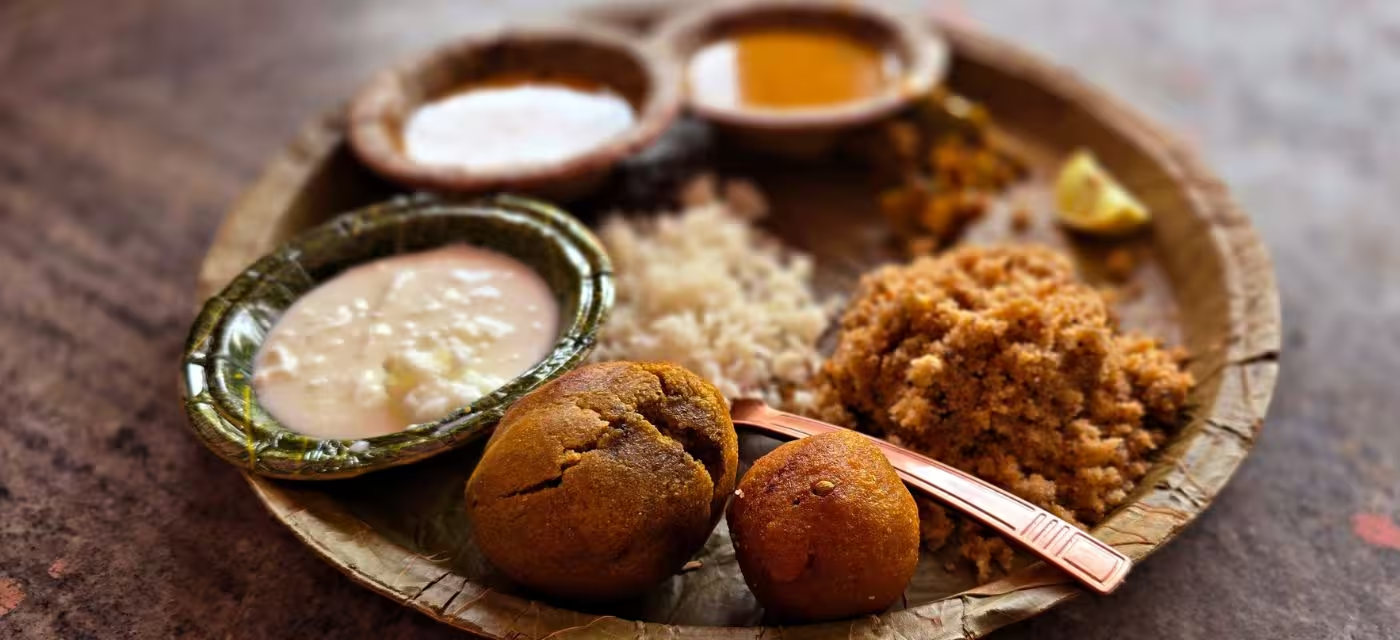
Dal baati churma This is Rajasthan’s famed dish. Baati is tough, unleavened bread prepared in the desert regions of Rajasthan. Baati is a particular favourite for its long shelf life. Besides, it requires very little water for its preparation. It is always accompanied by dal (lentil curry). Churma is a coarsely ground wheat mixture crushed and cooked in ghee (clarified butter) and jaggery or sugar.
Pyaaz ki kachori The ubiquitous kachori is a fried savoury or sweet pastry stuffed with various ingredients. The pyaaz (onion) ki kachori, known to have originated in Jodhpur, is enjoyed as a breakfast snack. The flaky, deep-fried snack is made from white flour and a filling of a pungent mixture – onion and spices such as fennel, cumin, turmeric, and chilli powder. Generally, these mouth-watering kachoris are served with two chutneys, one of coriander and mint, and the other of date and tamarind.
Laal maans Rajasthan’s most famous non-vegetarian dish is laal maans, meaning ‘red meat’, and gets its name for its blazing red colour. Traditionally, the meat would be prepared using wild boar or deer. Today, it is a marinated spice-infused rich mutton curry cooked on simmering low heat, in a fiery gravy sauce of red chillies, garlic paste, sliced onions, and yoghurt. And hence its redness!
Gatte ki sabzi Gatte ki sabzi is made with gram flour dumplings (steamed and lightly fried) and a tangy gravy of tomato, buttermilk, and spices. By and large, Rajasthani fare is vegetarian. Traditionally, almost all ethnic groups in Rajasthan abstained from meat-eating. Their diet relied mainly upon local produce and on dairy products for cooking. For the nonvegetarians, the prime source of meat was actually game meat, as shikaar, or hunting, was a popular pastime of the Rajputs, and the prerogative of those of them with royal blood.
Ker saangri One of the all-time favourites in Rajasthan, ker saangri is made using ker, a wild berry that has a tangy and peppery flavour, and saangri, a type of long bean that grows abundantly in the desert regions of Jaisalmer and Barmer. During seasons of drought, when little else is available, Saangri is what sustains the people, as it is 53-per-cent protein. Ker sangri is cooked with buttermilk or water.
Baajre ki roti with lahsun ki chutney Baajra is black millet flour and immensely enjoyed all over Rajasthan. In villages, thickly rolled baajra rotis are cooked over cow-dung cakes, which lends the rotis a smoky flavour. The rotis are a great accompaniment to vegetable or other preparations on a Rajasthani menu. Baajra roti is usually served along with lasun ki chutney, a garlic dip made from garlic, red-chilli powder, lime juice, jaggery, and homemade ghee.
Ghevar A special dessert treat from the deserts of Rajasthan! Ghevar is a Jaipur specialty, disc-like in appearance, with an unusual texture, like that of a honeycomb. It is made from all-purpose flour, ghee, and milk, and soaked in sugar syrup, garnished with the perfect finish – sliced almonds, saffron soaked in milk, and cardamom powder. Come then on winged feet! Enjoy sunny Rajasthan! Savour the flavours of a land extraordinary!
Related Posts