 English
 Deutsch
 Italia
 August 19, 2026 By admin
Zanskar Down the Solitary River
ZANSKAR: Down the Solitary River
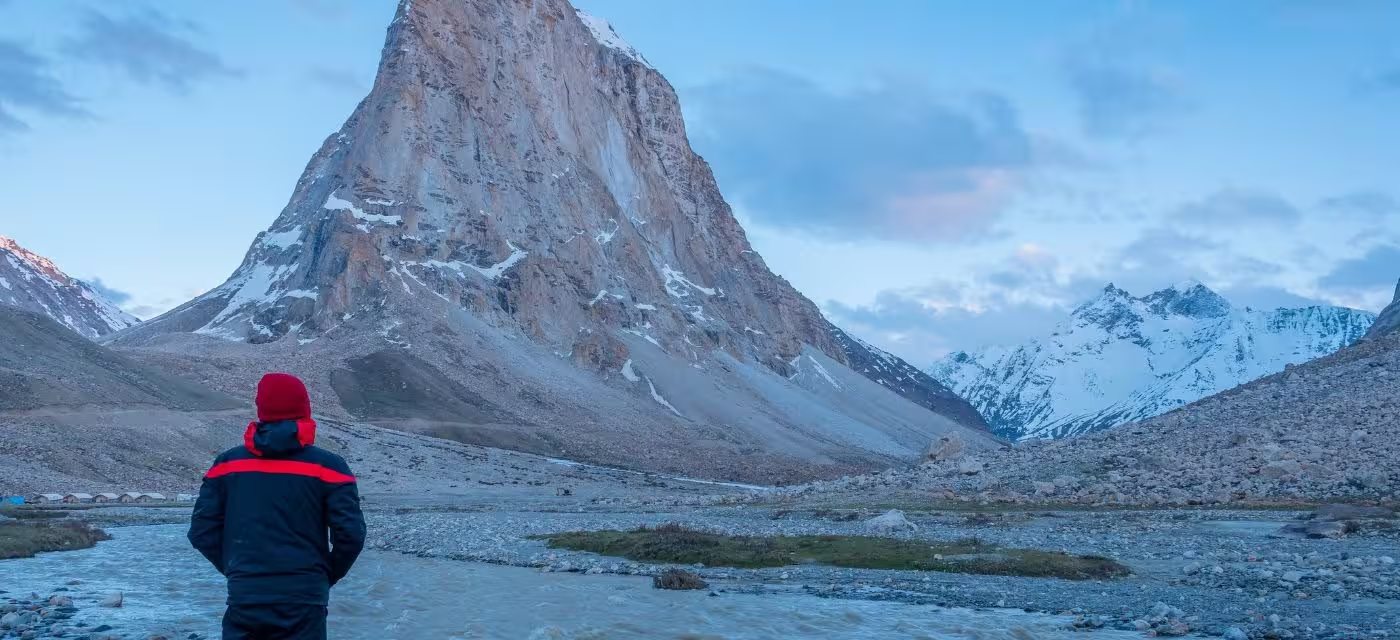
It’s a three-day bus journey from Leh to Ladakh, in the northernmost state of Jammu and Kashmir. The starkly stunning landscape of the Zanskar Valley lies in the high-altitude mountains of Ladakh—they protect the Valley, keeping it beautifully remote and nearly inaccessible.
The Zanskar Valley is impossibly cold, and the air only gets thinner as you climb higher. But what awaits you is magnificent—the sight of the gorgeous Zanskar River as it winds its way across the Valley. And rafting down this splendid river is an experience you will never forget.
The Journey Begins
Remala, the base for the rafting expedition, is situated on the Stod River, a tributary of the Zanskar River. Remala lies 230 km southeast of Kargil and 415 km southwest of Leh.
The route requires you to spend a few days acclimatising, preparing you to overcome the dizziness, headaches and breathlessness that come with the high altitudes of the region.
Remala, embraced by the gushing Stod as it races through the mountains, is where the rafting expedition begins.
Rafts are pumped up and gear is loaded. Neoprene wetsuits, splash jackets, gloves and helmets are put on. Safety and rescue instructions are issued with great seriousness.
The last bit is the one to pay attention to the most!
Because here, in the beautiful but unpredictable Zanskar Valley, nothing is to be taken for granted or underestimated. When you’re rafting, especially if you’re a beginner, it’s only too easy to fall into the bitterly cold water and get hypothermia—and that’s dangerous.
In rafting, rivers are graded according to how easy, difficult or even dangerous they are to navigate. The Zanskar is graded as a difficult Class IV river.
Into the Rapids
Carrying the rafters are paddle rafts and oar-powered rafts, catarafts for the gear, several safety kayakers and, of course, the one person each group of rafters can’t do without—the guide.
The first stretches of the river are short and easy, with a few Class II rapids. Meanwhile, the guides are constantly at hand, giving lessons on how to paddle and move through the speeding waters.
And yes, there is time to take in the outstanding beauty of the rugged peaks and bare terrain as you glide past them.
Over the next few days, the expedition stops at designated campsites along the way, allowing you to break journey, relax and recoup, so that you can be up at the crack of dawn the next day—ready for the river again!
The Zanskar Gorge
When the rafts enter the breathtaking gorge that drains the river system of the Zanskar, it’s both terrifying and thrilling.
Because here, there’s no other way to move forward except on the water—you raft, go by boat or, in the deep winter, when the Zanskar freezes over, walk on the ice.
There’s not a plant or even a shore in sight. Instead, black, red and mustard-coloured rock walls loom high and craggy on either side of the roaring river.
Here, in the deep gorge, the Class III rapids get tougher, faster, more furious and increasingly tricky to navigate. The rock cliffs become narrower, ensuring that you put everything you have into paddling, as if your very life depended on it.
Rescue is much tougher here than in other spots.
But it’s in the very heart of the gorge that the real excitement lies.
Rafters experience large Class IV rapids as the river smashes its way through extremely long stretches that can only be covered over the next few days, with a break or two at campsites.
The Final Descent
Finally, after hours and days of tireless paddling and navigating, you approach the very last and most chilling stretch.
And then you are marvellously rewarded with a moment you’ll never forget for the rest of your life.
The ferocious river bursts out of the canyon and then simply drops.
Down you go—raft, paddle and all—until you hit the enormous expanse of water below!
From here, you paddle through Class III and IV rapids again, crossing the confluence of the Indus and eventually reaching the shore at Nimu, from where you travel back to Leh.
The journey is exhausting, exhilarating and unforgettable—a rare encounter with one of the most remote and dramatic river landscapes in the Himalayas.
What are you waiting for?
The magnificent Zanskar River beckons.
Related Posts