
 English
 Deutsch
 Italia
 May 14, 2025 By admin
Wonders Of Kerala Cuisine
Wonders of Kerala Cuisine
Also regarded as the spice bowl of India, Kerala is home to many delicacies appealing both vegetarians and non-vegetarian alike.
Being blessed with a long coast line and dotted with several ports, Kerala has always welcomed traders from all parts of the world – Europe, Arab countries, Mediterranean and China. Thus, Kerala cuisine is a blend of indigenous and foreign influences tweaked to local tastes.
For example, tapioca or cassava has come all the way from Brazil transported to Kerala during a period of famine. It was a very popular vegetable as it is high in starch and carbohydrate and an instant hit in Kerala as an alternative of rice.
The combination of tapioca and fish curry which was once a staple diet of the poor has now found place on the menu of food aficionados and continues to be a favourite in every Kerala household.
Traditionally, Kerala cuisine was predominantly vegetarian and revolved around locally available ingredients. However during the course of time and with Christians and Muslims moving into the state to set up businesses, the food preferences changed incorporating their cooking styles.
Today, Kerala cuisine offers a multitude of vegetarian and non-vegetarian options. Due to its vast coastline, fish and other seafood varieties are an integral part of the cuisine.
Unlike their counterparts from other parts of India, most of the Hindus residing in Kerala, except Brahmins, eat fish, chicken, beef, pork, eggs and mutton with relish.
Before Independence, when Kerala as a state was not formed, the region was divided into three princely states namely Travancore (south), Kochi (central) and Malabar (north). The cuisine of every region was different from the other, not in terms of the ingredients but in terms of the style of cooking and the names of the dishes.
Kerala cuisine is quite different from North Indian cuisine and even the food pattern is different. While wheat-based breads such as chapatis, rotis are a part of the daily meal in North India, the people of Kerala enjoy eating boiled rice and tapioca.
Districts of Thiruvananthapuram and Palakkad share its boundaries with Tamil Nadu and hence are greatly influenced by the Tamilian culture and its food habits. This is evident from the hugely popular breakfast of idli, sambhar and dosas.
The wide network of bakeries across the length and breadth of Kerala selling varieties of breads, cakes, puff pastries and cutlets speaks of the European influence. Strong affinity to potatoes and tomatoes were seen as result of its import from America.
Kozhikode (Calicut) in northern Kerala or the Malabar region is fondly referred to as ‘the gourmet capital of Kerala’ and has been a paradise for indigenous food hunters.
The regions boats of an array of delectable dishes using a cooking method that blends Arabian, North Indian and indigenous Malabari cuisine with generous usage of chicken, eggs, beef and mutton and are mostly mild spiced and suitable to foreign palates as well.
The cuisine of Central Kerala is by and large spicy to suit the tropical weather conditions.
Kerala is the land where coconuts grow in abundance and therefore forms a major ingredient in most of the Kerala dishes, either as slices, grated, in paste or in the form of milk used for thickening the sauces and curries.
Other frequently used ingredients in Kerala cuisine are green chillies, curry leaves, mustard seeds (for tempering), tamarind and asafoetida.
Also there are a quite a few vegetables/raw fruits which find a place only in Kerala cuisine and not so commonly used in other parts of India, raw bananas, jack fruit, bitter gourd, yam, colocasia, tapioca and the ash gourd just to name a few.
Kerala Sadhya
The king of all meals, Sadhya is a traditional ceremonial meal associated with festivities and celebrations and served on plantain leaf and to eaten with bare hands.
An authentic Sadhya would comprise plain boiled rice served along with about 20 different accompaniments and local desserts.
Kaalan, avial, thoran, olan, pachadi, mango pickle, lime pickle forms the major side dishes, along with papadam, banana, plain yogurt, flavoured buttermilk and banana chips.
Two or three varieties of traditional dessert called payasam (sweet porridge) would be served at the end of the meal.
Each dish has a specific place on the plantain leaf and is served in a particular order. For example, the pickles are served on the top left corner and the banana on the bottom left corner.
Sadhya is a lunch event and an event that has to enjoyed at leisure. It’s also a refreshing change from the daily routine of fine dining, keep your fork and knife aside and enjoy your meal with your fingers.
Must Try When in Kerala
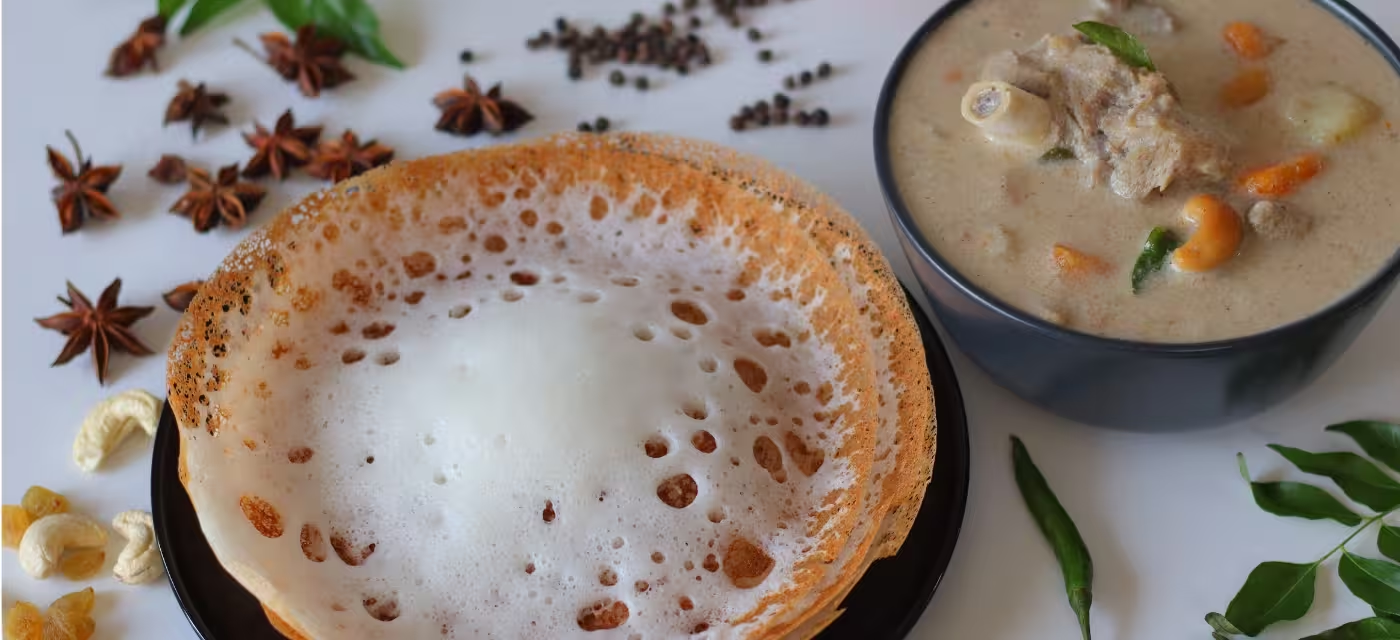
Appam and Stew
Similar to hoppers, appam is a pancake made with a batter of raw rice, coconut, yeast and cooked rice.
Appams are fluffy at the centre and crispy in the outside and best paired with mild vegetable stew flavoured with coconut milk.
Always go for the freshly cooked ones and your chef would be more than happy to do it for you. Appams are best to have in breakfast and can be enjoyed with chicken/mutton stew and egg curry.
Karimeen Pollichathu (Shallow Fried Pearl Spot on a Plantain Leaf)
A delicacy of central Kerala, this dish is made of the indigenous fish named pearl which is commonly found in the backwaters of Kumarakom and Alleppey.
Fresh fish is marinated and wrapped in plantain leaf and shallow fried on a slow flame.
Eating pearl spot itself is an art as there are sharp bones but an expert eater would have flaked off the entire meat leaving a fossil like skeleton behind.
Pazham Pori (Banana Fritters)
An all-time favourite tea time snack in Kerala is made with ripe bananas.
Slices of bananas are dipped in a batter made of refined flour and sugar and deep fried in oil.
The name varies from pazham pori to vazhakka appam to ethakka appam in different regions of the state.
This is recommended to be tasted at a street side local tea shop with a cup of tea.
Related Posts