 English
 Deutsch
 Italia
 August 18, 2026 By admin
Western Ghats
The Great Escarpment
“Climb ev’ry mountain Search high and low Follow every byway Every path you know Climb ev’ry mountain Ford every stream Follow every rainbow’Till you find your dream”
— The Sound of Music
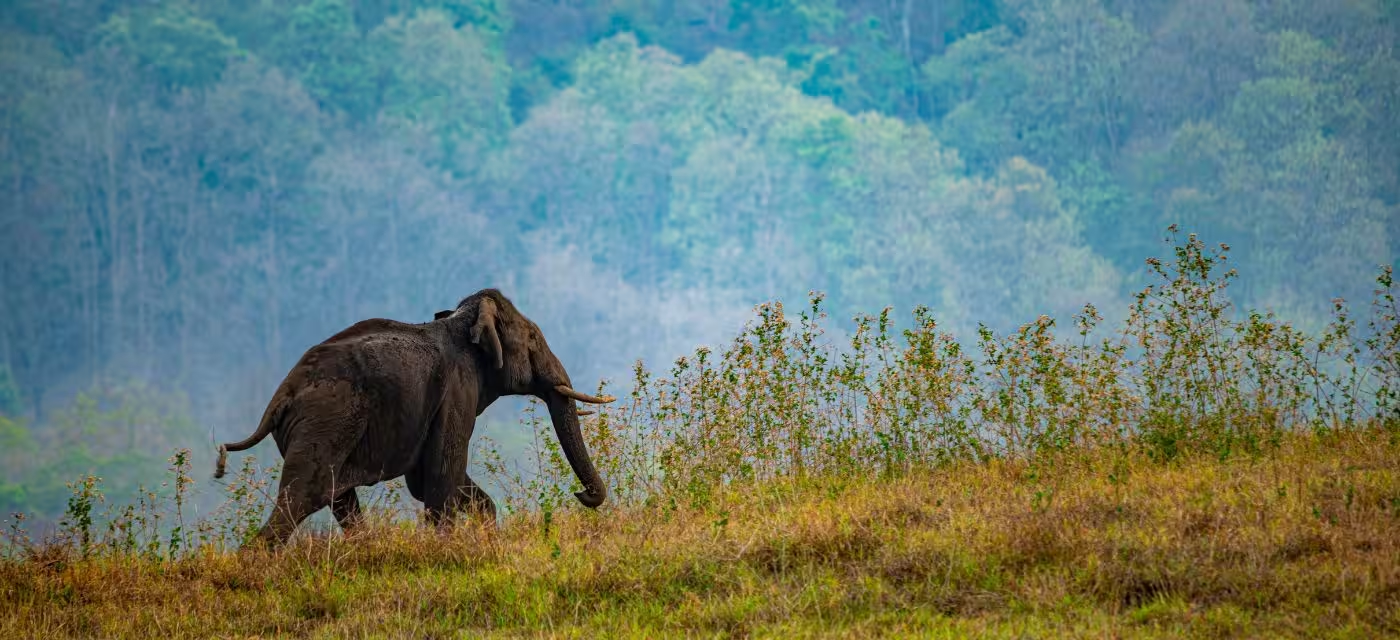
As the train hurtles down the stunning western coastline of India’s peninsula, the glistening waters of the beautiful Arabian Sea come into view on one side, and on the other side, running almost parallel to the coast, is a splendid mountain range. Lush, emerald green, and older than the great Himalayas, the breathtaking mountains rise majestically, waiting patiently to meet the southwest monsoon as it lashes the edge of the sea.
The rain-laden winds blow with great force, but the impassable mountains stop them, making sure they don’t cross the peaks and thereby protecting the Deccan Plateau.
Meet the Western Ghats.
Covering nearly 1,600 km, this gorgeous range begins at the border of the states of Gujarat and Maharashtra, runs along the western edge of the Deccan Plateau, and ribbons through the states of Maharashtra, Goa, Karnataka, Kerala, and Tamil Nadu before finally coming to rest at Kanyakumari, the southernmost tip of India.
If you’re travelling in India, then journeying through the Western Ghats is an experience not to be missed. The Ghats have been listed as a UNESCO World Heritage Site, with 39 spots across Kerala, Tamil Nadu, Karnataka, and Maharashtra designated as World Heritage Sites.
The Ghats are also one of the world’s eight “hottest biodiversity hotspots”, with several thousand rare, threatened, and perhaps even undiscovered species of flora and fauna to be found here.
With its undulating hills, deep valleys, dense rainforests, cascading rivers, lakes, and spectacular waterfalls, this ecologically rich range is naturally also home to some of India’s finest reserve forests, national parks, wildlife sanctuaries, tiger reserves, and biosphere reserves. The old colonial hill stations set high in the Ghats are also great getaways for travellers looking to escape the Indian heat.
If you’re seriously considering hitting the Western Ghats trail—which is so long and dotted with so many destinations that it’s tough to choose—these are perhaps some of the finest places to cover on the trail, including a few off-the-beaten-track destinations.
MAHARASHTRA
Matheran
The tiny 8-km hill station, and Asia’s only pedestrian hill station, is situated 2,636 ft above sea level in the Western Ghats. It has, for years, been the perfect getaway for busy Mumbaikars.
One of Maharashtra’s prime tourist destinations, Matheran has managed to remain a lovely hill destination because Maharashtra Tourism has preserved this ecologically sensitive zone by banning motor vehicles within town limits.
Matheran has a thick evergreen forest cover and plenty of fresh air, making it a pleasure for walkers and trekkers. For all those who want to make their way to the top of the ghat, the options are to trek, go on horseback, travel in hand-pulled carts, and even take the toy train.
Matheran has about 38 beautiful lookout points, offering unparalleled views of the gorgeous plains and rivers in the distance.
- Panorama Point: A refreshing trek, ideal in winter and the monsoon, offering great views of Neral and even Mumbai.
- Hart Point: Densely forested and perfect for birdwatchers.
- Monkey Point: Another lovely forested viewpoint.
- Porcupine Point: Famous for its sunset views.
- Louisa Point: Offers a view of Prabal Fort.
- One Tree Hill Point: True to its name, the point has only one tree. You can walk the footpath from here to Shivaji’s Ladder.
- Rambagh Point: Offers views towards Karjat and Khandala.
- Alexander Point: Provides a view of Chauk Valley.
Charlotte Lake, surrounded by forest and close to Pisharnath Temple, should not be missed.
There are many different routes to get in and out of Matheran. For travel enthusiasts and lovers of the outdoors, the Matheran–Karjat, Matheran–Vangani Station, and Railway Line Trek are fantastic route choices.
Bhimashankar
This little-explored spot in the Desh region of Maharashtra is perfect for those who want a break from the usual destinations. Located in the northern Sahyadris and 273 km east of Mumbai, Bhimashankar has lush forests, hills, and the lovely waters of the Bhima River flowing quietly through.
The river is considered sacred, and the lingam, a symbol of Shiva, attracts many devotees. Bhimashankar has another surprise: the stunning Nagara-style 18th-century Jyotirlinga Temple, built over a swayambhu lingam.
Behind the temple is a little trail that leads deep into the heart of the forest. This is the beautiful Guptbheema, the origin of the Bhima River, and worth every bit of the effort.
There is also the Bhimashankar Wildlife Sanctuary, which organises quite a few treks. The trek to the sacred grove of Vandev is perhaps the most popular.
GOA
Chorla Ghat
Hidden away in Goa’s interior are fabulous stretches of pure, protected nature. Chorla Ghat is a quiet, beautiful mountain destination located at the intersection of the borders of Goa, Karnataka, and Maharashtra.
It lies to the northeast of Panaji, Goa, and is part of the Western Ghats in the Sahyadri mountain range. It is situated at an elevation of 800 metres.
Chorla Ghat is a tropical rainforest and now an eco-tourism destination.
The Ghat is fabulous for birdwatching, butterfly watching, and simply walking. The dense forests have plenty of wildlife, but most of it is rare and endangered and fortunately protected, so the animals can be tougher to spot than usual.
You can trek to see the many waterfalls around the area, especially the Twin Vajra Waterfalls, visit Lasni Temb Peak, or simply explore the lovely rainforests on jungle walks.
Mollem National Park
Bhagwan Mahaveer Sanctuary and Mollem National Park is a 240-square-kilometre protected forest area in the Western Ghats of Goa, along the eastern border with Karnataka.
The dense forests here are the ideal home to a variety of wildlife. You could drive through or take the mud trails, and if you’re lucky, you may spot a herd of bison, a porcupine, a wild boar, or a flying lizard. This is also a wonderful place for birdwatching.
A visit to the stunning 12th-century Tambdi Surla Temple, built by the Kadambas, is worthwhile. The temple is dedicated to Shiva and stands out for its intricate and fine carvings.
The treasure of Mollem is really the tiered Dudhsagar Falls, literally “Sea of Milk”, which thunders down from a height of 300 m. It is Goa’s tallest waterfall and India’s fifth tallest. A viaduct of the South Western Railways passes through the waterfalls.
The water from the falls flows down into the dangerous Devil’s Canyon, a rock formation below. The 18-km trek to the falls is great for trekkers.
The Tambdi Waterfall, located about 2 km southwest of Tambdi Surla, at the Karnataka border, is equally spectacular if you can manage the arduous trek.
Sunset Point offers a wonderful view of the scenic park and its lovely expanse of closed-canopy treetops.
KARNATAKA
Madikeri
This enchanting capital of the Kodavas in the heart of Coorg is known for its austere and quiet beauty. Madikeri is 1,166 metres above sea level and 96 km from the Brahmagiri Hills.
The mighty River Cauvery meanders through a spectacular landscape covered in lush green forests of bamboo, sandalwood, and rosewood; waterfalls, ravines, streams, and endless grassy slopes.
Then there are the coffee bushes with their red berries and the divine fragrance of coffee heavy in the air; the unmistakably delicious aroma of fresh cardamom, pepper, nutmeg, oranges, and turmeric; the wonderful sweetness of wild Coorg honey; elephants and tigers; and the villages of the Kodavas—all mesmerising and inviting.
If you’re travelling by vehicle, these are the places to see:
- Madikeri Fort: An 18th-century fort built by Tipu Sultan.
- Raja’s Seat: Originally the spot from where the Kodagu kings viewed the landscape. Today, it offers views of valleys, paddy fields, and the blue Western Ghats.
- Abbi Falls: A gorgeous waterfall located inside a privately owned coffee estate.
- Omkareshwara Temple: An unusual mosque-style temple built by the Kodagu king Lingaraja in 1820.
If you’re an avid trekker, Coorg is a fantastic place for walking and climbing. Through coffee and pepper plantations, along the beautiful Cauvery, through forests, or simply uphill and downhill—it’s refreshing and immensely enjoyable.
For wildlife lovers, the Coorg Wildlife Society organises treks to Pushpagiri, Brahmagiri Sanctuary, and other spots in the area. The Society also arranges licences for angling in the Cauvery. After you’re done fishing, however, you must return your catch to the river.
Kakkabe
At the base of the Western Ghats, in the heart of the rainforest in southern Kodagu, lies the little village of Kakkabe. Guarding the village is Thadiyendamol, the highest peak in Coorg. Kakkabe is 254 km from Bengaluru.
Once the largest producer of honey in Southeast Asia, this unspoilt beauty of nature is rich with stunning rainforest, pretty trekking trails, waterfalls, streams, rare flora, and many birds.
Definitely begin your day with the most remarkable and majestic gift of nature here—Thadiyendamol Peak. Standing at 5,730 ft, this giant of Coorg is fabulous to climb through the thick, glorious rainforest that surrounds it.
If you’re planning to stay in Kakkabe, the Palace Estate deserves special mention. Built high at the foot of Thadiyendamol, this fantastic homestay is surprisingly a no-frills, almost rustic place, but that’s all part of the remarkable experience.
The tranquil estate has spectacular views from its lodge and is actually the point from which trekkers begin their steep climb up the peak. The estate itself is lovely to walk around, with coffee bushes and a 50-foot-high waterfall.
You can then take a longish, one-hour walk to the scenic Nilakandi Waterfall. Here you can spot pangolin, the flying squirrel, barking deer, and the South Indian marten, the only one of its species found in South India.
Also of interest are the Igguthappa Temple, where every visitor is given a three-course meal, and the Nalnad Palace, built in 1792 and formerly the royal hunting lodge and summer home of the Kodava kings.
KERALA
Munnar
Kerala’s famed hill station rests at 5,000 ft in the Western Ghats in Idukki District, at the confluence of the three streams—Nallathani, Kundala, and Muthirapuzha—from which it derives its name, Munnar, meaning “three rivers”.
Idyllic Munnar was one of the favourite summer resorts of the British. Today, this breathtakingly beautiful hill destination has endless stretches of green manicured tea plantations, gorgeous valleys, lush forests, wildlife sanctuaries, pristine streams, great waterfalls, several endangered species of wildlife, and pure air fragrant with spices.
The remarkable and rare Neelakurinji, or Strobilanthus flower, which blooms only once every twelve years, is found in Munnar.
There’s much to see and do:
- Eravikulam National Park: An outstanding example of wildlife conservation and home to the Nilgiri tahr, a highly endangered species of wild goat that is also Munnar’s mascot.
- Tea Museum: Traces the history of the tea industry in Munnar from the 1880s.
- Kolukkumalai: The highest tea plantation in the world.
- Athukad Falls, Cheeyapara Falls and Valara Falls: Magnificent during the monsoon as they roar, plunge, and cascade from great heights.
- Mattupetty Dam and Sethuparvathipuram Dam: Offer cruises, elephant and horse rides, and opportunities for wildlife sightings.
- Lockhart Gap: Offers a great view of Bison Valley.
If you’d like to buy something special, Munnar is tea country, so choose from the finest varieties produced locally. You can also pick up spices and strawberries, two things Munnar is equally known for.
Vagamon
Situated in the Sahya range of the Western Ghats bordering Kottayam, this pristine hill getaway is fortunate to remain among the lesser-explored destinations. This is what gives it a feeling of happy solitude and untouched beauty.
It’s like plunging into the heart of an emerald. Vagamon is 3,500 ft above sea level.
Rolling green hills, deep ravines, wayward streams, cascading waterfalls, tea gardens, and the remarkable road cut in solid rock and lined with quiet pine forests are just some of the superb sights to experience in Vagamon as the coolest of breezes wafts over you.
When you’re here, begin with Kurisumala, a spiritual retreat and pilgrim centre for Christians, about 10 km from Vagamon.
Kurisumala recreates the Way of the Cross in a series of pictures or tableaux. The 2-km trek is not too tough. Groups of pilgrims and devotees pass from station to station, offering prayers as they climb.
The views from here are wonderful, with beautiful valleys and towns below, tea plantations, and more. You can also reach Kurisumala by jeep.
For adventurous tourists, there are options for trekking, paragliding, and rock climbing.
TAMIL NADU
Red Hills
Twenty-eight kilometres from Ooty, in the Nilgiri Biosphere Reserve, is an ecologically fragile zone where development isn’t allowed anymore.
Come away from the clamour and crowds of Ooty and take the Muthorai Road to the area called Red Hills. You will never regret it, because this is a place that feels as though you’ve stepped back in time.
First named by the British, Red Hills is gorgeous and virtually unspoilt by the progress around it. There are many lakes, wonderful large forests, tiny rivulets, lush endless mountain slopes, fantastic flowers, houses with slanting roofs and chimneys, rolling tea gardens, and pure air.
Within a 25-km radius of Red Hills are eight pristine, beautiful lakes that can be seen from the tops of the hills. You can take a tour along the lakes, fish in them, soak in the tranquil views, or simply walk through the mountain paths, slowly taking in the extraordinary landscape.
If you’d rather ride, several mountain bikes are also available to travel around the estate, down to the lake, and around the tea plantations.
Red Hills is a birdwatcher’s paradise. The area is home to more than 60 species of birds, including the Grey Hornbill, Wood Pigeon, Barbet, Black-and-Orange Flycatcher, White Scavenger Vulture, Black Eagle, Hawks, Honey Buzzard, Falcons, Kestrels, Harriers, Jungle Owlet, and Brown Hawk Owl.
About 13 km from Emerald Lake is Avalanche village, home to the Todas. The Todas are a unique tribe that has lived in the Nilgiris for centuries. Their village is distinguished by the rounded tops of their homes and small doorways.
There is also a hundred-year-old Trout Hatchery in Avalanche.
Make a trip to Parsons Valley Lake and experience the exhilarating scenery of its grasslands and forests.
If you’re looking to stay somewhere special, the Red Hill Nature Resort is just the sort of homestay to consider. This aristocratic colonial bungalow from 1875 rests high on a hilltop overlooking Emerald Lake and the surrounding areas.
Courtallam
Courtallam, or Kuttalam, is a small village high up in the Western Ghats on the Tamil Nadu–Kerala border. But this spot is quite unlike most other hill destinations.
That’s because Courtallam is famous for its waterfalls.
People throng this place simply to experience the thrill and magic of being under the rumbling falls.
There are six waterfalls at Courtallam, spread across a small area of around 10 km.
- Main Falls: Located at the Chittar River and cascading down three steps of a vertical rock face.
- Shenbagadevi Falls: Has a temple and a cave dedicated to a sage.
- Honey Falls: Named after the beehives on its rock face and unusual because it is shaped like a horseshoe.
- Five Falls: Located close to the Aravankadu Pass.
- Old Falls: A lesser-visited waterfall.
- Tiger Falls: Located close to Old Falls, with a temple and bathing ghat for pilgrims.
If you’re interested, you can drive from Courtallam to see the Papanasam Dam, which was built during the British period, in fact during World War II. It is a large dam that took five years to build.
A Journey Through the Western Ghats
It’s impossible to encompass the extraordinary beauty of the majestic and incredibly vast Western Ghats—the landscape before time—in a few pages.
But it is possible to make the journey and experience this rare and wonderful ecosystem and the unique biodiversity that thrives within it.
And when you’re finally in the midst of the spectacular landscape that feels as though it has been put on display especially for you, you stop to enjoy the stillness and solitude and realise that you’re about as far away from India’s marvellous chaos as you would ever need to be.
Related Posts