 English
 Deutsch
 Italia
 August 28, 2026 By admin
Maharashtra Travel
MAHARASHTRA
Truly Maha Rashtra, the Great Land
India’s spectacular Konkan Coast, lying between the Arabian Sea and the Western Ghats mountains, starts south of Mumbai in Maharashtra and extends for over 700 km to Goa’s border with northern Karnataka or Uttara Kannada.
Maharashtra’s share of this coastline reveals a scattered bounty of seaside gems that sparkle with the energy of picturesque little fishing villages, fisher-folk, orchards, temples, and trading ports. They are beautiful, pristine, and happily off the tourist trail.
A road trip along this route will reward you with unforgettable experiences – miles of silvery sands and azure waters; vibrant promenades and serene secluded alcoves; majestic marine fortresses and ancient temples; superb wildlife sanctuaries and rich marine life; lovely homestays and fabulous coastal cuisines.
Mumbai
The seven Portuguese-owned islands of Bombay were given in the dowry of Princess Catherine of Braganza to English King Charles II in 1661. A few years later the islands were leased to the East India Company who turned the area into a flourishing trading port.
Balancing its grand colonial heritage with modern grit and glamour, Mumbai is today, a global finance powerhouse, India’s commercial hub, and a fashion epicentre; it also has the largest slums in Asia, the largest tropical forest in an urban zone, and the most prolific film industry in the world.
This melting pot that extends into the Arabian Sea is home to dreamers and strugglers, actors and gangsters, fisher folk and millionaires, artists and sportspersons, and millions more.
See & Do
The wealth of Mumbai’s architectural heritage can be seen in its beautiful old buildings and monuments, many of which are fine examples of Victorian Gothic and Art Deco styles. Much of the city’s colonial heritage zones can be explored on foot.
Top highlights and experiences in the city and around include:
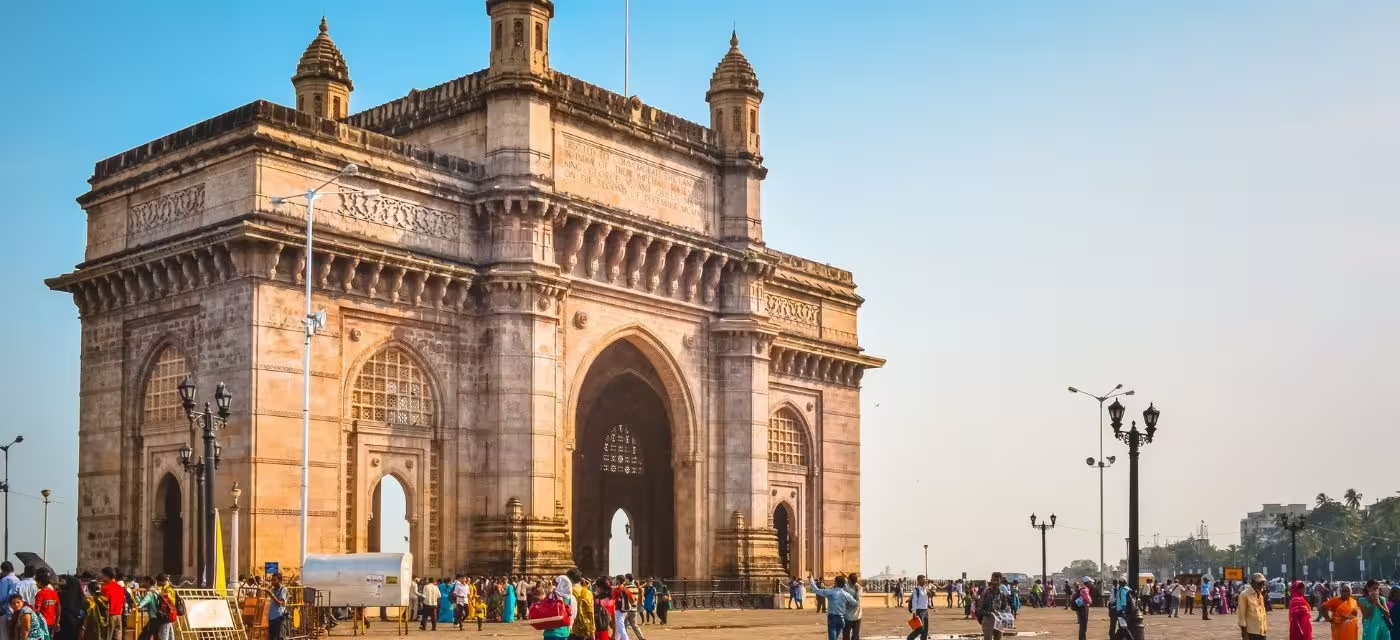
Gateway of India
Fountain and Kala Ghoda stretch
Fort Area
UNESCO-inscribed Victoria Terminus, now renamed Chhatrapati Shivaji Terminus
Marine Drive and Chowpatty stretch
Malabar Hill and Hanging Gardens
Khotachiwadi, the 19th-century enclave
Haji Ali dargah, dating to the 15th century
Elephanta Island & Elephanta Caves
Dharavi slum township
Bandra-Santa Cruz-Juhu area
Film City, Goregaon
Sanjay Gandhi National Park, between Mumbai and Thane
Shopping is one of the most exciting things to do in the city that never sleeps! Altogether delightful experiences await you when you step out into Mumbai’s cheerful, energetic, busy streets – from glitzy malls stocked with high fashion and luxury to street markets offering great bargains, Mumbai has something for every budget and interest.
You can get food here at all times. Mumbai’s street food is iconic. Or take your pick from the innumerable eateries – there’s seafood, Muslim fare, Parsi, Chinese, and Continental cuisines among a host of others, scrumptious bakery products…all unmissable.
Bordi-Dahanu
A 3-hour drive from Mumbai along the gorgeous Sahyadri mountain range will bring you to the pristine beaches of Bordi-Dahanu.
This coconut and casuarina tree-lined stretch lies on the border of Maharashtra and Gujarat in Palghar District. The area is famous for the delicious sapodilla (chickoo) fruit and several fruit orchards nestled in the mountains.
Dahanu is home to a large community of Parsis, who have lived here for generations, as well as the primitive Warli tribe, famed for their mural/wall paintings. Both communities have helped shape the unique cultural identity of the place.
Unspoiled by urbanisation, Bordi-Dahanu has been listed as a ‘green zone’ because it is ecologically fragile.
This is where you can experience coastal village culture, take a walk on the 17-km-long white sands of Bordi Beach, or even stroll up to the lovely mangroves on the tip of the beach, late evening.
At dawn or sunset, see the fishing boats returning with their catch or visit the local market to buy fresh seafood.
Asvali Dam is a lovely picnic spot, with its beautiful lake and surrounding Warli villages. Also nice to see are the Kalpataru Botanical Gardens in Umergaon, 10 km from Bordi.
Mumbai – Murud-Janjira
A visit to the gorgeous Murud Beach will lead you to its other gem – the Janjira Fort on an island in the sea.
Murud, a tiny village with thick foliage of trees on its coastline, is a breezy, sheltered stretch of sand flanked by hills on three sides, and opens up spectacular views of the sunset here.
The Janjira Fort is a famous 16th-century citadel that was built by the Siddis, trade-warriors from Abyssinia who settled in Murud-Janjira and ruled the region for about 400 years.
Mumbai – Diveagar
This seaside treasure of the Konkan will entice you to stay for days and days!
Diveagar, with its nearly five-kilometre-long silvery sands, is one of the Konkan coast’s finest beaches. Supari (betel nut) orchards line one side of the road, while the other side has dense coconut groves that part to make way for the stunning secluded beach.
Visitors here can see the endless ‘shifting phenomena’ – beach sands shifting due to the force of the waves!
This strip of the coast is also abundant in marine life, and flora and fauna – wonderful for nature lovers.
The other prime attraction at Diveagar is the Roopnarayan Temple that houses an exquisitely carved 900-year-old statue of Vishnu.
MUMBAI – CHIPLUN | CHIPLUN – GANPATIPULE | GANPATIPULE – RATNAGIRI | RATNAGIRI – MALVAN | MALVAN – TARKARLI – VENGURLA
Chiplun
Chiplun is a quiet town that serves as a perfect getaway from the crowds and noise of city life. Located on the banks of the River Vashishti and bounded by lush green hills, Chiplun has no ‘special’ attractions but does boast picturesque green vistas and beautiful spots to drive to.
See & Do
Visit Pedhe Parshuram village (10 km); it still retains the air of its centuries-old history and is noted for the ancient Parshurama Temple dedicated to Lord Vishnu’s sixth incarnation.
The temple sits atop a cliff, overlooking the Vashishti.
You’ll find plenty to do on the River Vashishti. Drive down to the jetty (20 minutes from the highway); enjoy boating in the evening; or try a bit of angling.
A note of caution though: crocodiles have been spotted in the river.
Ganpatipule
Even the beautiful road journey will not prepare you for the beach at Ganpatipule – a revelation of sorts.
The endless silvery sands here change colour with the time of day…best at sunset when the beach turns to gold, against the backdrop of golden skies!
Remarkably, even though Ganpatipule draws hundreds of tourists, it never seems to be crowded; staying serene and unspoiled.
People come here from all over to seek blessings at the nearly 400-year-old Swayambhu Ganapati Temple, which faces the beach. The view from the hillock behind the Temple is especially breathtaking.
While inside, the sanctum sanctorum is lit by the golden rays of sunrise and sunset, illuminating the massive stone idol of Ganapati.
A wonderfully relaxing weekend getaway, Ganapatipule is where spirituality and nature come together in sweet harmony. It is also abundantly blessed with mango, cashew, betel nut, jackfruit, coconut, palm, and casuarina trees.
See & Do
The tiny town stands out for its few roofed houses, neatly drawn roads, and red soil.
Tourists can explore the backwaters here, and enjoy water sports such as row boats, motorboats, aero boats, and pedal boats. There’s also paragliding to try.
A little outside, 35 km from Ganpatipule, is the Jaigad Fort, lying at the entrance of the River Shastri. The 17th-century fort offers majestic views of the sea.
If you’d like to try local delicacies, then make sure to try the ambapoli (thin pancakes of crushed and dried mango) and phanspoli (thin pancakes of dried and crushed jackfruit).
In the summer, you can savour the marvellous ‘Devgad Hapus’ (Alphonso) mangoes.
Malgund Beach (just before Ganpatipule) is a serene spot for quieter moments.
Untouched Aare Ware Beach, south of Ganpatipule, is not to be missed. The sea views from the cliffs and road above it on either side are fantastic.
Ratnagiri
Situated around 25 km from Ganpatipule, Ratnagiri is perhaps most famous for its delicious ‘hapus’ mangoes, that have firmly established it on the tourist map.
But look deeper, and you’ll see the other treasures the town has to offer – beautiful beaches made up of black and white sands, blue seas, green cliffs, a magnificent coastline, and enough historical and cultural attractions.
See & Do
Ratnagiri’s nicest and quietest beach is Bhatye Beach, especially near the Regional Coconut Research Centre.
The other two beaches worth visiting are Pandre Samudra and Mandavi.
Spread over 120 acres, the Ratnadurg Fort is not to be missed – you’ll catch fabulous views of the sea and the surrounding mountains from the citadel.
Thibaw Point also offers fantastic views.
Thibaw Palace is the legacy of Ratnagiri’s Burmese connection. The mansion, now converted into a museum, is where the British kept King Thibaw of Burma (now Myanmar) under house arrest in 1910-11.
Ratnagiri is also the birthplace of freedom fighter Bal Gangadhar Tilak. Tilak’s ancestral home, now called ‘Tilak Ali’, is one of the important landmarks of Ratnagiri, and is open to visitors.
Also significant is the Patit Pawan Mandir, which was the first temple built for the non-Brahmins by revolutionary leader Swatantryaveer Savarkar.
You can also visit the Bhagwati Bunder (sea port) if you’re interested.
Malvan
Once a tiny fishing hamlet on the Konkan Coast, Malvan sprang to new life when the Marathas came here, especially under their greatest leader, Chhatrapati Shivaji, who, in 1664, decided to build the massive fort of Sindhudurg, on an island just off Malvan.
Remarkably, the imposing warrior king contributed his own physical labour to the construction of the Sindhudurg Fort.
Which is why, when you visit the Fort, you’ll see imprints of Shivaji’s hands and feet preserved in a slab of lime, at the entrance to the Fort.
The Sindhudurg Fort remains an incredible achievement, one for which the Marathas and their famed leader will forever be remembered, and stands as an enduring testament to their unquestionable power and fantastic naval prowess, that daunted even the British and the Portuguese.
Shivaji also fortified the nearby island of Padmagad and built a couple of towns north of the Malvan on the mainland.
Malvan today may be home to gentle fisher-folk, quiet villages, and a pristine coast, but it is the living legacy of Maharashtra’s rich history and must be experienced.
See & Do
Malvan Beach and the jetty, vibrant and abuzz, are where you’ll get the rare opportunity to see a fish auction between 5 and 7 pm.
The other beaches to spend time and relax on are Chivia Beach, Asra Mahal Beach, Tandavali (around 19 km away), and Achara, which is perfect for dolphin-spotting between October and February.
The Sindhudurg Fort was built on a rock-island called Kurte Bet. The fort has 3 km of zig-zagging ramparts, 12-feet-thick and 30-feet-high walls, 53 bastions, and 3 broad semi-circular formations crowning its head.
Among the temples inside the fort, the most unique one is the Shree Shivchhatrapati Temple, dedicated to Shivaji.
The Maratha warrior’s idol here is unusual – a non-bearded, silver-capped sculpture.
Visit the fort at sunset; you’ll get breathtaking views from the top.
Make time too to see the splendid Vijaydurg Fort, located some 74 km away from Sindhudurg.
Malvani Cuisine
Malvani cuisine is known for its distinct flavour and the region’s geographic location is key to its food which boasts a staggering variety of dishes using fish, fowl, and vegetables.
Gravies and curries typically assimilate the vinegary piquancy of kokum, raw mango, or tamarind, the rich, full-bodied flavour of fresh coconut, and the fire and warmth of the famous Malvani blend of spices and masalas.
Savour the cuisine’s fresh seafood preparations featuring mackerel, squid, pomfret, crab, shellfish, and prawn, which are abundant and perennial favourites too.
Vengurla
The coastline in Vengurla is studded with virgin beaches, and rows of cashew, coconut, and mango trees while lush rolling hills surround the town.
Located around 110 km from Goa, this former Dutch-British outpost was once one of the busiest ports in the 16th-18th centuries.
The road leading down to the shorefront offers dramatic vistas.
Sagareshwar Beach is one of the most beautiful stretches on the Konkan Coast.
The lighthouse offers fabulous views out to sea while Vengurla Rocks (also called Burnt Island) is excellent for bird watching.
Tarkarli
Tarkarli lies eight kilometres south of Malvan, at the confluence of the River Karli and the Arabian Sea.
This is an immaculate stretch of coastline, and no exaggeration this.
Tarkarli Beach has talc-like sands and is one of the few stretches where you can see through crystal-clear waters almost 20 feet deep. If you’re lucky you may even spot a dolphin or a turtle.
The waters here can turn rough and unpredictable, so it’s best to swim after consulting the local fisher folk.
You can also visit Chiwla Beach, Sarjekot Island, and the Rock Garden in the area.
The Sindhudurg Fort is a major attraction; you’ll find some of the best snorkelling and scuba diving off the Indian mainland.
Water sports take place on a nearby island, hence preserving the serenity of the beaches.
The narrow, palm-fringed roads here are lined with village homes that charm you with their unhurried way of life.
There are also several beachfront homestays and guesthouses to choose from if you’d like to stay a day or two.
Related Posts