 English
 Deutsch
 Italia
 August 28, 2026 By admin
Varanasi Dev Deepavali
VARANASI
A Million Lights for the River Goddess
Celebrating Dev Deepavali
The world is full of magic things, patiently waiting for our senses to grow sharper.
– W. B. Yeats
The Festival
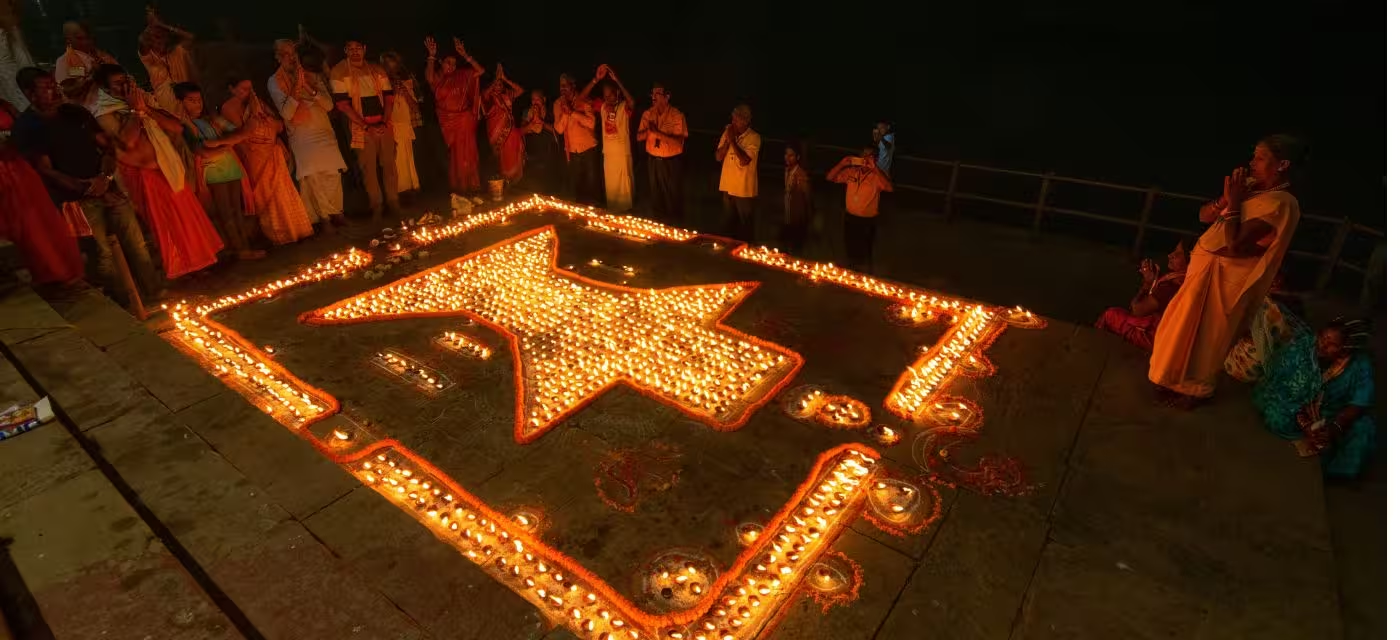
On Dev Deepavali, the 84 ghats of Varanasi dazzle with the incandescence of thousands of lit diyas and the fervour of the faithful who gather here dressed in their festive best. They believe that the gods and goddesses descend on earth here on this auspicious day to bathe in the sacred waters of the Ganges.
As the rest of India celebrates the triumph of good over evil on the new moon night of Deepavali, Varanasi waits patiently. Then, on the full moon 15 nights after Deepavali, this ancient, energetic city converges at the edge of the River Ganga to commemorate Dev Deepavali – “the Diwali of the Gods” or “Festival of Lights of the Gods”.
Dev Deepavali falls on Kartik Poornima, the full moon of the Hindu lunar month of Kartika (November-December), fifteen days after Deepavali. It is celebrated on the last day of Ganga Mahotsav, which begins on Prabodhini Ekadashi (11th day of Kartika) and concludes five days later, on the day of Dev Deepavali.
Kartik Poornima is also known as Tripuri Poornima or Tripurari Poornima. Tripurantaka or Tripurari is a manifestation of Siva, the destroyer of evil. The legend associated with the name narrates how Siva as Tripurantaka destroyed the three evil mythical cities or citadels (Tripura) of the asuras to protect the gods from their onslaught; peace, joy, and order once again prevailed in the heavens. Dev Deepavali thus commemorates the annihilation of Tripura by Siva.
The days leading up to Dev Deepavali are marked by the arrival of thousands of pilgrims from across India and the world in Varanasi. Scores of tourists too book hotels in the city months in advance so as to be able to witness one of the grandest, most unique, and spectacular religious events in India.
The traditional plan of events for Dev Deepavali in Varanasi is elaborate and followed meticulously every year. Pujas, fasting, feasting, and ritual baths take place, colourful rangoli patterns adorn courtyards, and homes, temples, and buildings look resplendent lit with diyas. Firecrackers are burnt at night, and processions of beautifully adorned deities are taken out into the streets. Many households also organise Akhand Ramayana (reciting the Ramayana) followed by bhoj where food is offered to people.
The main ceremony of Dev Deepavali begins with Ganesh Vandana, the offering of prayers and flowers to Lord Ganesha. This is followed by deepdaan, the offering of lit diyas accompanied by the chanting of Vedic mantras, performed in honour of Ganga, the presiding goddess of the river.
Thousands of devotees perform the Kartik Snan (taking a holy bath in the Ganges during Kartika) in the faith and hope of being cleansed of their sins.
The river bank is decorated with flowers and diyas to honour the gods. The fabled ghats of Varanasi are a truly breathtaking sight to witness on the day of Dev Deepavali.
The steps of the ghats on the riverfront, aglitter with the light of a million diyas, appear like star-studded stairways to heaven. The Ganga shines brilliantly as her waters reflect the beautiful moonlight and form trails of gently floating diyas.
Ganga Aarti
It is, however, the spiritual rite observed every evening as dusk descends that stays etched on the mind. For it is an experience that is at once magnificent, moving, and unforgettable.
This is the Ganga Aarti, performed in full fervour for the river deity Ganga, goddess of the holiest river in India. For millions of Hindus, the River Ganga is the physical manifestation of the goddess Ganga; bathing in her divine waters is both spiritual ritual and necessary cleansing.
The Ganga Aarti is perhaps the most important event related to the Ganges. The tradition is a mark of gratitude and respect to the river and the means of asking for her blessings. Witnessing this exquisite culmination of Dev Deepavali, called maha aarti, in Varanasi only elevates the experience.
The ambience is electrifying. The mood, powerful and uplifting. The venue is Dasaswamedh Ghat, near the Kashi Vishwanath Temple. Hundreds of spectators stand along the banks, in reverence and enthrallment.
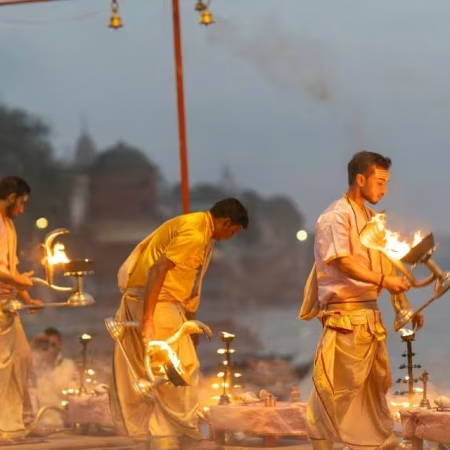
The perfectly choreographed ceremony is a spectacular sight: the aarti is performed on a stage by young priests; the blowing of a conch shell heralds the beginning of the ritual and the heady fragrance of incense fills the air as the priests face the river with lit lamps and begin the aarti.
The large flaming brass lamps in their right hands move in beautiful synchronicity with the brass bells ringing in their left hands; they are accompanied by the rhythmic chants of hymns, the singing of bhajans, the beating of drums, and the clang of cymbals.
The lamps seem to absorb the power of the deity as they create a bright hue against twilight skies and the sun setting on the Ganges.
People start arriving early in order to get good vantage points from which to view the aarti. Many shops in the area even hire their balconies out to tourists.
A lovely and unique way of seeing the aarti is from the river – on a boat. On the evening of Dev Deepawali, get on a boat and soak in the beauty of the ghats shimmering with lights as far as you can see.
Dev Deepavali is also the occasion when martyrs are remembered at the ghats. This is done with prayers and the offering of an aarti to the Goddess Ganga.
The event is organised by Ganga Seva Nidhi; wreaths are placed at Amar Jawan Jyoti at Dashashwamedh Ghat and also at the adjoining Rajendra Prasad Ghat by police officials of the Varanasi District and by officers of the three armed forces (Army, Navy, and Air Force).
At the closing ceremony, sky lamps are lit, patriotic songs are sung, and the Bhagirath Shourya Samman awards are presented.
Dev Deepavali is significant and auspicious for the Jain community too. On this day, Jains visit Palitana, a Jain pilgrimage centre.
Ganga Mahotsav
Ganga Mahotsav begins on Prabodhini Ekadashi and goes on for five days.
Life and culture in and around Varanasi revolve around the Ganga and the celebration of Ganga Mahotsav only reaffirms the people’s faith and gratitude towards the bountiful river.
It is typically held at the Dasaswamedh Ghat but the venue could be subject to change. It showcases the rich cultural heritage of Varanasi.
For five whole days, Varanasi comes alive with classical music, dance, and theatre as maestros of the performing arts from across India grace the stage with their presence.
Other events include:
Country boat race
Daily shilp mela (arts and crafts fair)
Sculpture displays
Martial arts
Ganga Mahotsav is not only a cultural fiesta but also a food lover’s paradise. The event is a wonderful opportunity to savour the delicacies of Varanasi.
The Food
Varanasi is one of the oldest continuously inhabited cities in the world. No surprise then that its street cuisine is as layered and elaborate as its history.
Neighbouring states, including Bihar and West Bengal, have also influenced Varanasi’s culinary heritage. The fascinating city, considered one of the most sacred Hindu pilgrimage sites in India, is predominantly vegetarian.
Since food is an inherent element of Varanasi’s rich culture, a trip to the city would be incomplete without experiencing its legendary street foods.
Shops set in narrow lanes serve piping hot bedmis, refreshingly cool lassi, and varieties of delicious sweets. You’ll find iconic old eateries that serve traditional food as well as new-age cafes and restaurants that offer a range of cuisines, Indian and continental.
Kachori Sabzi
Kachori Sabzi is a hot favourite breakfast dish in Varanasi.
There are two different types of Kachoris – Badi (big) and Choti (small) Kachori. While Badi Kachori is stuffed with a spicy lentil mixture, Choti Kachori is stuffed with a spicy mashed potato mix.
These hot and crisp delicacies are served with a flavourful gravy called aloo rassa.
Banarasi Thandai
In the searing heat of India’s northwest, the tantalising thandai brings tremendous sweet respite.
Tracing its roots to Mughal cuisine, the thandai is traditionally a creamy blend of milk, sugar, almonds, fennel seeds, poppy seeds, whole white peppercorn, rose petals, cardamom, saffron, and sugar.
The Banarasi Thandai is famous for its refreshing taste. Made from seasonal fruit puree, the thandai is flavoured with rose essence, dry fruit, ice-cream, nuts, pepper, fennel seeds, and various other ingredients.
Makhan Malaiyyo
Malaiyyo is a famed winter dessert.
Influenced by Persian cuisine, the unique Makhan Malaiyyo or Nimish is prepared by slowly churning milk to create a creamy texture. The milk foam is then flavoured with cardamom and saffron. Pistachios and almonds are used for garnishing.
Tamatar Chaat
Tamatar Chaat is a delightful mashed mixture of boiled potatoes, tomatoes, onions, green chillies, and fresh coriander leaves.
Spices such as pounded ginger and red chilli powder are sprinkled to lend it a fiery flavour.
Choora Matar
Choora Matar is Varanasi’s fusion dish combining elements of Maharashtra and Bihar.
Made of flattened rice soaked in desi ghee and cooked with spices as well as green peas, raisins, and saffron, Choora Matar is a famous breakfast and evening snack in Varanasi.
Rabri Jalebi
Varanasi is often called the ‘king of jalebis’, and this is an understatement.
Rabri Jalebi, the mouth-watering combination of jalebis or imarthis (a bigger version of the jalebi) with rabri (condensed milk-based sweet dish), is sheer heaven!
Lassi
Lassi is a blend of curd, water, spices and sometimes fruit.
Traditionally served in kulhads (earthen tumblers), the rich, creamy lassi is made from homemade curd.
In Varanasi, there are dozens of flavours to choose from. Fruit and trimmed pistachios are largely used to garnish this amazing drink.
Launglata
Launglata is a delightful sweet preparation usually made during the festival of Holi but is available throughout the year in Varanasi.
Launglata has a crispy covering made of pastry dough and filled with mawa (whole dry milk), nuts, and sugar. It is then soaked in flavoured sugar syrup and served.
Banarasiya Paan
An after-food mouth freshener stuffed with fragrant spices, paan is a common treat almost all over India, and in many Indian households.
The betel leaf used to make paan has not only traditional uses but also health benefits – it aids digestion and is believed to cure headaches even.
The famed Banarasiya Paan is something that you must try in Varanasi. It is stuffed with lime, betel nut, and various other natural flavouring ingredients such as gulkand (a sweet preserve of rose petals) and fennel seeds.
The City
Thousands of devout pilgrims take a dip in the waters in the hope of attaining nirvana, boats float past, funeral pyres smoulder beside the river, and the endless ghats and temples stand beautiful, studding the banks.
Picturesquely situated on the crescent-shaped left bank of the River Ganga, the legendary city of Varanasi (also called Benares or Kashi) in Uttar Pradesh is one of the oldest continually inhabited cities in the world and is one of the ancient seats of learning, culture, and the arts in India.
The city holds great significance for the millions of pilgrims and seekers who have been coming here for over 2500 years.
There are few places in India as traditionally Hindu and as representative of Hindu culture in its entirety as Varanasi.
Siva, the supreme god of creation and destruction, is the presiding deity of the city. For Hindus it is hallowed ground; for Buddhists, it marks the spot where the Buddha preached his first sermon; for Jains it is the birthplace of their two patriarchs.
Forever surrounded by the aura of its antiquity, Varanasi is unique, fascinating, overwhelming, daunting, endearing, contradictory, and intoxicating all at once.
It is a kaleidoscope of Indian life like no other.
Things to Do in Varanasi and Around
One of the best things to do in Varanasi is to simply take in the local sights.
You can try a customised heritage walk in the city. Explore the bazaars, observe artisans at their craft, see old and traditional homes, and discover fascinating parts of the city.
The ghats are a revelation. Stroll along the river bank or, if you want a quintessential Varanasi experience, take a boat ride along the Ganga at sunrise or dusk.
It’s definitely worth doing at both times, because the ambience, experiences, and sights are different.
The dramatic Ganga Aarti takes place every evening at Dasaswamedh Ghat. Watch it with the crowds on the riverbank or view it from the river, on a boat.
You can also see the sunrise Ganga Aarti at Assi Ghat; it is less formal and touristy.
Visit the magnificent Kashi Vishwanath Temple – dedicated to Lord Siva; the Bharat Mata Mandir – dedicated to India; the Durga Temple – dedicated to Goddess Durga; the Alamgir Mosque – originally a temple dedicated to Vishnu but now an unusual mixture of Hindu and Muslim architectural styles.
Visit the famous Banaras Hindu University (BHU). Established in 1916, the BHU is regarded as a centre of learning and quality education in India.
The campus has a museum with a collection of miniature paintings, 12th-century palm-leaf manuscripts, sculptures, and local history displays.
Sarnath
Take a day trip to Sarnath.
Sarnath is one of the four most important Buddhist pilgrimage spots in the world. The Deer Park, Sarnath, is where Gautama Buddha taught the First Turning of the Wheel of Dhamma to his disciples, the five fellow ascetics.
The Deer Park is also where the Buddhist Sangha came into existence.
If you are here on the Buddha’s birthday, Buddha Purnima (the full moon of May), there is a once-a-year-only opportunity to see the relics of the Buddha in a procession that accompanies a splendid fair.
Any time of the year you can see the surviving Dhamekh Stupa covered in stone engravings of many scripts, the pillar of Emperor Asoka who visited and founded many institutions here, ruins of various ancient branches of Buddhism as well as gorgeous temples built by many nations.
Silk Weaving
Silk weaving is the dominant industry in Varanasi.
It is famous for its production of very fine silk and Banarasi saris, brocades with gold and silver thread work, which are often used for weddings and special occasions.
Visit one of the weaver villages around Varanasi to observe the intricate and painstaking art of creating a traditional silk sari.
Varanasi is well-known for classical dance, music, and yoga as well.
Related Posts