 English
 Deutsch
 Italia
 August 18, 2026 By admin
Himalayan Cuisine
Eat, Pray, Love – Under the Himalayan Sun
“What I’ve enjoyed most, though, is meeting people who have a real interest in food and sharing ideas with them. Good food is a global thing and I find that there is always something new and amazing to learn – I love it!” —Jamie Oliver
TIBET
Mountainous Tibet is the highest region on Earth, with temperatures that drop well below zero during the long winter. So, on the Tibetan Plateau, greens like mustard and cabbage, and root vegetables like turnips, carrots, and potatoes are the only vegetables that can be grown.
Tibet’s unique but comforting cuisine reflects its wintry landscape and its hardy people, focusing on barley, dairy products, and meat. Simple, warming recipes involving noodle dishes, stews, dumplings, cheese, butter (often used to make tea), and soups, are the mainstay of the cuisine. Rice only grows in southern Tibet and is rarely eaten except on special occasions.
The land’s iconic flavours are the aromatic ginger, garlic, coriander, and green onion; spices like turmeric, black pepper, fenugreek, and black cumin are the heroes of the Tibetan kitchen, and are used to season practically everything.
The Tibetans love the momo (dumpling) and consider it most integral to their food. Yak meat is the most preferred filling for the momo here.
The other deeply Tibetan staple is the tsampa. The roasted barley flour has been around in Tibet since the 5th century CE, and is predominant in the cuisine. Tsampa is commonly eaten by mixing salty butter tea, dried dri (female yak) cheese, and sometimes sugar, into a stiff dough that is rolled into small balls called pa — often enjoyed with a sauce or gravy.
Breads collectively known as balep are also pivotal to the cuisine and, are often made from wheat rather than barley flour. Tibetan breads are often served with hot sauce and a little butter tea.
Next up are the noodles. Warming soups collectively known as thukpa, are filled with all kinds of noodles, often accompanied by tender chunks of meat to make them richer.
Dairy is used to make butter, curds, and cheeses that again make their way into many rustic dishes.
Yak meat is the most popular meat in Tibet. Yak and mutton contain high protein that helps ward off the harsh cold.
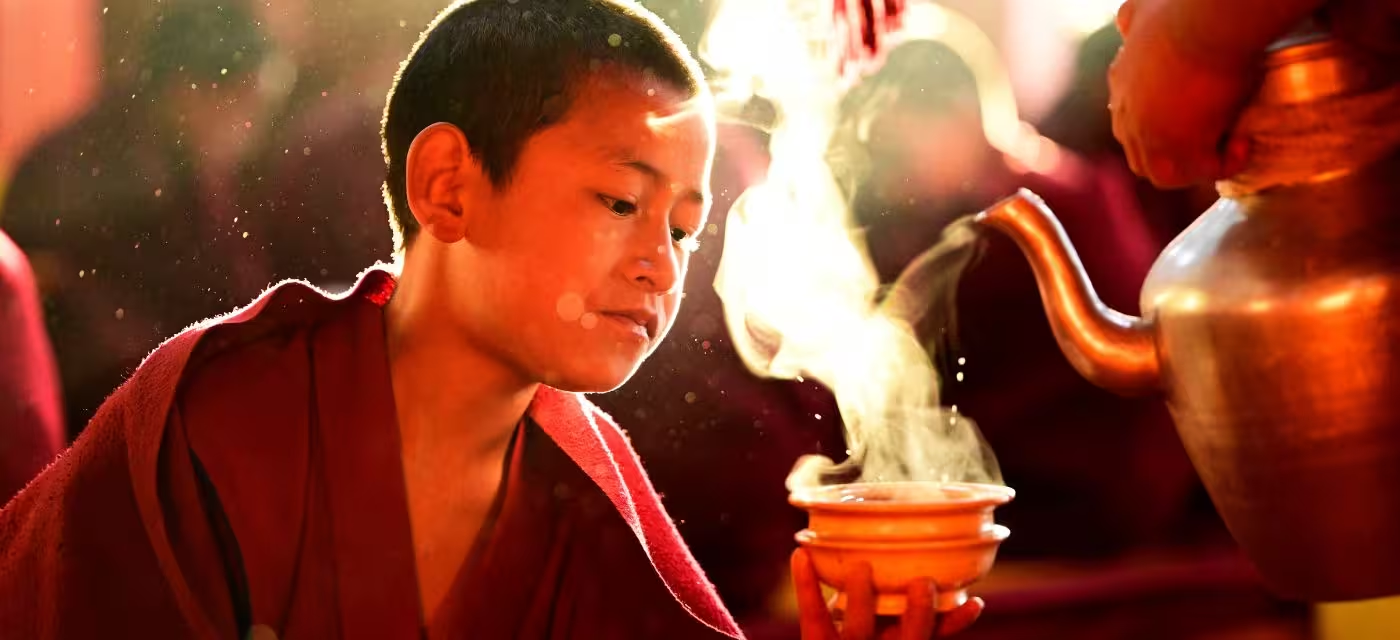
Butter Tea, another huge favourite, is boiled tea added with ghee and salt.
Chang, a kind of beer, is usually brewed from fermented barley
BHUTAN
Most modern Bhutanese trace their ancestry back to the Tibetan migrations into Bhutan in the 7th century CE. The Tibetans brought with them their food culture, and soon began to incorporate new ingredients that they found in Bhutan’s fertile valleys and hills; the cuisine continued to adapt until Bhutanese food developed its own unique character. Bhutan’s diverse terrain, from sub-tropical to alpine and from lowland to highland allows for an extraordinary variety of foods to be cultivated or eaten.
The most distinctive quality of Bhutanese cuisine is its spiciness. Chillies are so integral to the cuisine that a traditional Bhutanese meal would be incomplete and tasteless if it were not spicy
Rice is the main dish of most Bhutanese meals. Accompanying it are a couple of side dishes consisting of meat or vegetables. Pork, beef, and chicken are the most popular meats here. Vegetables include spinach, pumpkins, turnips, radishes, tomatoes, river weed, onions, broccoli, cauliflower, cabbage, carrots, eggplant, garlic, and green beans. Grains such as rice, buckwheat, barley, wheat, maize, etc. are also cultivated depending on the local climate.
Fish is also eaten, but is traditionally smoked or dried before cooking. Pulses include several types of peas and beans as well as lentils. Fruits include apples, pears, berries, peaches, plums, cherries etc. Almost all dairy is eaten as butter or cheese. Yak is perhaps the most common dairy, but milk from cows, goats, and buffaloes is also used. Sweeteners are cane sugars, honey and sap from local trees.
Herbs include mint, fennel, bay leaves, wild onion leaves, lemongrass and keora. Commonly used spices are cinnamon, cardamom, ginger, pepper, turmeric, sesame, nigella, cloves, and saffron.
Here are some of the most popular Bhutanese dishes:
Ema Datshi
The national dish of Bhutan is a spicy mix of chillies and datshi (local cheese). Momos – Dumplings stuffed with pork, beef or cabbages, and cheese. Phaksha Paa – Pork cooked with spicy red chillies, and radishes or spinach. Hoentoe – Aromatic buckwheat dumplings stuffed with turnip greens, datshi, spinach, and other ingredients. Jasha Maru – Spicy minced chicken, tomatoes, and other ingredients. Usually served with rice. Red Rice – Similar to brown rice, when cooked it is pale pink, soft, sticky, and extremely nutritious and filling. Goep (Tripe) – Cooked with plenty of chillies and chilli powder.
NEPAL
Nepal’s food is variously influenced by its cultural and geographic diversity, resulting in a range of interesting cuisines born out ethnicity, soil, and climate.
Dal-bhat-tarkari
Nepal’s favourite food, pretty much eaten throughout the country. Dal is a lentil (yellow, black or red) soup flavoured with spices. This is served over bhat (boiled grain) — usually rice but sometimes other grain—with tarkari (vegetable curry). Enhanc igins. Momos— Tibetan style dumplings with Nepali spices and meat or vegetables—are extremely popular. Special foods such as sel roti and patre are eaten during festivals such as Tihar. New dishes such as taas (akin to the sheesh kebab) have also been introduced.
APPETISERS: Chatamari – Rice flour flat bread cooked over heat with toppings such as minced meat or vegetable, egg, sugar or no toppings. Choyla – Grilled /roasted spicy meat. Gundruk – Dried and fermented greens. Kwati – A bean soup Momo(cha) – Dumplings filled with minced meat (usually buffalo), and steamed or fried Samay Baji – Beaten rice with roasted meat, smoked fish, boiled-then-fried egg, black soybeans and diced ginger. Sekuwa – Grilled meat usually made from mutton, duck, chicken, wild boar. Sel – Doughnut-shaped dessert/snack made from rice flour. Sukuti – Spicy dried meat roasted over a charcoal fire. Aloo Tama – Potato made with bamboo shoots. Tawkhaa – Jello of meat soup served cold. Wo – Flour patty made of lentils with or without meat/egg topping, used in rituals or festivals or as a snack.
THE MAIN COURSE: Aloo Tama – Potato made with bamboo shoots. Dal – Lentils. Sag – Greens (Spinach, mustard greens). A standard accompaniment to plain rice. Masu – Meat with spices (curry) and gravy. Usually served with rice. Bhat – Rice Tarkari – Vegetable/mixed vegetables in a curry, usually broth.
RELISHES: Achar – Sour, spicy or sweet pickle. The most popular ones are made of ground tomatoes, sliced radish, ground coriander, boiled or diced potatoes. Sanya Khuna – Hot, spicy, salty dish made from fish soup.
DESSERTS: Dahi – Yoghurt/Curd Juju Dhau – Creamy curd from Bhaktapur. Juju literally means ‘king’. Sikarni – Yoghurt/Curd mixed with dried fruit.
BEVERAGES: Rakshi – Liquor Thon (Newari) or Chhyang (Tibetan) – Milky white beer/liquor made from fermented rice. Tongba – Made by pouring hot water into a pot of fermented millet.
“Food, in the end, in our own tradition, is something holy. It’s not about nutrients and calories. It’s about sharing. It’s about honesty. It’s about identity.” —Louise Fresco
Related Posts