 English
 Deutsch
 Italia
 August 18, 2026 By admin
Foods of Kongunadu
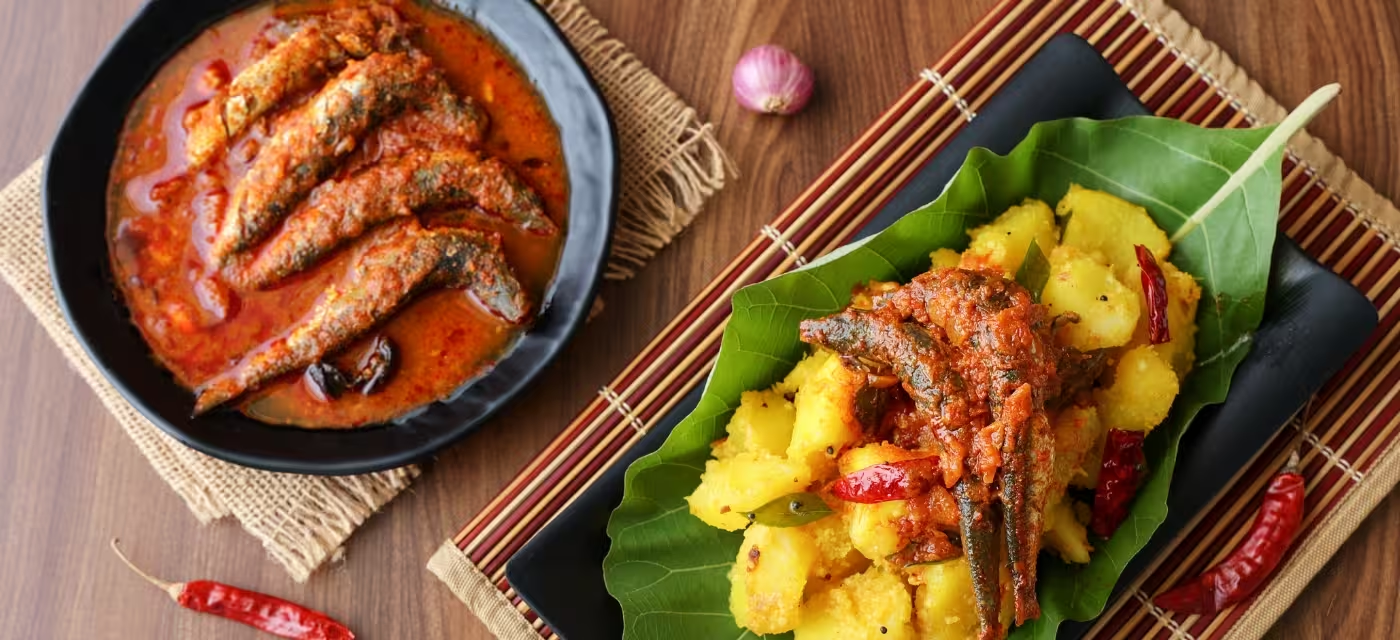
A Village Feast: The Foods of Kongunadu
Tamil cuisine, long associated with the ubiquitous idli-dosa-vada, and perhaps to a large extent with the fiery Chettinad cuisine of the Karaikudi region of the state, would surprise us with its lesser known but outstanding range of traditional cuisines, depth of flavours, and remarkable history of food going back several centuries.
‘Namakku Coimbathur pakkamunga’… if someone in Tamil Nadu were to say this, it would mean ‘I am from Coimbatore’. It would also mean that they are native to the very heart of Kongunadu, the historic land mentioned time and again in ancient Tamil literature and history.
Kongunadu, the north-western region of Tamil Nadu – covering Coimbatore, Pollachi, Ooty, Erode, Aathur, Karur, Palladam, Avinashi, Sathyamangalam, Udumalpet, Salem, Tirupur, Palani, Metthur, Namakkal, Dindigul, Krishnagiri, and Dharmapuri – once ruled by the mighty Chera kings during the early centuries CE, and later by the Cholas, Pandyas, and Hoysalas, is exceptional for its heritage cuisine that is a beautiful blend of simple yet refined ingredients, and strong culinary traditions.
The region also shares boundaries with parts of the two southern states of Karnataka and Kerala. Their influence too is evident in the cuisine here.
The real food of Kongunadu has mostly been confined to traditional home kitchens and is greatly underestimated and little represented – often eclipsed by some of its more famous counterparts in south India.
No wonder then that even connoisseurs of good food, and enthusiastic restaurant diners rarely get a chance to experience the delights of the ancient Tamil cuisine.
Things are changing now though, with hotels in cities such as Chennai, Madurai, Coimbatore etc. hosting special Kongunadu food festivals to introduce the region’s classic dishes and showcase the majestic food traditions of the Chera, Chola, and Pandya kings.
A handful of small restaurants in Chennai and Coimbatore that serve authentic renditions of Kongu dishes also seem to be making an effort to revive the little known cuisine.
Forgotten recipes are suddenly being unearthed; mostly collected directly from the kitchens of families who have been cooking these dishes from recipes that have been passed down generations.
So what is the key to Kongu cuisine’s appeal? And why is it all of a sudden fascinating and drawing chefs, food authors, and food lovers?
Perhaps it’s because Kongu food is simply food from a village – earthy and wholesome.
It is most importantly, a cuisine of the land and its bounties – deeply grounded in fine indigenous ingredients. The Cauvery River and its tributaries also help; the produce here is naturally fresh – vegetables, greens, poultry, fish, dairy, and grains.
Kongu cuisine amazes with its sheer simplicity. It is rich with flavour yet not heavy.
The food brims with elegance and confidence yet is not flamboyant; it carries a certain rootedness of character, defining the close and reverent bond that the people of the region have with their land.
Since Kongunadu is in the arid interiors of Tamil Nadu, its cuisine is free of any coastal influences.
The distinctive, exquisite flavours come from sesame seeds, pepper, groundnuts, copra (desiccated coconut), dried ginger, nannari (a local herbal root), roasted turmeric, gingelly oil (made from sesame seeds; and the earliest known oil medium!), kollu (horse gram), and ponni (short-grain rice).
Coconut, plantain, dates, palm, sugarcane, turmeric, mango, tomato, rice, tamarind, sesame, peanuts, maize (corn), pearl millet, sorghum, and of course greens are grown in plenty here, and are thus extensively incorporated into everyday dishes.
Kongu cuisine was once predominant in Tamil culture, but the dishes have been endlessly adapted and moulded into new recipes over the years.
Rice is now the staple of the Kongunadu region. Its quintessential rice dish must be the minimally spiced arisi parappu saadam, a pulao-like dish of rice and lentils tempered with mustard, red chilli, and garlic, and drizzled with aromatic home-made ghee (clarified butter).
The other lovely rice item is the vaazhaipoo saadam (plantain flower rice). It is made with the wonderfully aromatic ponni, peanuts, shallots, and copra; their individual flavours set off to perfection by the peppery astringency of the banana flowers.
However, Kongunadu natives will always love their millets!
In the old days, much before rice made its way into the cuisine, kumbu (pearl millet), vella cholam (sorghum), and ragi (finger millet) were some of the grains that were regularly used.
Kalli is a millet dumpling typical of the region. Millets are soaked and steamed in a mud pot and then churned with a large ladle.
Hand-pounded spice pastes and podis (powders) are integral to most Kongu dishes and decide the unique flavour of each preparation.
Here are Some Interesting Facts About Kongu Cuisine
The ancient period had little exposure to spices. Ginger and peppercorns are the only spices mentioned in historic manuscripts.
- There was no onion, garlic, tomato, green and red chilly before the 10th century CE.
- Dry ginger and pepper were used instead of chillies.
- Meat/fish/poultry are never marinated, giving them their distinct texture, taste, and colour.
- Turmeric is either freshly grated or first roasted, and then ground. It gives Kongu curries their rich yellow colour and distinct aroma.
- Cubes of mutton are sun-dried, then fried and used as accompaniments to a meal.
- Rather than fresh coconut, copra is used in curries and gravies.
- Unpeeled potatoes, and milk, are used in curries and gravies.
- Mangoes are often used to prepare various sweets.
- Coconut shells are often used to soften meat while cooking.
- Kongu food uses very little oil and chillies in its cooking.
- The Kongu preparation of meat dishes does not involve too many spices. It is quite rustic and sometimes finished off with just coconut paste.
- Cereals such as rye, bajra, jowar are extensively used in main course dishes.
- Butter milk and sweets are had as the second last course and rasam (souplike accompaniment), as the last!
Here’s a look at some of the most traditional and well-loved Kongu dishes; some original, others which feature on the menus of food festivals and restaurants in Tamil Nadu – most of these recreated sans modern ingredients.
Appetiser
- Nannari Sharbat – a refreshing drink made from the nannari herb and narthangai limes.
Salads
- Sutta Kathirikai – smoked aubergine
- Pasiparuppu – green gram bean
- Porichha Kozhi – fried chicken
Snacks
- Murungai Keerai Paniyaram – a shallow-fried drumstick leaf dumpling
- Puziyampatti Parappu Vadai – yellow split pea patties
- Azhapoo Vada – banana flower and lentil fried cutlets
Non-Vegetarian
- Nathakadaiyur Nandu Masala – crab masala
- Naatu Kozhi Rasam – a tangy country chicken soup
- Attu Eraichi Elumbu – lamb meat and bone soup
- Nattu Kozhi Kuzhambu – home-style country chicken made with shallots, tomatoes, and coconut paste in a rich gravy
- Kari Kuzhambu – slow-cooked lamb curry with coriander seeds, garlic, chilli, ginger, shallots, and whole spices in a rich gravy
- Thandu Keerai Urundai – a deep-fried meatball made with minced mutton and Foxtail Amaranth spinach
- Pallipalayam Kozhi Varuval – slow braised country chicken flavoured with red chilli, garlic, fennel, and other spices
Also, the Special Kaadai (quail); rabbit curry; Pollachi Mutton Kuzhambu; Kangeyam Mutton Biryani.
Vegetarian
Vegetarian curries are mildly-spiced, and the ingredients are the heroes here.
- Murunga Keerai Rasam – drumstick leaf soup
- Ahathi Keerai Sambar – a local spinach soup
- Vazhaithandu – banana stem soup
- Paruppu Urundai Kuzhambu – soup made with lentil balls
- Keerai Vadhkkal – a stew made from a local variety of spinach, tomatoes, and hand-pounded garlic
- Mushroom Thirattal – mushroom and groundnut masala
- Kootu – a green bean and lentil gravy dish
- Poondu Kuzhambu – a garlic and tamarind soup-like preparation; mushroom biryani
- Manikaram Vadagam Curry – made from holy basil and betel nut leaves
- Raagi Idiappam – millet string hoppers
- Nila Kuzhambhu – curry prepared with potato, yam, and sweet potato
- Kollu Masiyal – horsegram boiled and ground to a paste along with spices
- Payiru Thirattal – lentils, groundnut paste, onion, and pepper dish
Desserts
- Pathaneer Halwa – a sweet sticky concoction made from pathaneer or toddy before it ferments
- Kumbu Halwa – a dark dessert made of millet milk, rice flour, ghee, and sugar
- Ellaneer Payasam – made with chilled tender coconut water, and milk spiced with crushed cardamom and double boiled till it thickens
- Pazhadosai – pancakes made with bananas, wheat flour, sugar, and rice flour
- Nongu Halwa – a sweet, soft sticky concoction made of the Palmyra fruit
- Kachayam – banana fritters
- Obbattu – a pancake like sweet with a maida (refined flour) covering stuffed with a mixture of lentils and jaggery
- Paruppu Payasam – pudding made with green gram lentils, jaggery or palm sugar, and coconut milk
- Godhumai Halwa – sweet concoction made by extracting the milk of wheat
The dishes mentioned above are a mere introduction to Kongunadu’s fantastic repertoire of vegetarian and non-vegetarian preparations.
The ancient cuisine was most subtle and innovative, beautifully flavoured, immensely healthy, and surprisingly refined for its time.
While modern cooking – with its molecular gastronomy, fusion experiments, Masterchefs, cookery shows, and Michelin stars – dominates India’s food culture today, there is also a slow but visibly marked return to traditional food, especially in the big cities.
“It’s a good thing, because once heritage is lost, it is lost to us forever. These recipes were created according to the lay of the land and in a way that is good for our bodies. Holding on to such tradition is good in all things, not just in food.”
“It’s true that… traditional cooking does take a lot of preparation and time. These wonderful traditions foster family bonding: just sitting around a table together while preparing dishes can help.” – Sabita Radhakrishna, author of Annapurni, a cookbook comprising recipes drawn from six different communities of Tamil Nadu
Food is not just a marvellous equaliser. It is also our link with shared histories, cultures, and most importantly, with our treasured heritage.
Cooking the way our ancestors did will perhaps only bring us closer to the heart-warming and reassuring taste of home.
Related Posts