 English
 Deutsch
 Italia
 August 27, 2026 By admin
Gujarati Cuisine
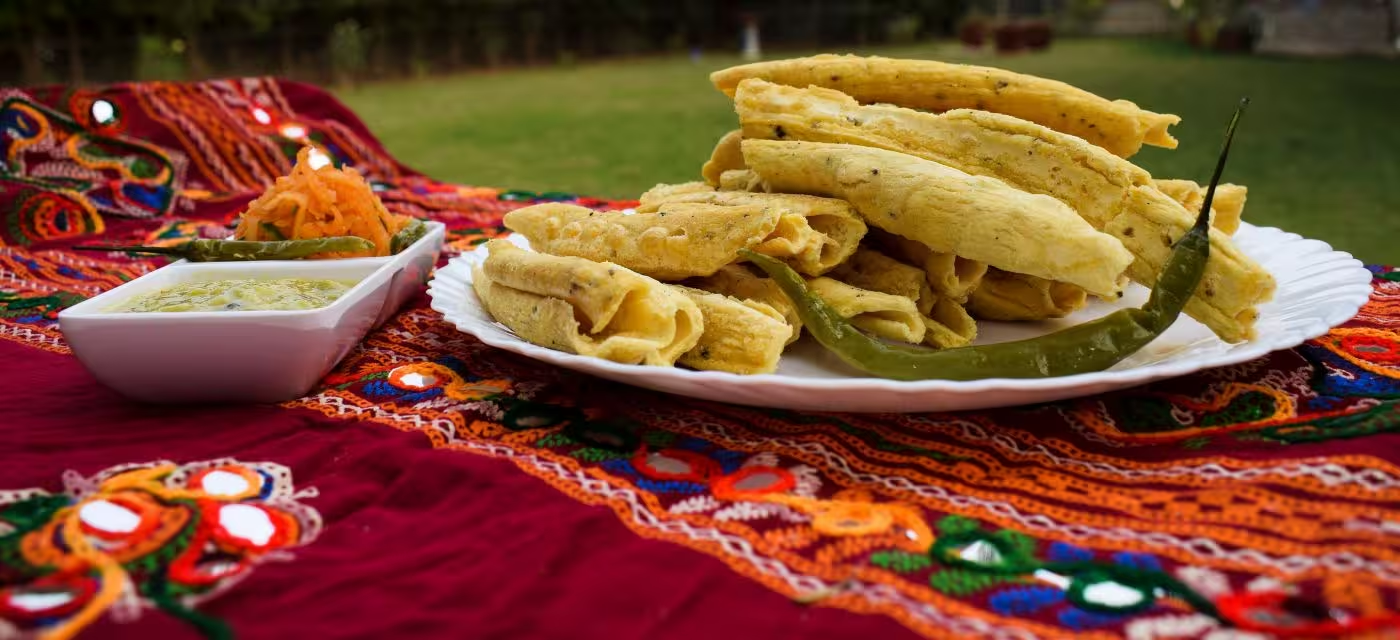
The Gujarati Kitchen
A Banquet of Flavours and Textures
One of the very nicest things about life is the way we must regularly stop whatever it is we are doing and devote our attention to eating.
– Luciano Pavarotti
The cuisine of a state as geographically expansive and culturally diverse as Gujarat cannot really be classified as one single or complete entity. All the four major regions of Gujarat stand out for their own unique culinary styles. Kathiawar in the Saurashtra region is renowned for its dairy produce and pickles, Amdavad (colloquial for Ahmedabad) in Central Gujarat is known for dhoklas, theplas, and dhebras as grains are in abundance in this region. Surat in South Gujarat brings us the delicious undhiya, among other delicacies. The dry and arid region of Kutch will surprise you with its unique foods, the most well-known of which is the Kutchi Dabeli.
Using a little ingenuity, Gujarati cuisine is able to transform the simplest ingredients into superb delicacies in a subtle yet rich blend of flavours and textures. Complexity of flavour and texture and delicacy are the two hallmarks of Gujarati cooking. Most importantly, each flavour holds its own in perfect harmony with the others.
Like many excellent cuisines, Gujarati cuisine derives its uniqueness from the interplay between sweet (usually derived from jaggery instead of refined sugar), sour, and hot flavours; this marriage is one of the mainstays of the cuisine, combining all the strengths and making it so intriguing to the palate.
Although Gujarat is predominantly vegetarian (due to the influence of Jain vegetarianism) a fair proportion of Gujaratis are non-vegetarians. The state’s Muslim and Catholic populations, along with a small Parsi community and a few of the coastal communities have each their own non-vegetarian fare. The erstwhile royal houses of Gujarat, who are traditionally non-vegetarian, too have great non-vegetarian recipes. All these communities have outstanding cuisines that are usually hard to find outside private homes.
Kathiawari Cuisine
The Kathiawar peninsula is part of the Saurashtra region. Sharing a border with the neighbouring state of Rajasthan has lent the cuisine strong influences of Rajasthani cooking. Kathiawari food is much hotter in comparison to the foods of other regions in Gujarat where sweet and sour flavours tend to mark the dishes.
Famous dishes include the sev tameta nu shaak, which is a curry prepared with tomatoes and chilli powder and topped with sev (tiny crunchy deep-fried noodles made from chickpea flour paste) and ringna nooroh – roasted eggplant peeled, mashed, and tempered in spices.
Surti Cuisine
Southern Gujarat’s Surat city may be famous for its diamond business, but Surti food is itself a gem waiting to be explored. Since the region receives substantial rainfall, the cuisine uses plenty of fresh and seasonal local ingredients — fruits and green vegetables – to present elaborate and clever dishes that simply burst with flavour.
Surat’s biggest contribution to the cuisine is without doubt undhiyu. Typically a winter special, undhiyu (which loosely translates to ‘upside down’) is a rustic casserole comprising seasonal vegetables. Traditionally, vegetables such as Indian flat beans, pigeon peas, potatoes, eggplant, purple yam, and green banana are mixed together with essential spices in an earthen pot. The pot is then covered and buried upside down in the hot muddy ground and surrounded by coal. The coal allows it to slow cook, giving the dish an earthy, smoky flavour.
Surat is famous for delicious farsan such as khaman, khandvi, patra, dhokla, thepla and khakra. Surti locho is a steamed gram flour-based ‘cake’, a blend of spices, chilli, ginger, and garlic, is topped with sev, and served with hot chutneys.
Ghaari: made on the day of Chandi Padvo (the last full moon day of the Hindu calendar), the deep-fried dish comprises all-purpose flour stuffed with dried fruit, thickened milk, gram flour, and sugar.
The Surti Sev Khamani, a snack made with split chick-pea and topped with green chili and ginger chutney and sev, also makes use of pomegranate as a topping, illustrating the use of fresh fruit in a hot/savoury snack.
Then there is the wonderful ponkh – fresh, green, recently harvested sorghum, eaten while the emerald grains are still juicy, bright and tender. The unique ponkh is a winter specialty that can be roasted, steamed or cooked in other ways. Surti Ponkh is a delicacy that combines ponkh seeds with sugar balls, freshly-ground black pepper, sev, and pepped up with tangy lemon juice.
Amdavadi Cuisine
The Amdavadi’s love for farsaan is legendary! Street food culture reigns king in Ahmedabad and offers a world of delights:
Khaman: a soft, fluffy piquant savoury cake made from chickpea flour and served with fried green chillies and often with a tangy tamarind and jaggery or date chutney.
Dhokla: a light, moist, tangy sandwich made of either rice or gram flour; it is steamed, then sprinkled with coriander leaves, coconut shavings, and served with a layer of mint-based chutney.
Khandvi: made of gram flour batter cooked to a thick paste, yoghurt, and spices all delicately rolled into bite-sized pieces and topped with toasted sesame seeds.
Khichu: a blend of rice flour, green chillies, cumin seeds, and salt that is left to simmer all day in a pot of water on a charcoal stove, lending it a deliciously smooth texture.
Samosa: crisp and crunchy paper-thin pastry stuffed with either minced mutton, dried green peas, potato or mung lentils, and spices, and served with a special sauce and fried green chillies.
Chawanu: beaten rice topped with grated raw papaya and a piquant masala.
Amdavadi pulao: prepared by mixing cooked vegetables with rice; yields a sweet aftertaste.
Kulfi: a dense and creamy frozen dairy dessert originating from the Indian subcontinent in the 16th century. Traditional flavours include cream, rose, mango, cardamom, saffron, and pistachio.
Golas: snow cones dipped in a colourful and delicious variety of syrups.
Jalebi: flour batter is deep-fried in pretzel or circular shapes and then soaked in sugar syrup.
Kutchi Cuisine
The largely barren and harsh desert landscape of Kutch may offer only limited ingredients and produce but its vibrant and resilient people have, over the centuries, developed their own brand of culinary genius to extract interesting and absorbing flavours from whatever is available.
The dabeli is the quintessential Kutchi street food. Pao or bread roll is stuffed with a filling of potato, tamarind paste, jaggery, date, and masala. The pao is pan-roasted and then topped with sev, onion, spicy peanuts, and pomegranate seeds. Traditionally, dabeli is also layered with a garlic-based chutney before roasting.
Other popular Kutchi dishes include bajra na rotla (Indian flat bread made of pearl millet), traditionally served with either the ringna no oroh, or yoghurt and garlic chutney; and Khaja, a dessert reminiscent of baklava.
Other Popular Gujarati Dishes
Perhaps nowhere else in India would you find a culture of snacking as fervently integrated into daily lifestyle as you would in Gujarat. Here is an assortment of farsaan and other traditional favourites:
Thepla: a flat bread made of wheat flour with masala and roasted on a pan.
Shrikhand: a soft and light dessert made using hung curd and sugar.
Dal dhokli: whole wheat flour diamond-shaped bits simmered in a pigeon pea lentil gravy perked with spices.
Kadhi: sweet, hot, and tangy yoghurt/buttermilk-based curry mixture thickened with gram flour and tempered with ginger and chilli.
Khichdi: mung lentils and rice cooked together with a dash of turmeric, black peppercorns, and salt, and served piping hot with a dollop of ghee.
Muthiya: a fist-shaped steamed savoury snack made up of wholewheat flour, gram flour, fenugreek leaves or bottle gourd, semolina, turmeric, and chilli powder.
Fafda: a fried crunchy snack made with gram flour, laced with carom seeds and black pepper.
Khakhra: wheat flour flat breads that are dry roasted until crisp and then topped with ghee and a spicy masala.
Basundi: sweet condensed milk, flavoured with cardamom, saffron, and nutmeg, with the addition of dried fruit.
Chakri: a spiral-shaped, spiky snack made from rice flour, bengal gram flour, and black gram flour mixed with ginger, chilli, and sesame seeds and deep-fried.
Patra: Colocasia leaves are first smeared with a paste of gram flour, jaggery, garam masala (blend of ground spices), sesame seeds, and tamarind. These leaves are then rolled into pinwheels, steamed, and later added to an aromatic and flavourful tempering.
Chaas: spiced buttermilk that combines mint leaves, coriander leaves, green chillies, and spices.
Athanu or pickle: the gunda-keri (clam berries and unripe mango) is a traditional favourite. Chhundo is a terrific hot, sour, and sweet mango preserve made with raw mango and spices. Gor keri is a sweet raw mango pickle that is wonderfully spiced with fenugreek and mustard seeds, and jaggery.
The Gujarati Platter
A Gujarati vegetarian thali (platter) is an experience, a feast in one plate – indulgent yet well-balanced. A typical thali will offer an appetiser, spiced buttermilk, Indian flatbreads, a salad, a variety of lentils or a yoghurt-based gravy dish, fresh assorted vegetable preparations, sprouted pulses, fresh yoghurt, pickles, savoury snacks, deep-fried breads, rice dishes, and sweet dishes.
Related Posts