 English
 Deutsch
 Italia
 August 27, 2026 By admin
Navratri Festival
A Time to Celebrate
“To other countries, I may go as a tourist, but to India, I come as a pilgrim.”
– Martin Luther King, Jr.
Gujarat is replete with vibrant, colourful festivals and fairs. They hold an important place in the state’s culture, illustrated by the many celebrations held around the year. A host of rural fairs and regional events are celebrated, combining social, cultural, and religious values and usually marking a change in season, harvest or a religious occasion. Dance, music, and food are almost always an integral part of these festivals and fairs.
Nine Nights of the Goddess Navratri
Religious Festival
September/October/November
According to the Hindu lunar calendar
Across Gujarat
The most energetic, flamboyant, and popular of Gujarat’s innumerable festivals is Navratri, or ‘Nine Nights’, held around October/November.
For nine nights in a row, sleep takes a backseat as the entire state is transformed into a fairground and millions of Gujaratis gather in open spaces and immerse themselves in celebration and dance to salute the feminine divinity, referred to as Shakti.
The nine-night festival honours the Mother Goddess Durga/Shakti, in all her manifestations. Durga is the warrior form of Goddess Parvati, the wife of Lord Siva (the Supreme Being who destroys/creates, protects, and transforms the universe). Legend has it that Parvati took on the form of Durga to destroy the demon Mahisasura in a battle that lasted nine days and nine nights and came to an end with the beheading of Mahisasura on the tenth. The nine nights came to be known as Navratri, while the tenth day was called Vijaya Dashami, the day good triumphed over evil. Navratri is a time also to celebrate fertility and the monsoon harvest.
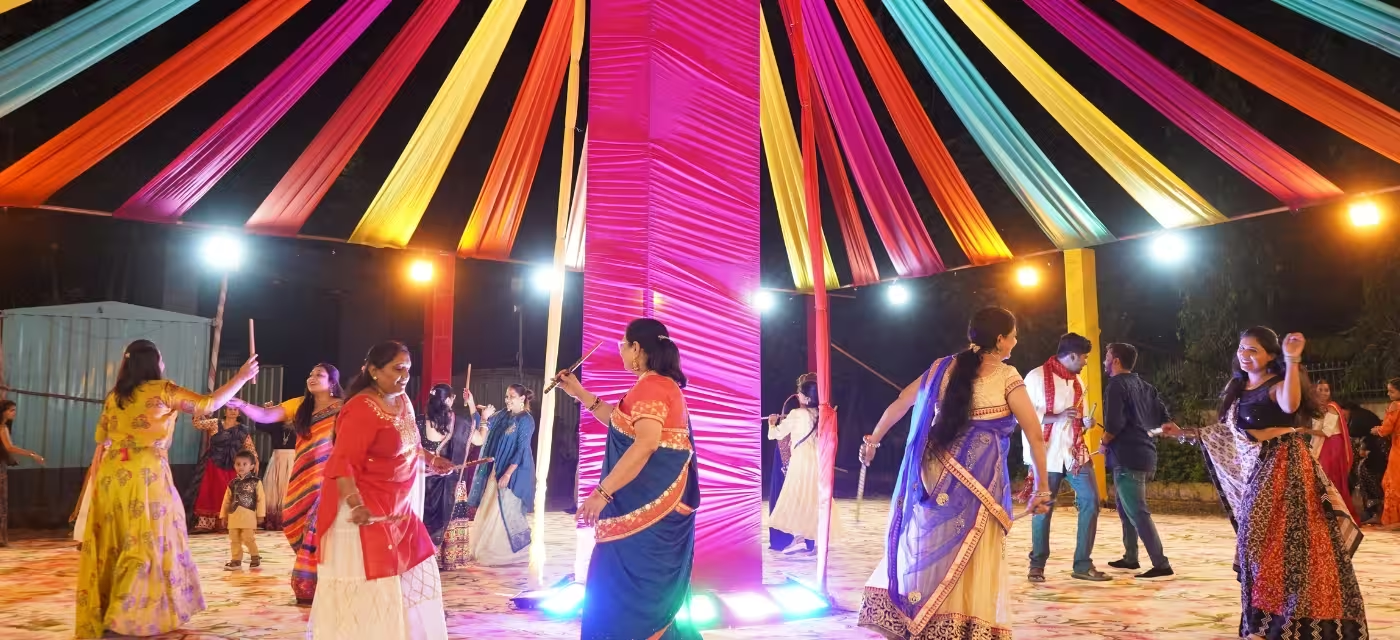
Garba, the iconic Gujarati dance form of Navratri, is an unforgettable sight to behold: thousands of people dance to music in a circle, whirling away till late into the night. The focal point of every garba circle is the small Goddess shrine erected by each community to mark the beginning of the festival. The garba is performed around a lamp placed in an earthen pot, the garbo, which symbolises the womb or the very source of life on earth.
The enchanting garba is danced by women only while in raas everyone joins in. Dandiya raas is the most captivating version, in which men and women strike beautiful lacquered batons, giving the dance its distinctive tempo. The music was traditionally acoustic, comprising drums and singing, but most people now use amplified sound systems or even live bands with modern instruments.
Over the course of the nine days, prayers and rituals of worship take place in the mornings and are accompanied by fasting. Evenings come alive with social and cultural events and exchanges, with much feasting and, most importantly, dancing. Gujarat takes its garbas very seriously. Dressing up in colourful traditional outfits is a must, especially for the women, who plan weeks ahead to put together different costumes for each night of the festival!
These nine nights of feverish dancing, foot-tapping music, fabulous midnight buffets, and men and women in resplendent traditional attire swirling to the beat of the dhol (traditional hand-held drum) are reason enough to be in Gujarat for Navratri, often called “the world’s longest dance festival”.
Garba nights are one of the biggest events on Gujarat’s cultural calendar. Garba nights can vary from enormously crowded, extravagant set-ups, giant stages, celebrity appearances, and easily accessible entry passes to more vibrant, exclusive, sophisticated, and upscale venues to which gaining entry may prove much more challenging and expensive. But definitely worth the effort.
Vadodara, the ‘cultural capital of Gujarat’, is one of the best places to experience Navratri and the most sought-after location for celebrating Navratri. Navratri is traditionally a Hindu festival, but it’s quite common to find people of other faiths too having fun with their friends at a garba.
Everybody moving and performing the same step in unison around a central emblem – this is the spiritual power and energy of garba, of the nine nights dedicated to the Mother Goddess.
Experience it only in Gujarat.
Related Posts