 English
 Deutsch
 Italia
 August 18, 2026 By admin
Kaziranga The Trail of the Unicorn
Kaziranga – The Trail of the Unicorn
“The rhino is herbivorous. It spends long hours grazing in the open fields or in the shallow waters of a pond or a lake. It seldom attacks other animals and they too leave the rhino alone because of its bulk, brute strength and forbidding appearance. Even the tiger keeps out of its way.
The rhino bothers no one and no one bothers it.”
— The Kaziranga Trail, Arup Kumar Dutta
The Land of the Great One-Horned Rhino
Have you ever seen a rhinoceros? And no, the zoo doesn’t count!
Yes, the very same creature that looks as though it has stumbled into the present from some primeval time. The very same creature that is feared and famed for its brute strength but is actually quite a peaceful animal—if left to its own devices—happy to munch away at vegetation.
Unless you’re one of those intrepid travellers who has explored the savannahs of Africa or the high-altitude rainforests of Indonesia, chances are you haven’t.
But if you’re travelling in India, you can certainly see a rhino, especially the Great One-Horned Rhino. This fascinating animal, one of India’s most popular tourism mascots, lives in the state of Assam in the Northeast of India.
Home to the Great One-Horned Indian Rhino is the beautiful Kaziranga National Park.
Two-thirds of the world’s Great One-Horned Rhinos live here. The Park is a UNESCO World Heritage Site and is especially known for being the last undisturbed habitat of the one-horned rhino.
Kaziranga is the oldest park in Assam and lies along the floodplains of the Brahmaputra River to the north, with the Karbi Anglong Hills and tea plantations to the south.
Located perfectly on the edge of the eastern Himalayas, this stunning reserve is a biodiversity hotspot.
The Park is a unique mix of wetlands, grasslands, and woodlands and is not only the habitat of the beautiful one-horned rhino but also of rare swamp deer, tigers, more than a thousand wild elephants, herds of wild buffalo, around 450 species of birds, and many other animals.
Kaziranga was declared a Tiger Reserve in 2006 and is renowned for its high density of tigers. The region is also associated with the Kaziranga–Karbi Anglong Elephant Reserve.
Into the Wild
Being in the wild in Kaziranga is an incredible experience and an opportunity not to be missed.
You marvel at the sheer abundance of nature surrounding you. When you’re lucky enough to spot a magnificent tusker, a swamp deer, or a tiger lurking in the tall elephant grass, you realise that you’re seeing what could be some of the last populations of these magnificent animals in the wild.
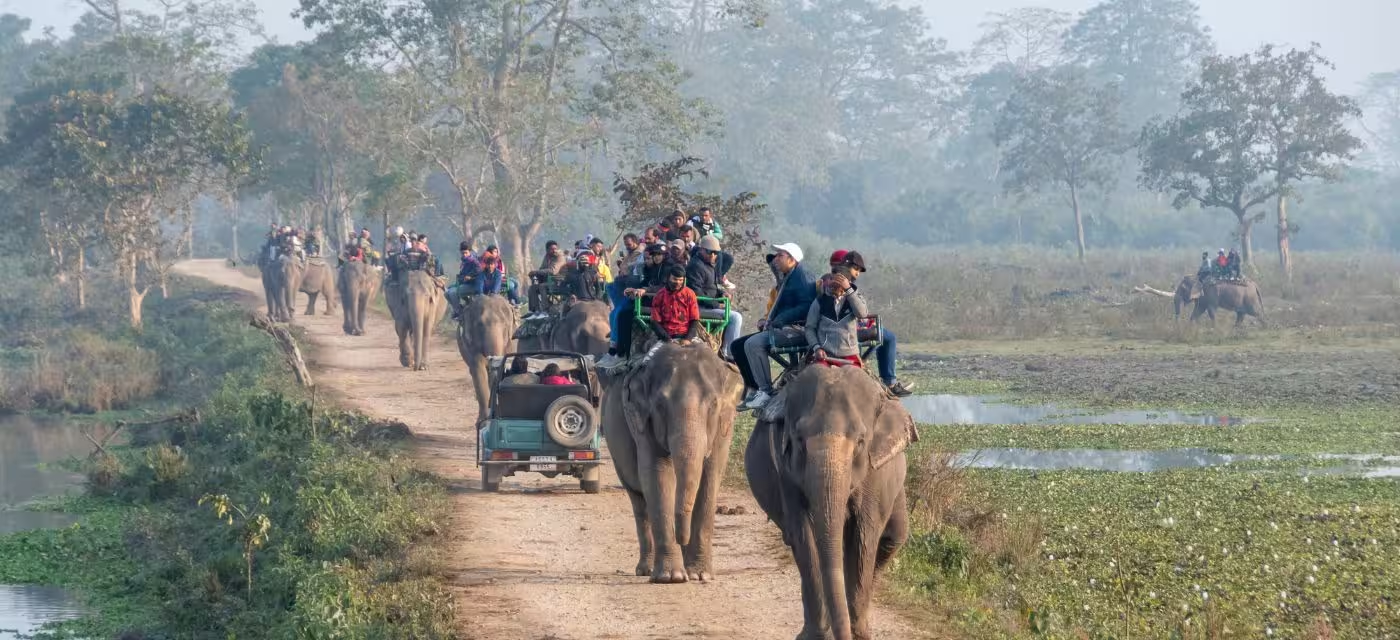
If you would love the chance to experience and enjoy the animals up close, there’s cause for happiness because Kaziranga offers superb elephant and jeep safaris.
Elephant Safari
The elephant safari begins as early as 5 am, with each safari lasting for about an hour.
It is one of the best ways to explore the Park and see its wonderful wildlife.
It’s an excellent idea in many ways. The normally ready-to-charge rhinos, for one, seem utterly unfazed by the elephants or the safari groups.
Sitting on an elephant can give you some of the best possible views through all that tall and deceptive elephant grass.
But most importantly, the safari allows you to see wild animals in their natural habitat in a quiet and relatively non-intrusive way.
The safari routes include:
- Kohara
- Agaratoli
- Baghori
Jeep Safari
Jeep safaris are permitted on predefined tourist circuits within Kaziranga National Park.
The principal points mentioned are:
- Mihimukh – Central Range at Kohora
- Bagori – Western Range
- Agaratoli – Eastern Range
- Ghorakati – Burapahar Range
Each circuit takes approximately one and a half to two and a half hours, depending on the tourist’s interests.
A Cruise on the Brahmaputra
For those who would like to enjoy a ringside view of the forest and its wildlife, a cruise on the Brahmaputra River along the Park is ideal.
Once you’ve finished exploring Kaziranga, you could also visit a tea plantation or one of the nearby Karbi or Mising villages.
When to Visit Kaziranga
The ideal time to visit Kaziranga, according to the source, is between November and April.
The Park typically remains closed from May 1 to October 31 every year.
Staying at Diphlu River Lodge
A great place to stay while in Kaziranga is Diphlu River Lodge.
The accommodation is excellent and the location of the lodge is perfect. Only the boundary river separates its extensive grounds from the National Park itself, while the jungle views are exceptional.
The lodge has:
- Eight independent cottages
- Four semi-detached cottages
- Raised structures built on stilts
- Bamboo and thatch construction
- Air-conditioned twin-sharing cottages
- Capacity for 24 guests
The cottages are beautifully designed and furnished using local materials, allowing them to blend naturally with the spectacular surroundings.
The Elephant Festival
For tourists who make the trip to Kaziranga in February, there’s a rare and special experience in store.
Every year in February, Kaziranga National Park becomes the venue for the wonderful Elephant Festival in Assam.
Dedicated to the conservation and protection of the Asiatic elephant, the Elephant Festival is one of India’s largest elephant festivals and is organised jointly by the Forest Department and the Tourism Department of the Government of Assam.
The three-day festival is unique not only because of its message of awareness and conservation, but also because of its participants—the elephants themselves.
When Elephants Take Centre Stage
Assam is home to around 2,500 domestic Asiatic elephants. Some of these very elephants participate in the cultural activities dedicated to them during the festival.
Around a hundred domestic Asiatic elephants participate in activities such as football and even dancing, to the great cheers of spectators.
Soon after, the beautifully decorated elephants walk in a slow procession, accompanied by troupes beating drums and cymbals.
It’s a fantastic moment.
The majestic beauty of these gentle giants, as they display their skills and patiently follow their handlers through the crowd, is unparalleled.
A Conservation Success Story
Kaziranga is a fantastic conservation success story.
Asia’s finest rhino sanctuary has, over the years, also become the land for other reserves—the home of many rare and endangered animals and birds, and certainly a key refuge for their future on the planet.
The mighty Brahmaputra River is Kaziranga’s closest companion and, quite literally, the giver of life to this gorgeous grassland kingdom and its spectacular wildlife.
Come to Kaziranga
Come to Kaziranga.
Come to its tallgrass savannahs.
Come and meet the marvellous creatures of India’s wild that call it HOME.
Related Posts