 English
 Deutsch
 Italia
 August 20, 2026 By admin
Indra Jatra Festival
OF A HEAVENLY GOD AND AN EARTHLY GODDESS
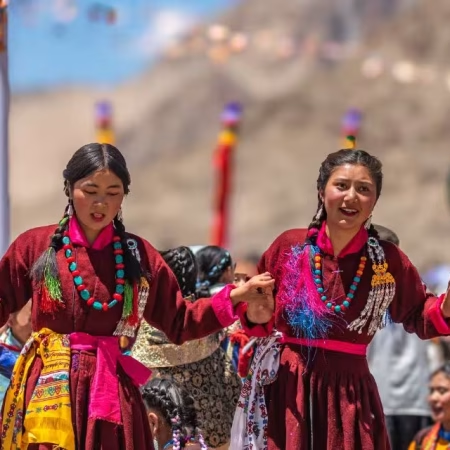
The eight-day-long Indra Jatra (also known popularly as Yenya) festival falls in September and is one of the most exciting and revered festivals of the Newari community of the Kathmandu Valley.
It is the largest street festival in Nepal. The word jatra itself means procession. The celebration also marks the beginning of a month-long festival season in autumn.
Started in the 10th century CE by King Gunakamadeva, the festival commemorates the legend of how Indra – the Lord of the Heavens and the God of Rain in Hindu mythology – descended from heaven in human form to look for a rare flower for his mother, and his ascent to the heavens thereof.
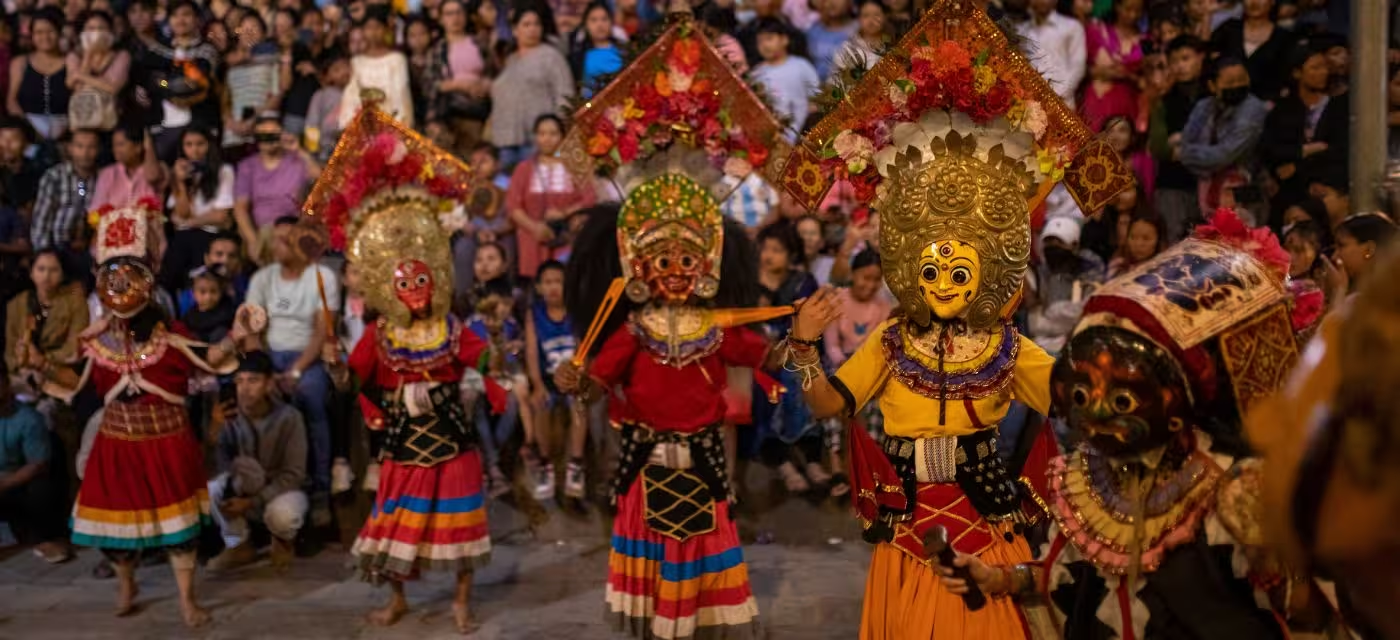
Indra Jatra is marked by masked dances of deities and demons, displays of sacred images and tableaus in honour of Indra.
THE BEGINNING OF INDRA JATRA
It begins with the erection of a linga (wooden ceremonial pole) made of pine at the Basantapur Square in front of the old Hanuman Dhoka Palace.
For the pole-raising ceremony, hundreds of spectators gather at the Palace Square and in the surrounding temples.
Each night of the Indra Jatra is a vision of radiance and illumination as the shrines and ancient palace buildings around the Kathmandu Durbar Square are aglow with oil wicks.
One of the key rituals of the Indra Jatra is to pay respect to one’s forefathers and also to those deceased the past year – all day long, across temples and shrines, people light butter lamps and offer prayers, fruit, and flowers.
Each night on the platform in front of the temple of the Living Goddess, a reenactment depicting the ten earthly incarnations of Lord Vishnu takes place.
THE LIVING GODDESS KUMARI
The grandest highlight of the Indra Jatra though, is the Kumari – the Living Goddess.
In a unique 17th-century tradition in Nepal, a pre-pubescent girl, one who is seen as the incarnation of the Hindu Goddess Durga, is chosen, anointed, and worshipped as a Kumari.
She is worshipped as a goddess until puberty, at which time a new goddess is then selected.
The Kumari is chosen from the Shakya caste among the Buddhist Newars – usually a three or four-year-old girl; a virgin with no bodily marks or injuries.
How the Kumari is chosen remains a closely guarded secret involving ancient Tantric ‘mysteries’. What is known is that she is put through elaborate tests during which she must show no fear.
THE KUMARI’S RARE PUBLIC APPEARANCE
The Indra Jatra is the only time the Kumari steps out of her home to tour the city and shower her blessings.
To catch the merest glimpse of the young goddess is considered lucky – hence, the huge crowds that throng the streets of Kathmandu!
Young and old, locals and foreigners, families… all get to the Durbar Square early to see the Kumari make her rare public appearance.
In the afternoon of the day before full moon, ecstatic mobs gather near the Hanuman Dhoka Palace for the long-awaited Living Goddess’ chariot procession to catch a glimpse of the revered little Newari girl who is deified as the Vestal Virgin.
THE CHARIOT PROCESSION
The chariot of the Kumari is taken out in a procession through the main streets of Kathmandu in a golden palanquin.
Wonderful masked dances known as Lakhey are performed almost every evening, dancing to traditional Newari music and the accompaniment of loud, rhythmic drums and the clanging of cymbals.
The other significant dance performed here is the Pulu Kisi or the Elephant Dance.
It is traditional for the Head of State, consular staff, and other dignitaries, along with the city’s people, to come to the Hanuman Dhoka Square for the worship of the Kumari.
The Head of State receives a tika (a sacred red paste pigment applied on the forehead) from the Kumari.
The chariot of the Kumari followed by two other smaller chariots carrying children representing Ganesha (the elephant-headed god) and Bhairava (a terrifyingly beautiful manifestation of Shiva said to be the Destroyer of Evil) is taken to different parts of old Kathmandu.
The festival of Indra Jatra ends with the lowering of the linga bearing Indra’s flag amidst elaborate religious ceremonies.
EXPERIENCE INDRA JATRA IN KATHMANDU
The Indra Jatra is one of the most recommended festivals in Nepal.
On the day, the Kathmandu Durbar Square is kept free for all visitors.
Apart from the spectacular celebrations and chariot processions, the Indra Jatra also offers you the rare and unique experience of getting a glimpse of the beautiful, elusive Kumari.
Truly unforgettable.
Related Posts