 English
 Deutsch
 Italia
 May 14, 2025 By admin
Festive India
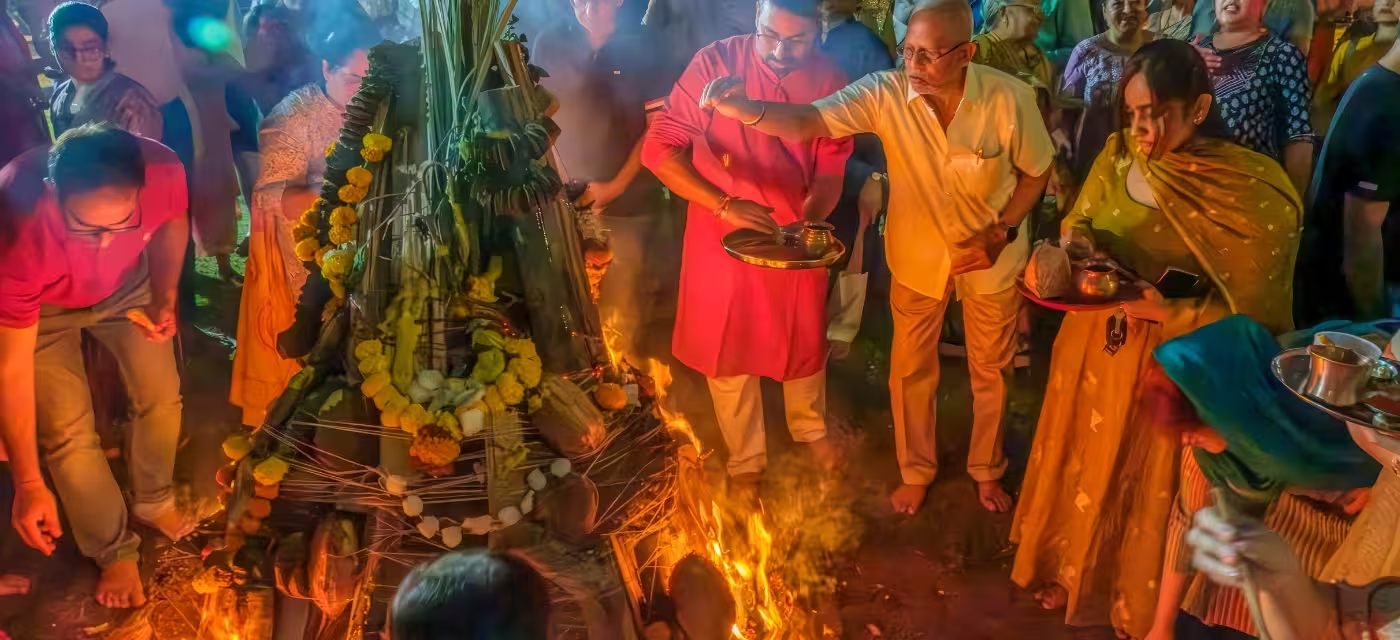
Festive India
It is the power of faith that can part a river, move mountains, and endure the hardships that come bundled up for being an integral part of Kumbh Mela, a congregation of millions, gathered together to be freed from the vicious earthly cycle of life and death and move towards a heavenly realm, which knows no suffering or pain.
Festivities Galore at the Ardh Kumbh Mela
Gods and demons, good and evil, and the eternal fight between the two, lie at the heart of Hindu mythology.
Rivers have always held a special place in Hindu mythology, as these are considered to be the carriers of life and fertility. Hence rivers are always an integral part of almost all major festivals in India.
One of the festivals which are worth mentioning in this context is Kumbh Mela. This fair is perhaps the largest religious gathering in any religion around the world. A vast number of people gather at different places and perform different rituals on this day by the banks of different rivers.
The name Kumbh Mela consists of two words, the literal meaning of the name of the festival is, ‘Kumbh’ which means a pitcher or a pot, the word Kumbh also signifies a Hindu sun sign, Aquarius. The word mela means a fair or a gathering.
This is a fair which is conducted at four different places of India on the banks of pious rivers. The places where the mela is conducted are Haridwar, on the banks of river Ganges; Ujjain by the river Shipra; Nasik by the river Godawari and at Allahabad by the confluence of the rivers Ganges, Yamuna and Saraswati.
During the festival the banks of these rivers become a large bathing ground for the rich, the poor, the sadhus and the women alike.
For each place the Kumbh Mela repeats every 12 years, but in actuality there are four different Kumbh Melas which take place at different sites. For e.g. if the Kumbh Mela is taking place in Prayag in the year 2011 then the next Kumbh Mela will take place at Ujjain.
It’s the mythological history of India and the sacred religious texts that bind us carnal souls to an eternal hope – things will be better, without the ever-imminent fear of them getting worse that cripples us here.
‘An eternal life free of sins’ is the promise that comes attached with the magnificent event of Kumbh Mela. It is a promise to which millions want to be bound with, and it is this promise that has made Kumbh Mela what it is today.
Gods and demons, good and evil, and the eternal fight between the two, lie at the heart of Hindu mythology.
Having asked for the demons help to obtain the nectar of immortality, the gods could not allow evil to become immortal and so they ran, carrying with them the kumbh (pot) with the demons in hot pursuit. Drops fell at four spots, of which one is Haridwar.
During the auspicious alignment of stars and planetary bodies, the holy water of the Ganga at Haridwar during the Ardh Kumbh (half Kumbh, held every six years) are transformed into nectar which can wash away the sins of 88 generations.
What had enticed the gods and demons, can mere mortal be far behind?
Thousands of devout arrive hoping to fulfil their spiritual quest of moksha or freedom from the cycle of rebirth.
Amongst the overwhelming numbers that make this journey, it is no doubt the sadhus and their antics which offer the most alluring visual extravaganza.
The Naga sadhus (naked sages) of the Himalayas, clad only in cow dung ashes, lead the procession into the holy waters.
Tapasya (meditation) takes various forms- balancing on a single leg, keeping one’s hand raised for years on end and so on.
Related Posts