
 English
 Deutsch
 Italia
 August 19, 2026 By admin
Discovering the Treasures of India’s Wilderness
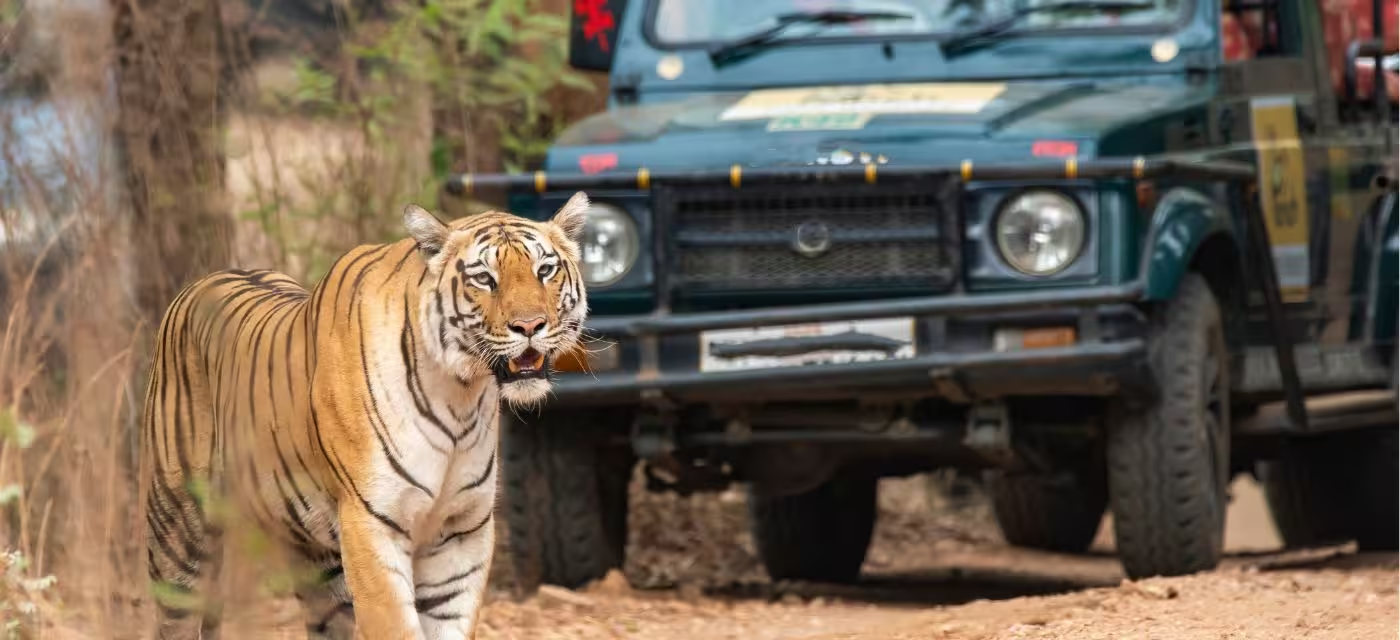
Discovering the Treasures of India’s Wilderness
“The greatness of a nation and its moral progress can be judged by the way its animals are treated.”
— Mahatma Gandhi
India is a land of extraordinary wildlife diversity.
Across the country, animals and birds inhabit an astonishing variety of landscapes — from lush tropical forests and deep mangrove swamps to dry grasslands, remote deserts, icy alpine regions and the depths of the ocean.
The Western Ghats, Eastern Himalayas and Indo-Burma region are among the world’s biodiversity hotspots, making India an exceptional destination for wildlife enthusiasts and nature lovers.
India is also one of the world’s megadiverse countries, accounting for approximately 7–8% of the world’s species.
Its wildlife is perhaps best known through iconic animals such as the tiger, elephant, leopard, deer and rhinoceros, but the country’s natural wealth extends far beyond these famous species.
Across India’s national parks, wildlife sanctuaries and reserves, remarkable ecosystems continue to protect rare, endemic and endangered species.
This is a journey through some of India’s finest wilderness destinations — including famous reserves as well as lesser-known places where extraordinary landscapes and wildlife await discovery.
Central India
Satpura National Park, Madhya Pradesh
The Satpura Tiger Reserve stretches along the Satpura mountain range as it slopes towards the Narmada and Tawa valleys.
The landscape is spectacular, and wildlife is abundant.
A half-day Jeep safari to the Reserve from Neemghan Gate is a good way to explore the area and search for wildlife such as bison and sambar.
For travellers seeking a more immersive experience, a longer expedition through the Reserve’s extensive circuit offers the opportunity to spend nights in forest rest houses.
If the goal is to experience the wilderness rather than simply see it, Satpura rewards a slower journey.
Pench National Park
Also known as the Indira Priyadarshini Pench Tiger Reserve, Pench lies along the southern boundary of Madhya Pradesh.
The Park can be explored through three gates:
- Turia Gate
- Karmajhuri Gate
- Jamtara Gate
A Jeep safari is an excellent way to experience the forest.
Early morning rides are particularly atmospheric.
The jungle comes alive with calls and sounds, and an experienced guide or naturalist can help interpret the forest’s many signals.
As evening approaches, watch for kingfishers, cheetals, wild dogs, jackals and owls.
And if an alarm call suddenly breaks through the forest, there may be a tiger nearby.
Chhattisgarh
Achanakmar Wildlife Sanctuary
Established in 1957, Achanakmar Wildlife Sanctuary covers more than 500 sq. km of lush forest.
It lies amid the Mekhal Range, where the Vindhyas and Satpuras meet.
Morning safaris can last around four to five hours, while evening excursions generally take three to four hours and are accompanied by a guide.
The sanctuary supports a wide range of wildlife, including deer, wild boar and bear.
With luck, visitors may also encounter tiger, leopard, striped hyena, jackal, sloth bear, Indian wild dog, antelope, mountain gazelle and blackbuck.
Barnawapara Wildlife Sanctuary
Named after the twin villages of Bar and Nawapara, Barnawapara Wildlife Sanctuary was established in 1976.
The sanctuary is unusual in that villages exist within its boundaries while poaching and serious human-wildlife conflict have remained relatively uncommon in the source account.
Water is abundant, with streams, rivulets and watering holes spread throughout the landscape.
These watering holes are particularly good places to look for wildlife.
You may encounter:
- Leopard
- Antelope
- Mouse deer
- Sloth bear
- Indian wild dog
- Jungle cat
- Porcupine
- Tiger
Birdwatchers can look for more than 150 species, including golden orioles, racket-tailed drongos, herons and barbets.
Reptiles include monitor lizards, cobras, kraits, pythons and rat snakes.
Guru Ghasidas National Park
Formerly known as Sanjay National Park, Guru Ghasidas National Park was renamed after the region’s renowned social reformist.
Its greatest appeal lies partly in its relative obscurity.
The Park’s mixed forests of teak, sal and bamboo support a wide variety of animals and birds.
More importantly, Guru Ghasidas forms a vital wildlife corridor connecting the Bandhavgarh and Palamau tiger reserves.
Dense forests, streams, undulating terrain and the possibility of encountering tigers make this a destination for travellers looking beyond India’s better-known wildlife parks.
Kanger Valley National Park
Established in 1982, Kanger Valley National Park is one of Chhattisgarh’s most remarkable wilderness destinations.
Located around 27 km from Jagdalpur, the Park takes its name from the Kanger River flowing through the valley.
The wildlife is remarkably diverse.
Among its inhabitants are:
- Tigers
- Leopards
- Wild cats
- Mouse deer
- Jackals
- Sloth bears
- Giant flying squirrels
- Otters
- Civet cats
- Striped hyenas
- Wild pigs
- Cobras
- Pythons
- Crocodiles
- Monitor lizards
But one creature deserves special attention — the hill mynah, also known as the Bastar Mynah and the state bird of Chhattisgarh.
Udanti Wild Buffalo Wildlife Sanctuary
Created specifically for the conservation and protection of the wild buffalo, Udanti Wildlife Sanctuary covers around 247 sq. km.
A watchtower provides an excellent vantage point over the sanctuary.
Below it are lakes and streams, while Nagesh Talab is particularly attractive for wildlife viewing.
Its clear waters stretch across the green landscape like a sheet of glass.
Sitanadi Wildlife Sanctuary
Spread across approximately 556 sq. km, Sitanadi Wildlife Sanctuary is a landscape of forests and serene waters.
Established in 1974, it supports diverse wildlife and birdlife.
One of its highlights is a watchtower standing around 635 metres above sea level and surrounded by seven mountains named after the Saptarishis, the seven sages of Hindu mythology.
Safaris are accompanied by guides and offer opportunities to explore this relatively lesser-known wilderness.
South India
Coringa Wildlife Sanctuary, Andhra Pradesh
On the coast of Andhra Pradesh lies Coringa Wildlife Sanctuary, near Kakinada.
Located around the delta of the Godavari River where it meets the Bay of Bengal, Coringa contains one of India’s major mangrove ecosystems.
The sanctuary supports almost 35 species of mangroves and a remarkable variety of marine and birdlife.
It is also home to rare animals including the fishing cat and smooth-coated otter.
The combination of river, mangrove and coastal ecosystems makes Coringa particularly fascinating for nature lovers.
Tamil Nadu
Vedanthangal Bird Sanctuary
Vedanthangal Bird Sanctuary is described in the source as India’s oldest bird sanctuary.
The landscape combines mangrove islands, evergreen scrub and thorn forests.
During the season, thousands of birds arrive here to rest, breed and shelter among partially submerged trees.
Look out for:
- White ibis
- Asian spoonbill
- Grey pelican
- Rosy pelican
- Sandpiper
- Night heron
- Cormorant
It is an especially accessible wilderness experience for birdwatchers and families.
Gulf of Mannar Marine National Park
The Gulf of Mannar Marine National Park comprises 21 islands lying approximately 8 km off the Tamil Nadu coast.
It forms the core area of the Gulf of Mannar Biosphere Reserve.
Its extraordinary marine landscape includes:
- Coral reefs
- Mangroves
- Salt marshes
- Sea grasses
- Mudflats
- Beaches
- Estuaries
- Marine forests
The endangered dugong is the star species.
The waters also support whales, bottlenose dolphins, finless porpoises and endangered marine turtles.
The region is also important for migratory birds, including crab plovers, sandpipers, red knots and flamingos.
The islands are uninhabited and require permits for visits. Glass-bottomed boats provide an opportunity to experience the marine ecosystem without entering the islands.
Kerala
Silent Valley National Park
Silent Valley is one of the rare remaining patches of untouched tropical rainforest in the Western Ghats.
Part of the Nilgiri Biosphere Reserve, it is surrounded by steep ridges and escarpments that have helped preserve its ecological character.
From the watchtower at Sairandhiri, visitors can enjoy spectacular views of the surrounding mountains.
Trails lead towards the River Kunthi, where visitors may encounter birds, giant squirrels, the endangered lion-tailed macaque and Nilgiri langur.
For butterfly enthusiasts, Silent Valley offers another extraordinary dimension of biodiversity.
Eravikulam National Park
Once used as a hunting preserve by British colonial planters, Eravikulam National Park has become an important example of wildlife conservation.
Its most famous resident is the endangered Nilgiri tahr, a wild goat that once faced severe hunting pressure.
The species is now protected within the Park.
Located at an elevation of around 7,000 feet, Eravikulam also offers spectacular mountain scenery.
The Director’s Leap Viewpoint is particularly popular.
Karnataka
Bhadra Wildlife Sanctuary
Also known as the Bhadra Tiger Reserve, this sanctuary lies within the Western Ghats and is surrounded by the Baba Budanagiri Range.
The River Bhadra and its tributaries nourish the landscape.
Spread across nearly 500 sq. km, Bhadra supports:
- Tigers
- Panthers
- Bison
- Sloth bears
- Wild dogs
- Wild boar
- Flying squirrels
- Around 200 bird species
One of the most unusual attractions is the Jagara Giant — not an animal, but a remarkable 300-year-old teak tree with a girth of approximately 5.21 metres.
The reserve can be explored through jungle safaris and trekking trails.
Elephants gather around Nagarbhavi Lake, while watering holes such as Talbidrekere provide excellent wildlife-viewing opportunities.
The Andaman Islands
Mahatma Gandhi Marine National Park
Located at Wandoor, around 29 km southwest of Port Blair, the Mahatma Gandhi Marine National Park protects an extraordinary tropical marine ecosystem.
Created in 1983, the Park covers around 280 sq. km and includes 15 uninhabited tropical islands covered in forests and mangroves.
Its marine ecosystem includes:
- Colourful corals
- Exotic fish
- Shells
- Tropical marine life
Only Jolly Buoy and Red Skin are open to visitors, alternately for six months each.
The experience begins at Wandoor, followed by a ferry ride through mangroves, a glass-bottomed boat excursion over coral reefs, snorkelling and time on beautiful beaches.
Western India
Mollem National Park, Goa
Near Goa’s eastern border with Karnataka lies the Bhagwan Mahavir Wildlife Sanctuary, within which lies the core area of Mollem National Park.
Together, they cover around 240 sq. km.
The forests range from evergreen to deciduous and support a remarkable variety of wildlife.
Visitors may encounter:
- Langurs
- Bison
- Sloth bears
- Porcupines
- Flying lizards
- Wild boar
- Panthers
- Snakes
- Numerous bird species
Mud trails provide a wonderful way to experience the forest.
For panoramic views of the surrounding hills and valleys, Sunset Point is especially rewarding.
Maharashtra
Melghat Tiger Reserve
Melghat lies within the southwestern Satpura mountain ranges, where Maharashtra meets Madhya Pradesh.
Its dramatic terrain includes:
- Jagged cliffs
- Rocky ravines
- Deep valleys
- High hills
- Rivers
- Vast natural forests
The Reserve covers around 3,600 sq. km and encompasses the Gugamal National Park, Melghat Wildlife Sanctuary and neighbouring deciduous forests.
Wildlife includes:
- Flying squirrels
- Leopards
- Sloth bears
- Porcupines
- Pangolins
- Pythons
- Otters
- Black-naped hares
Early morning and evening Jeep safaris begin from Semadoh, while trekking routes along the River Sipna offer excellent opportunities for birdwatching.
With luck, you might even glimpse the rare Forest Owlet.
Gujarat
Marine National Park, Gulf of Kutch
The Marine National Park in the Gulf of Kutch lies along Gujarat’s western coast.
It is described in the source as India’s first National Marine Park.
The Park contains 42 islands, most surrounded by reefs, with coral reefs found around 33 of them.
The landscape is extraordinarily varied, combining:
- Sandy beaches
- Mangrove swamps
- Coral reefs
- Mudflats
- Creeks
- Seagrass
- Estuaries
- Saline grasslands
- Marshes
- Rocky shores
At low tide, large numbers of coastal birds gather to feed.
During winter, thousands of migratory birds arrive, sometimes forming spectacular V-shaped formations over the Gulf.
Northern India
Pin Valley National Park, Himachal Pradesh
Deep in Spiti, the Pin Valley National Park is a destination for adventurous travellers.
The Park rises from approximately 11,480 to 19,680 feet, creating an extraordinary high-altitude landscape.
Trekking is the primary way to explore the Park.
The wilderness offers opportunities to encounter rare Himalayan species including:
- Snow leopard
- Ibex
- Blue sheep
The famous Great Himalayan National Park lies nearby, making this region particularly appealing to serious mountain and wildlife enthusiasts.
Rajaji National Park, Uttarakhand
At the foothills of the Shivalik Range, Rajaji National Park is covered largely by sal forests.
The Park is particularly famous for its wild elephants, including magnificent adult males with impressive tusks.
Birdlife becomes especially abundant during the monsoon and winter seasons, when migratory species arrive.
A Jeep safari is an excellent way to explore the Park.
Eastern India
Bhitarkanika National Park, Odisha
Bhitarkanika National Park combines wetlands, forests, rivers and wildlife in an extraordinary coastal ecosystem.
Among its major attractions are:
- Olive Ridley turtles
- Saltwater crocodiles
- Otters
- Mangrove forests
- Creeks
- Historic ruins
The Park covers approximately 672 sq. km and includes the beautiful Gahirmatha Marine Wildlife Sanctuary, an important rookery for Olive Ridley turtles.
Its river systems provide protected habitat for the enormous saltwater crocodile.
Bhitarkanika is best explored by motorboat.
The forest block around Dangmal provides opportunities for wildlife sightings, while Bagagahana Island is famous for its nesting herons.
West Bengal
Gorumara National Park
Located in the eastern Dooars near the River Murti, Gorumara National Park is one of North Bengal’s prominent wildlife destinations.
The Park supports an impressive range of wildlife, including:
- Elephants
- Greater Indian one-horned rhinoceros
- Indian bison
- Leopards
- Sloth bears
- Wild boar
- Indian wild dogs
- Indian wolves
Several watchtowers provide excellent vantage points, while Jeep and elephant safaris offer opportunities to experience the forest.
Northeast India
Namdapha National Park, Arunachal Pradesh
In the Eastern Himalayas lies Namdapha National Park, one of India’s most extraordinary wilderness destinations.
Its relative inaccessibility has helped protect its dense forests.
According to the source, Namdapha is unique for hosting four big cats:
- Tiger
- Leopard
- Clouded leopard
- Snow leopard
The Park is also home to macaques, the endangered Hoolock gibbon, hornbills and Bengal floricans.
Its enormous forest landscape contains hundreds of tree species and thousands of colourful butterflies.
And there are leeches too — so visitors should come prepared with appropriate protection.
The deeper you travel into Namdapha, the more profound the feeling of isolation becomes.
Once inside the forest, the canopy can be so dense that the sky is visible only at campsites.
The result is an overwhelming sense of solitude and wilderness.
Pakke Tiger Reserve
Located near the Assam border, Pakke Tiger Reserve lies within the Eastern Himalaya Biodiversity Hotspot.
The 862 sq. km Reserve is contiguous with Assam’s Nameri Tiger Reserve.
Pakke is particularly renowned for its hornbills and is described in the source as India’s only Hornbill sanctuary.
Four notable species are found here:
- Great hornbill
- Wreathed hornbill
- Oriental pied hornbill
- Rufous-necked hornbill
The Reserve also supports tigers, leopards, jungle cats, civets, Asiatic black bears, wild dogs, elephants, gaur, sambar and wild pigs.
One of Pakke’s most remarkable conservation stories involves the Nyishi tribe, whose village elders play an important role in protecting the forests.
Jeep safaris and birdwatching are among the key experiences.
Assam
Manas National Park
Situated along the Indo-Bhutan border, Manas National Park has an extraordinary range of distinctions.
It has been recognised as a:
- Wildlife sanctuary
- Tiger Reserve
- National Park
- Biosphere reserve
- Elephant reserve
- Ramsar wetland
- UNESCO World Heritage Site
The Park is home to tigers, elephants, wild buffalo, sambar and swamp deer.
The Manas, Hakua and Beki rivers flow through the landscape.
Visitors can experience the Park through:
- Jeep safaris
- Elephant safaris
- Jungle walks
- River rafting
Nameri National Park
Located in the foothills of the Eastern Himalayas in Assam’s Sonitpur District, Nameri National Park is another fascinating destination for wildlife enthusiasts.
The Park is a Tiger Reserve and also supports wild elephants and hundreds of bird species.
Visitors can combine wildlife exploration with:
- Trekking
- River rafting
- Birdwatching
- A visit to the Pygmy Hog Breeding Centre
Discover India’s Wild Side
India’s wilderness is far more diverse than its famous tiger reserves alone.
From the mangroves of Coringa and the coral reefs of the Gulf of Mannar to the snow-covered heights of Pin Valley and the dense forests of Namdapha, every landscape reveals a different face of the country.
There are forests where tigers move silently through the undergrowth.
Mountains where snow leopards disappear among the rocks.
Wetlands filled with migratory birds.
Coasts where turtles return to nest.
And forests where ancient communities continue to play a vital role in protecting nature.
The true treasure of India’s wilderness lies not simply in the animals we hope to see, but in the extraordinary ecosystems that sustain them.
To explore India’s wild places is to discover another India — ancient, untamed, diverse and endlessly fascinating.
“An animal’s eyes have the power to speak a great language.”
— Martin Buber
Related Posts