 English
 Deutsch
 Italia
 August 20, 2026 By admin
Flavours of the Earth from Middle India
Flavours of the Earth from Middle India
“If more of us valued food and cheer and song above hoarded gold, it would be a merrier world.”
— J.R.R. Tolkien
One land travels to another, churning life and geography. This isn’t the languid continental drift but something faster, more vibrant, visible, and tasteful.
People.
Madhya Pradesh rests at the geographical heart of India and, like any heart, its cultural lifeblood has flowed in from every direction.
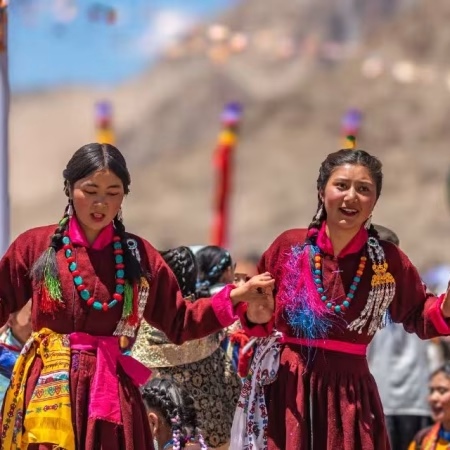
Among the communities that have shaped Madhya Pradesh, Rajasthan has perhaps contributed the strongest cultural influence. Rajput clans such as the Bhagels, Jaiwars, Chandelas, Tomars, and Sengars settled north of the Narmada before the great Deccan roads opened the region to travellers, nomadic tribes, agriculturists, and later communities displaced by the Narmada Dam.
They brought with them the colours of Rajasthan, its religious traditions, languages, dance and music – and, to keep it all fuelled, their beloved Dal, Baati and Churma.
From the Forests to the Narmada
The Gond and Korku were among the early inhabitants of Madhya Pradesh.
Fishing and farming communities, they lived on simple, nourishing foods based around sorghum, rice and spices. The rivers beside which their villages developed became natural meeting points for travellers and communities moving through Central India.
Among them were the Bhils, traditionally warriors and hunters whose emblem was the bow and arrow.
The Bhil community settled among the hilly forests of Central India and gradually moved from hunting towards agriculture.
Over time, these movements transformed the region’s cultural landscape.
Pale wall paintings gave way to vibrant Gondi art. Sorghum was joined by wheat. And the earthy flavours of cow-dung-fired Baatis travelled down the Narmada Valley and up towards the Satpuras.
Food, like culture, travelled with the people.
Dal-Baati – A Taste of Cultural Exchange
Regardless of social class, special occasions offered an opportunity to break away from the everyday monotony of rice and sorghum rotis.
The answer was Baati – served with spicy Dal, ghee and accompaniments.
Even leftovers found a place in this culinary tradition in the form of Maleeda.
Preparing the feast could itself become a celebration.
The kitchen would first be cleaned, with the floor traditionally plastered using anti-fungal cow dung.
Artistic families would paint murals of flowing rivers on the kitchen walls, while some even extended these designs towards their earthen stoves and ovens.
These murals offer a fascinating visual parallel to the journey of Dal-Baati through the rivers and landscapes of Central India.
A Meal from Madhai
One particularly memorable version of Dal-Baati can be experienced at Forsyth Lodge, where women from Madhai prepare the dish on winter afternoons.
Cooked traditionally and served beneath a Mahua tree, the meal fills the surrounding air with a distinctive smoky aroma.
The Central Indian version uses ingredients similar to the Rajasthani preparation, but follows a somewhat simpler process, giving it its own regional identity.
Wheat flour is kneaded into dough and divided into small balls, which are then lightly flattened.
The Baatis are baked over dung cakes until they develop a deep brown colour.
Meanwhile, lentils simmer slowly in an earthen pot over a traditional stove.
Once baked, the Baatis are dipped generously into ghee, allowing them to absorb its richness.
But a few Baatis are deliberately kept aside for something even more indulgent.
Maleeda – The Sweet Ending
Some of the baked Baatis are mashed and combined with jaggery.
The mixture is then enriched with dried dates, cashews and almonds before being shaped into a coarse ball.
This is Maleeda – a rustic, satisfying sweet that transforms leftover Baati into a completely different culinary experience.
It is a fitting example of how traditional food cultures waste little and turn simple ingredients into something memorable.
The Perfect Central Indian Plate
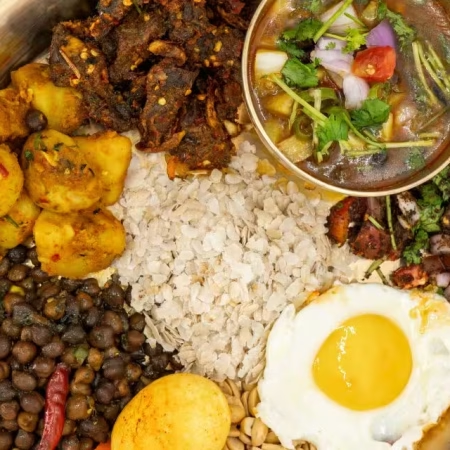
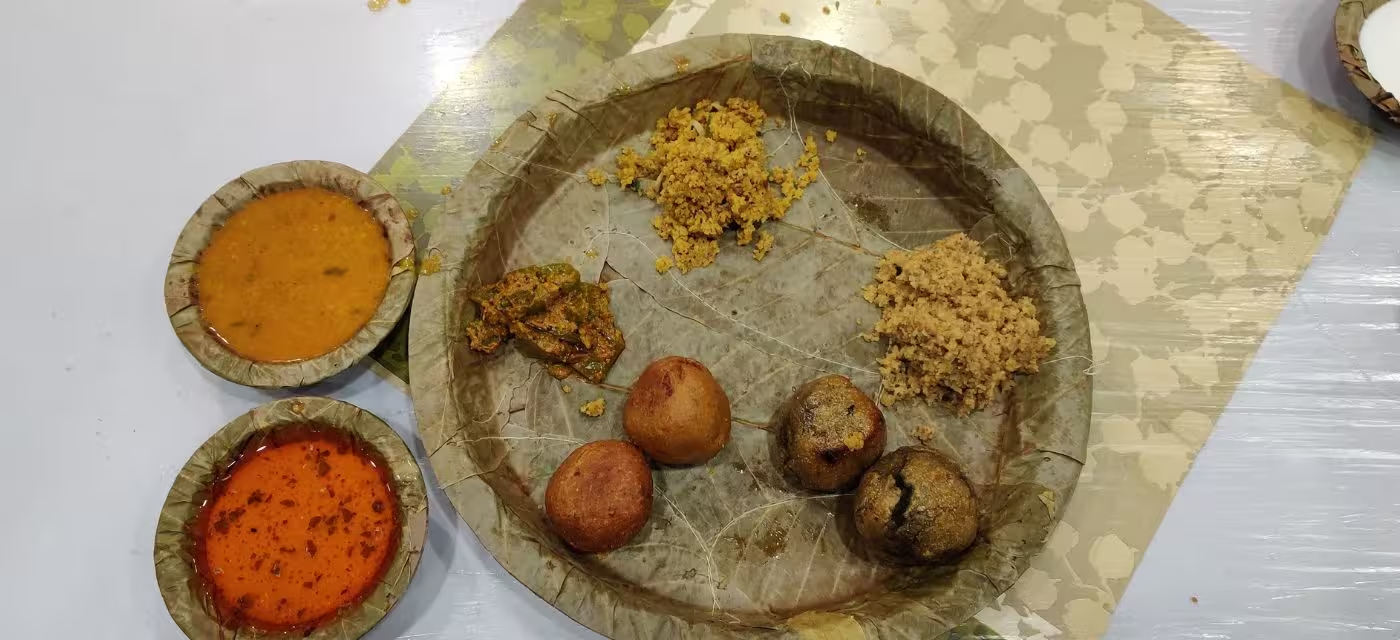
Traditionally, Dal-Baati is served in cups lined with Palash leaves, the leaves of the beautiful flame-of-the-forest tree.
The meal is accompanied by generous amounts of ghee, mashed potatoes and Chokha, a fiery green-chilli paste.
The best way to enjoy it is to break the Baati into pieces and allow it to soak up the Dal and ghee.
As the aromas rise around you, the meal becomes more than food.
It becomes a journey through people, migration, landscape and memory.
From Rajasthan to the Narmada, from tribal kitchens to village hearths, the story of Madhya Pradesh’s food is ultimately a story of movement.
The flavours of the earth have travelled far – and in Middle India, they have found a home.
Related Posts