 English
 Deutsch
 Italia
 August 19, 2026 By admin
Maharashtra Folk Music Dance and Drama
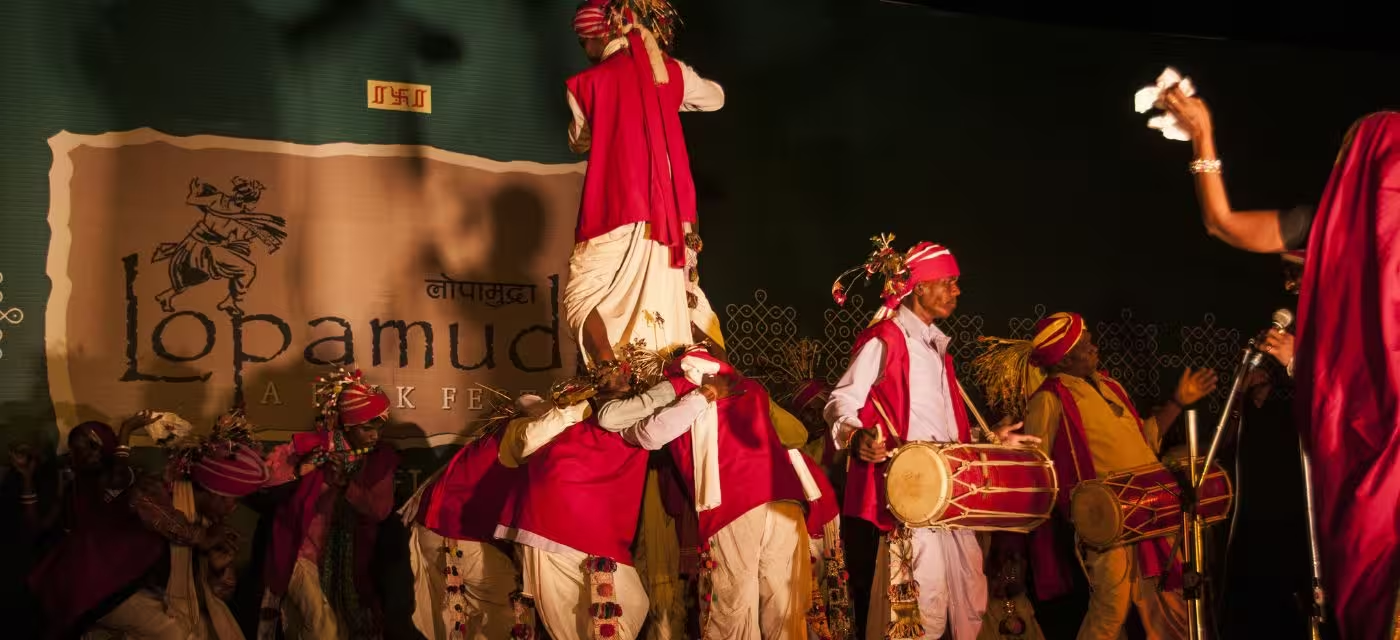
Maharashtra: The Rhythm of Music, Dance & Folk Theatre
Maharashtra’s cultural heritage is expressed not only through its festivals, temples and historic monuments but also through the vibrant sounds of its music, the energy of its dances and the drama of its traditional theatre.
From the powerful powadas celebrating Maratha warriors to the sensual rhythms of lavani, from devotional abhangas to the colourful world of tamasha, Maharashtra’s performing arts tell stories of devotion, courage, love, everyday life and community.
These traditions have travelled across generations, preserving the distinctive spirit of Maharashtra.
Lavani: Rhythm, Poetry and Passion
Over time, lavani evolved into a scintillating form of music and dance, with songs often centred on sensual themes and teasing lyrics.
There are two principal forms of lavani:
- Nirguni Lavani – philosophical in nature
- Shringari Lavani – sensual in character
Shringari Lavani is traditionally performed on stage by women, with the compositions often written by men.
Lavani is also performed in two distinct settings. Phadachi Lavani is presented publicly before a large audience in a theatrical atmosphere, while Baithakichi Lavani is performed in a private setting for a select audience, with the performer seated.
Powada: Ballads of Maharashtra’s Warriors
The powada belongs to a genre of Marathi poetry that emerged during the late 17th century.
Similar to traditional ballads, powadas narrate historical events, particularly the life and achievements of the great Maratha warrior king Chhatrapati Shivaji.
The early powadas were often composed by people who had witnessed the events they celebrated. The poet-composers and singers who performed them were known as shahirs.
With powerful singing, dramatic expression and stirring narration, powadas preserve the memory of Maharashtra’s warrior heroes and continue to inspire audiences.
Around 60 powadas were collected by Harry Arbuthnot Acworth and S. T. Shaligram and published in 1891 under the title Itihas Prasiddha Purushanche Va Striyanche Powade. Ten were later translated into English verse by Acworth and published as Ballads of the Marathas in 1894.
Folk Songs of Everyday Maharashtra
Maharashtra’s folk music is deeply connected to everyday life.
The bhaleri is sung to encourage farmers working in the fields, while special songs accompany the harvest season.
Women traditionally sing owi at dawn, reflecting on life at their sasural — their husband’s home — and maika, their parental home.
There are also songs performed during auspicious occasions such as marriage ceremonies, including those sung by Suvasinis during Ghana and Halad ceremonies.
Devotional folk songs known as artya are sung as prayers and invocations, while children have their own musical traditions too. The gentle palane, a folk lullaby, is traditionally used to soothe babies and send them to sleep.
Natya Sangeet: Maharashtra’s Musical Theatre
One of Maharashtra’s most celebrated traditions is Natya Sangeet, or Sangeet Natak — a form of operatic theatre in which music forms an integral part of storytelling.
Nearly two centuries old, this tradition draws from both folk and Indian classical music. Its compositions are based on classical forms but presented in a semi-classical style that makes them accessible and appealing to audiences.
The music combines classical melodies with rhythmic variations, while instrumental accompaniment remains closely synchronised with the vocals.
Natya Sangeet helped make classical music more accessible to the wider public through memorable verses and captivating theatrical performances.
One of the greatest names associated with this tradition is Narayanrao Rajhauns, popularly known as Bal Gandharva, who became celebrated as a master of Natya Sangeet.
The Bhakti Tradition
The Bhakti Movement left an extraordinary legacy in Maharashtra.
Poet-saints used poetry and devotional music to communicate spirituality, devotion and philosophical ideas, creating a tradition that continues to influence both folk and classical music.
Sant Jnaneshwar
Jnaneshwar, also known as Jnanadeva, was one of Maharashtra’s most revered poet-saints. His monumental Jnaneshwari is a verse commentary on the Bhagavad Gita. He also wrote the Anubhavamrita.
His sister Muktabai and his two brothers were also associated with the saint-poet tradition.
Sant Namdev
Namdev composed poetry in both Marathi and Hindi. He travelled across Maharashtra with Sant Jnaneshwar, spreading a message of deep devotion through his verse.
Sant Eknath
The works of Jnaneshwar and Namdev were followed by those of Eknath, the scholar and poet who explored the relationship between bhakti — devotion — and jnana — knowledge.
Eknath wrote abhangas, oweis and bharuds, contributing enormously to Maharashtra’s devotional literary tradition.
Sant Tukaram
Perhaps the most beloved of Maharashtra’s saint-poets, Sant Tukaram is remembered for the remarkable simplicity and honesty of his devotional poetry.
His abhangas and keertans express profound devotion and a deeply personal relationship with God.
Maharashtra and Indian Classical Music
Maharashtra has also made an outstanding contribution to Indian classical music.
The state has produced some of India’s most celebrated musicians and vocalists, including D. V. Paluskar, Pandit Jasraj, Bhimsen Joshi, Mogubai Hangal and Kishori Amonkar, among many others.
The state also hosts several renowned music festivals, including:
- Banganga Festival
- Pune Festival
- Ellora Festival
- Sangeet Shankar Darbaar
- Sawai Gandharva Festival
- Latur Festival
The musical heritage of Maharashtra extends to its instruments as well. The famous sitar, celebrated for its distinctive and melodious sound, is associated with the musical town of Miraj in Sangli district.
Tamasha: Music, Drama and Dance
Another important part of Maharashtra’s folk culture is tamasha, a lively form of entertainment combining music, drama and dance.
The word tamasha comes from Persian and means entertainment or fun.
Tamasha developed as a dance-drama tradition and became one of the most popular forms of folk theatre in Maharashtra. It is closely connected with lavani, with the two traditions often complementing one another.
Tamasha is performed in two styles:
- Dholki Baari
- Sangeet Baari
Traditional troupes include musicians, singers, dancers and comic performers. The performances are known for their humour, dramatic energy and suggestive lyrics.
No elaborate theatre is required. Tamasha can be performed in a village square, a courtyard, an open field or on a temporary stage.
How a Tamasha Performance Unfolds
The performance begins with the entrance of musicians, including the dholkiwala and halgiwala, followed by other instrumentalists playing instruments such as the manjeera and tuntune.
The lead singer then takes centre stage and the Gana, an invocation to Lord Ganesha, is performed.
This is followed by the gavalana or gaulana, which presents episodes from Marathi religious literature, particularly stories associated with Krishna.
Dance, drama and acrobatics add to the spectacle.
At the heart of tamasha, however, is lavani, accompanied by instruments including the dholki, manjeera, tuntune, daf, halgi, harmonium and ghunghroo.
The performance brings together ritual, comedy, satire, music, dance and drama, ultimately celebrating the triumph of good over evil.
Maharashtra’s Folk Dances
Music and dance are inseparable from Maharashtra’s festivals, rituals and celebrations.
The state’s folk dances reflect its rural traditions, religious beliefs, occupations and community life. They are colourful expressions of a culture passed down through generations.
Dhangari Gaja
The Dhangars, or shepherds, of Maharashtra’s Solapur region traditionally rear goats and sheep.
Their poetry is inspired by the natural landscape and often takes the form of couplets known as ovi or owee. Their verses also honour their deity, Biruba.
When the shepherds return home to spend time with their families, the men perform Dhangari Gaja to seek Biruba’s blessings.
Dancers appear in traditional Marathi clothing, carrying colourful handkerchiefs and moving around the drummers to the pulsating rhythm of the music.
Dindi and Kala
Dindi is a devotional dance performed on Ekadashi, particularly associated with devotion to Krishna.
The dance takes its name from the small dindi drum whose rhythm guides the performers. Dancers form geometric patterns around the musicians, moving their feet and bodies in increasingly energetic formations.
Kala also celebrates Krishna’s playful nature.
A pot symbolising fertility is used as a central prop. Dancers form a double-tiered human circle, with some performers balanced on the shoulders of others. A man then breaks the symbolic pot and curd is splashed over the dancers.
The performance concludes with energetic movements involving sticks and swords, creating a spectacular display of rhythm and movement.
Koli Dance
The lively Koli dance belongs to Maharashtra’s traditional fishing community.
The dance reflects the two central elements of Koli life — the sea and fishing.
Men and women perform together. The men often hold oars and move them rhythmically, recreating the movements of rowing a boat. Their movements may also represent waves and the casting of fishing nets.
The women traditionally wear Koli-style saris, while the men wear triangular lungis.
The dance is a joyful expression of community life, celebrating resilience, work and the simple pleasures of living by the sea.
Other Folk Dances
Maharashtra has many other traditional dances associated with festivals and religious occasions.
Phugadi is performed by young Maharashtrian women during Mangalagouri Puja.
Bharadi Gauri is associated with farmers who celebrate through singing and dancing.
Hadga, also known as Bhondla, is traditionally performed by unmarried or newly married girls.
Together, these traditions reveal the extraordinary diversity of Maharashtra’s performing arts.
A Living Cultural Legacy
The music, dance and theatre of Maharashtra are far more than forms of entertainment.
They preserve history through powadas, express devotion through abhangas, celebrate romance and rhythm through lavani, bring communities together through folk songs, and transform village spaces into theatres through tamasha.
They accompany festivals, marriages, harvests, religious ceremonies and everyday life.
Most importantly, these traditions bring people together.
The performers, musicians, singers, dancers, storytellers, costumes, instruments, stages and audiences are all part of the same living cultural heritage — a heritage that has survived because generation after generation has continued to perform, celebrate and pass it on.
Maharashtra’s music and dance are not simply echoes of the past. They are a living, vibrant expression of the state’s identity — an enchanting journey through the many rhythms of India.
Related Posts