 English
 Deutsch
 Italia
 August 18, 2026 By admin
Tawang Monastery
The Monk and the Horse
The journey from Tezpur in Assam is long, arduous, steep, and unreliable even. Still, you can’t deny the scenic landscape on display as you ride up the winding road and on into the town of Tawang in the state of Arunachal Pradesh.
Tawang is flanked by Tibet in the north, Bhutan in the southwest, and the Sela mountain range of West Kameng in the east.
From the town, you follow the seemingly insurmountable road through the gorgeous but extremely difficult Sela Pass, and then down to Bomdila, from where you travel another tough 180 km all the way up a mountain.
Then, it looks like your patience has been rewarded because suddenly you find yourself almost near the summit.
Now you see the multicoloured prayer flags. Now you hear the chants. Now you see the monks deep in prayer. Now you sense the tranquillity.
And all else fades away…
You’ve reached the stunning Tawang Monastery.
The Legend of the Horse
Legend has it that it was a horse that led Mera Lama Lodre Gyatso to the hilltop where the Tawang Monastery now rests.
It was in the year 1680–81, at the behest of the fifth Dalai Lama, that Mera Lama set out in quest of a suitable location for the monastery. The Lama found his mountain and built the monastery.
Today, it is the largest monastery in India and the second oldest in the world after Lhasa, with over 700 monks and 450 Lamas living and studying here.
Even over three centuries later, the beauty of the monastery and its surroundings remains breathtaking.
Located at a staggering 10,000 feet above sea level, the fort-like monastery is flanked by deep ravines, ridges, and a slope. From up here, the traveller is offered a bird’s-eye view of the glistening Tawang River that meanders through the valley below.
Adding to the splendour are gushing waterfalls, icy glacier lakes, snowy mountains, and thick coniferous forests.
Here, you could shut your eyes and fix the lens of your camera on any spot—and still get fabulous photographs, no matter where you stand.
Inside Tawang Monastery
The entrance to the monastery lies on the northern ridge. From here, two gates lead to the monastery.
The first is a main gate made of stone walls and a roof, the ceiling and inner walls of which are painted with murals of deities and saints.
Further up lies the majestic main entrance to the monastery. Its boundary wall is 925 feet in length and 20 feet in height.
Housed within are 65 residential buildings.
To the west of the courtyard lies the two-storeyed Library, where rare and ancient manuscripts, sacred texts, and scriptures of the land are preserved.
The Assembly Hall
The most striking part of the monastery is the Assembly Hall, whose inner walls are exquisitely decorated with thangkas—Tibetan Buddhist paintings on cotton or silk—along with sculptures and carvings.
The temple and the establishment of the Abbot are inside the Assembly Hall.
Standing in the middle of the northern side is a towering, ornately gilded 18-foot statue of the Buddha.
The figure is seated on a platform and rises all the way above the first floor, dominating the sanctum.
As you leave this extraordinary abode of the Lamas, the radiant butter lamps, rotating prayer wheels, wonderful and rare thangkas, intricate murals, the drone of Buddhist prayers, the monks quietly going about their work, and the majestic loveliness of the monastery are the images that stay with you.
They evoke visions of another time, long gone.
Torgya: The Festival of Tawang Monastery
Festivals—and there are many—are the essence of Buddhist monastic culture in Arunachal Pradesh and are associated with agriculture and religion, the mainstays of the people.
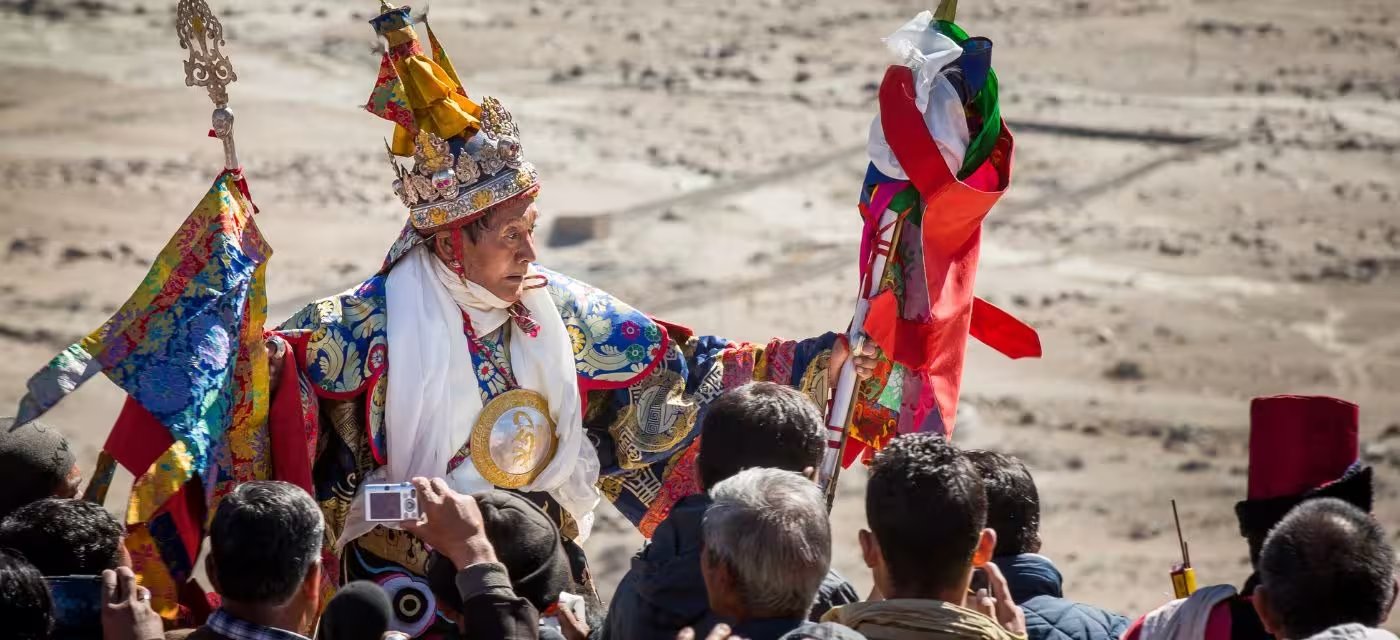
Torgya is an annual festival celebrated exclusively at the monastery. The festival generally falls in January and is celebrated to chase away evil spirits and bring happiness and prosperity to not just human beings, but also crops.
During Torgya, the courtyard of the monastery is transformed into a place of worship and celebration.
Ritual monastic masked dances in magnificent traditional costumes and masks are performed here by both artistes and monks.
Each dance represents a myth, while the costumes and masks represent animal forms such as cows, tigers, sheep, monkeys, and others.
Exploring Tawang and Its Surroundings
There are a great many places to see in and around the charming town of Tawang, and all of them are spectacular.
Some of the best spots to visit include:
- Sela Pass
- Gorichen Peak
- Jang Falls
- Bap Teng Kang Waterfalls
- P.T. Tso Lake
- Shonga Tser Lake
- Taktsang Gompa
- Bumla Pass
- The many small but fascinating old gompas (monasteries) around Tawang
And if you’re lucky, you might even spot a yak or two grazing by the lakeside.
Permits and Travel
Visitors to Tawang district require a special Inner Line Permit from the government, which is available in Kolkata, Guwahati, Tezpur, and New Delhi.
Since Tawang is still largely unexplored, it is fantastic for trekkers who want to experience virgin locales, superb views, fresh mountain air, and the simple life.
There are options for trekkers of varying abilities, from rigorous routes to lighter trails.
Local Life and Shopping
And if you would simply like to wander, you can do that too.
Mingle with the local people, talk to the monks, and shop.
There are quite a few souvenir shops selling:
- Buddhist prayer wheels in wood
- Chadars (wrap skirts worn by women)
- Shawls
- Woollens
- Handmade bags
- Brassware
- Unusual bamboo and grass jewellery
- Buddha figurines
If you’re interested in crockery, Tawang is also known for its beautiful porcelain and chinaware.
Food in Tawang
Food in Tawang is perhaps best enjoyed at small street-food eateries.
Chillies and fermented cheese are integral parts of the local food. Also famous here is the very unusual yak butter tea.
An Unforgettable Journey
Tawang captivates with its outstanding landscape and incredible beauty.
Every bit of this unspoilt land is a treat for the senses and, in some ways, so wonderful that it defies description.
So, if you’re ever travelling in the Northeast of India, try and make that arduous journey to Arunachal Pradesh.
Because when you reach your destination, you will be gifted with the experience of a lifetime in one of the most beautiful spots on earth.
Related Posts